foodiy
about
the project
Developed within the scope of EDIT’s User Experience and User Interface Design Course. The scope of this project was to design a food app, redesigning from an already existing product or service, or designing it from scratch.
My role was mainly focused on: desk research, developing the interview guides and conducting two of them, analysing the data obtained on interviews, mapping user needs and context, paper wireframing for the user profile section, testing paper and hi-fi wireframes, pixel perfect alignment and prototyping.
Role
User Research
Interviews
Interface Design
Prototyping
Testing
Team
Andreia Teixeira
Mariana Pereira
Matilde Pacheco
Paulo Queirós
challenge
Create a mobile application that helps and improves experience with food apps and includes a new functionality, according to user needs.
designing
the solution
01
how is the food tech market?
The first research we made was on Food Tech, we wanted to know the trends and what we could do to face the market and people consuming habits. The data below are from the Digital Food Lab report “Foodtech in Europe in 2020”.
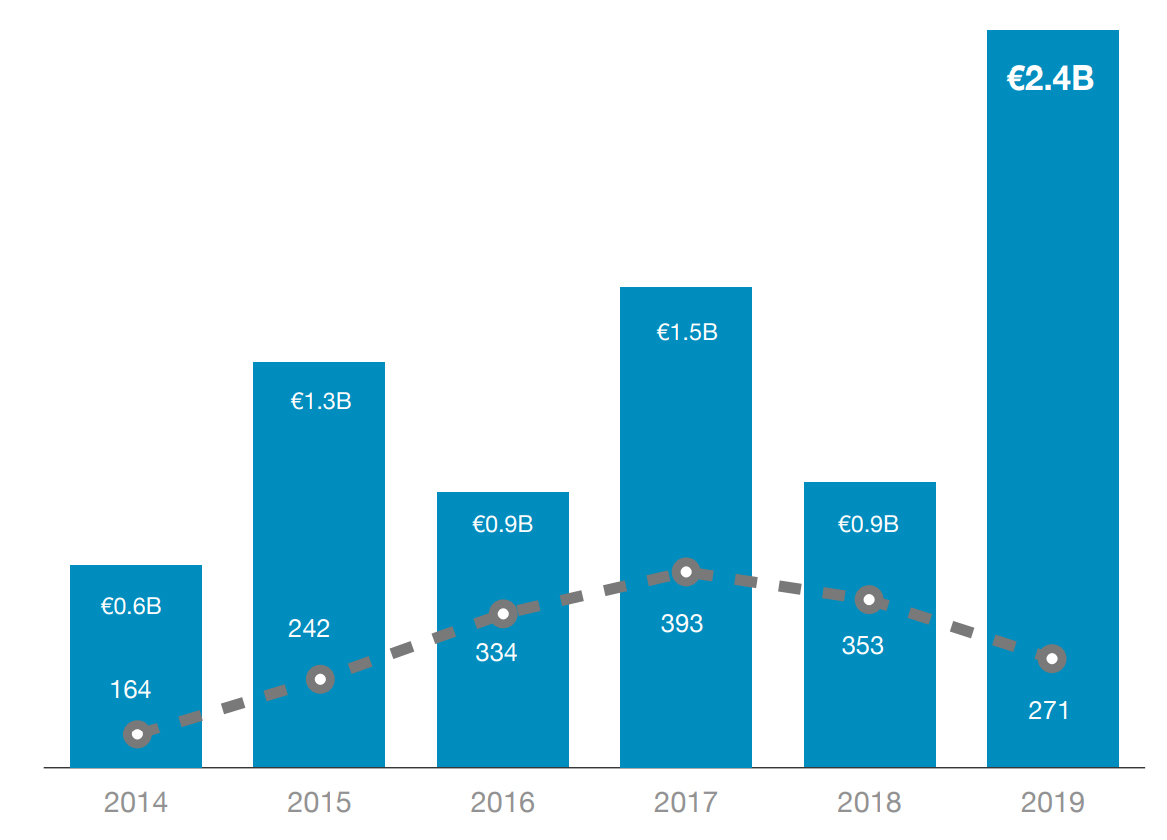
investments in european foodtech startups
Despite the decrease in the number of deals, the amount invested in Foodtech European Startups more than doubled from 2018 to 2019.
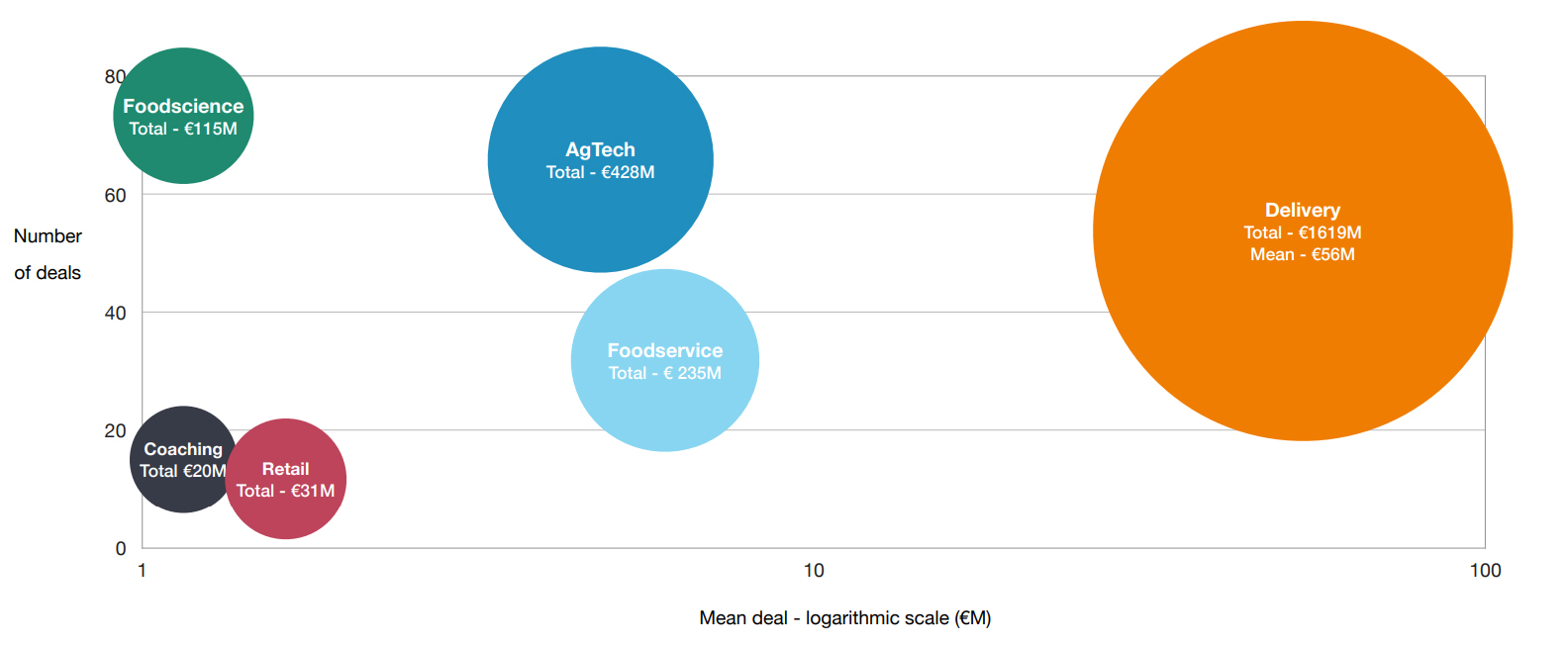
Deals and investments by categories in 2019
The category that registered greater growth was the Deliveries one.
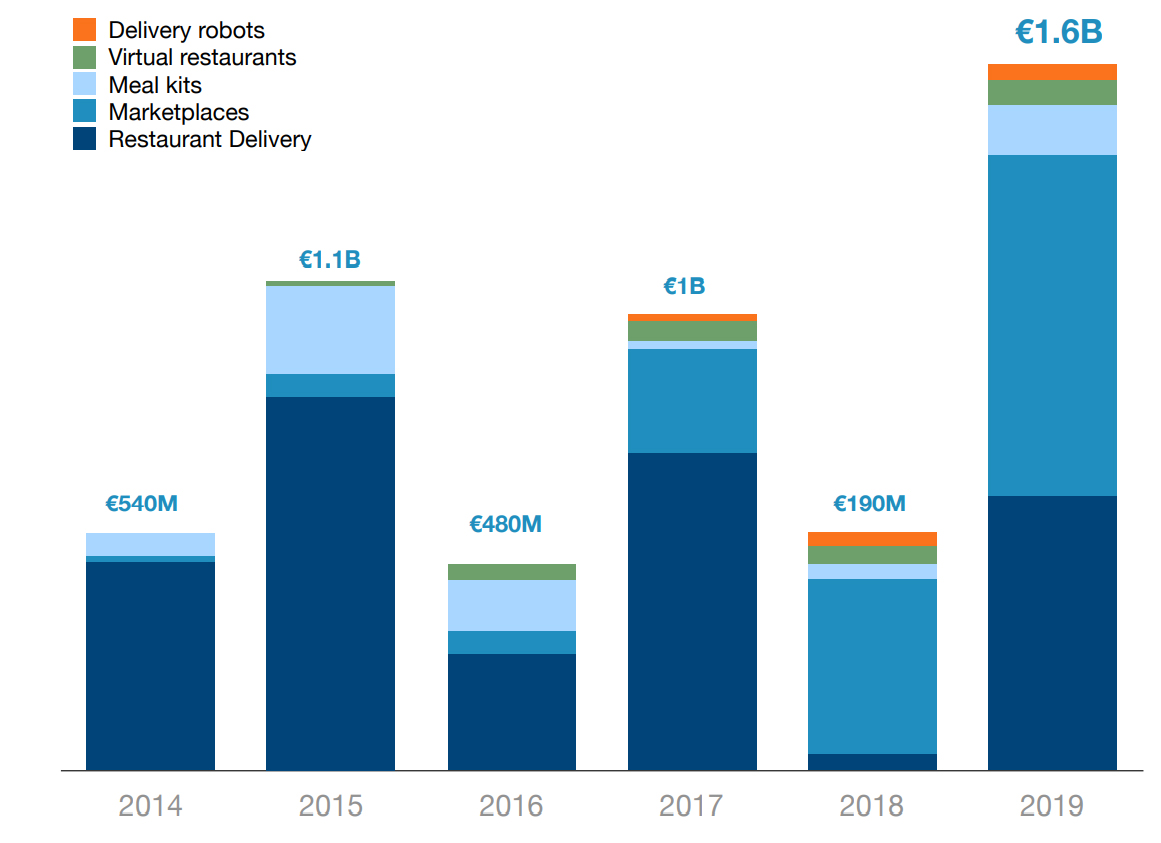
There seems to be a relevant increase in Foodtech Investment in Europe, being the deliveries a very relevant sector, and meal kits are conquering ground.
Investments in the Deliveries by categories
Meal kits is one of the areas that grew from 2018 to 2019.
02
Covid-19 impact on eating habits
Given the context of the pandemic, we tried to find out how people were reacting in the field of eating habits. The presented figures come from the study “React Covid – Inquérito sobre alimentação e Actividade Física em Contexto de Contenção Social.
%
altered their eating habits during the lock-down
There was a significant alteration on eating habits, tendentially to better ones and with higher values within women.
Alteration of eating habits
Percentage of respondents who altered their habits in a better or worse way
- Better Habits 58%
- Worse Habits 41%
Percentage of respondents who altered their habits by gender
- Women 47%
- Men 43%
%
altered theis visits to supermarkets
%
started cooking more
%
started eating more snacks along the day
%
altered the number of daily meals
more relevant data
– 45% of increase in recipes sharing on Social Networks;
– Increase in companies dedicated to healthy cooking and meal delivery;
– Consumers have realized that the task of cooking is not as complicated as it looked;
– In times of pandemic, cooking was a form of distraction and creativity combined with
need (to eat);
– Abroad, new food kits appeared with home delivery (adaptation to the situation);
– 61% of foodies tried new recipes during quarantine.
03
who are the foodies?
A foodie is a person who is very interested in cooking and eating different kinds of food (Oxford Dictionary)… and they are our target.
They are mainly Millennials, which is considered the Foodie Generation – 50% of the Millennials consider themselves as foodies and use social networks such as Facebook, Pinterest and Instragram, to get inspired.
posting photos
%
claim to post photographs of food and drink
food vs. music
%
would rather go to a food festival than a music festival
dinner vs. shoes
%
would rather dine out than buy new shoes
creativity
%
cook to express creativity and try new recipes
04
interviews
We interviewed six people that tend to have our users profile, using the same interview script, and a seventh person, this time with another set of questions because the goal was to understand a different public – the professionals who would develop recipes for our mobile application.
We synthetized the first interviews in a map of learnings about the positive and negative attitudes facing the act of cooking, and in the second one we extracted the data that could be useful to our solution.
POSITIVE
Flexibility and Ease – MOTIVATION
– Cook several meals at once;
– Try new recipes (Dinner and weekend).
Social – SENSATION OF ACCOMPLISHMENT
– Try new recipes to impress friends;
– Share photos with friends;
– Enjoy to cook for others (if they know how);
– Use “cuisine” as a topic of conversation;
– Decorate the dishes to share the photo.
Research and Process – TRENDS
– Search for recipes through the internet (google);
– Follow the recipe on mobile phone while they cook.
Products – THE FLAVOR
– Give priority to the quality of the products.
NEGATIVE
Flexibility and Ease – FRUSTRATION
– Lack of time to cook.
Social – SENSATION OF ACCOMPLISHMENT
– Lack of know-how blocking new experiences (fear of failure);
– Only something good deserves to be shared.
Research and Process – TRENDS
– Difficulty to clean the hands to consult the recipe;
– Lack of multi-tasking capacity (difficult activity);
– Screen locking while cooking.
Products – THE FLAVOR
– Avoid food waste (buy some products to be used in a one time recipe);
– The needed ingredients can block the user to try a new recipe;
– It has to be easy to find and have high quality.
Samanta McMurray
Healthy Recipes Developer for Digital Platforms. Author of the blog “Eat love with love” and 3 healthy recipe books and also creator of recipes in a weekly basis for Auchan and other websites such as “Vida Saudável” and “Cuizeat”.
Inspiration
Samanta considers that the most common sources of inspiration are visual, associated with food photography and recipes that can be found online, mainly through Pinterest, Google or even hashtags on social networks such as #foodstyling.
Healthy Food in Portugal
Before starting her blog in 2013, there were already many cuisine blogs, because Portugal has a good, old gastronomic culture, but there were not many healthy or international food blogs. Nowadays we can find a lot of healthy recipes, but it is probably a market that can grow even more.
Most appealing content
She notices that the recipes she shares directly on Instagram have a lot of likes but even more “savings” – people save the recipes a lot.
The photos which now get more likes have written content – be it a recipe or a reflection about her life. The written content is having a lot of validation, people are not just attracted by image anymore.
About Meal Kits
In the USA, where she currently resides, it is a very successful format and she refers to “Hello Fresh” as an example.
When asked about it, she agreed that it would make sense for people with her profile to feed the platform’s recipes, since they have to be tested several times ensuring that it will always work, with the right measures, without waste and with the guarantee that there are no variations in flavour.
She considers that it would be a benefit if one of the platform’s features were to teach “knife skills”: how to cut each ingredient for each type of recipe.
“I wanted to convince everyone that an image of porridge with strawberries is as appetizing as one of an ice cream”
05
persona
For the development of this mobile application we were given a persona and the possibility to create more, however we have chosen to stay with this one, since according to our research we understand that it corresponds precisely to the target we intend to reach, and therefore ensure a good experience to all our users.
Alice
22 years old. Female. University-educated. Full-time professional. Tech-savvy. Foodie.
Alice loves to go out to eat with friends. She believes that food can bring people together and loves bonding with others over a delicious meal. She prefers eating with smaller groups of friends, but occasionally will organize a meal with a larger group.
Her friends are young professionals starting their careers or graduate school. Her friends often have busy schedules, making it dificult to organize get-togethers.
She enjoys food, taking walks, art and photography.
The rest of her free time is often spent at home watching Netfix, reading, or baking.
“Camera eats first”
Alice enjoys taking pictures of her food. Often photos on social media will attract her to try a new recipe, restaurant…
alice’s tech habits
She finds a lot of information online
She is a heavy mobile user
Top apps she uses:

06
mapping user needs
Once the persona was “matured”, we mapped her needs to define what she would need and design the right solution.
Mapping our user needs was the core of our solution’s design. For each user’s need, we defined a context, finding out the motivations or frustrations and working out possible answers for them.
07
problem statement
After our research we discovered some of the habits, motivations and frustrations, and pointed out the problem our persona faces.
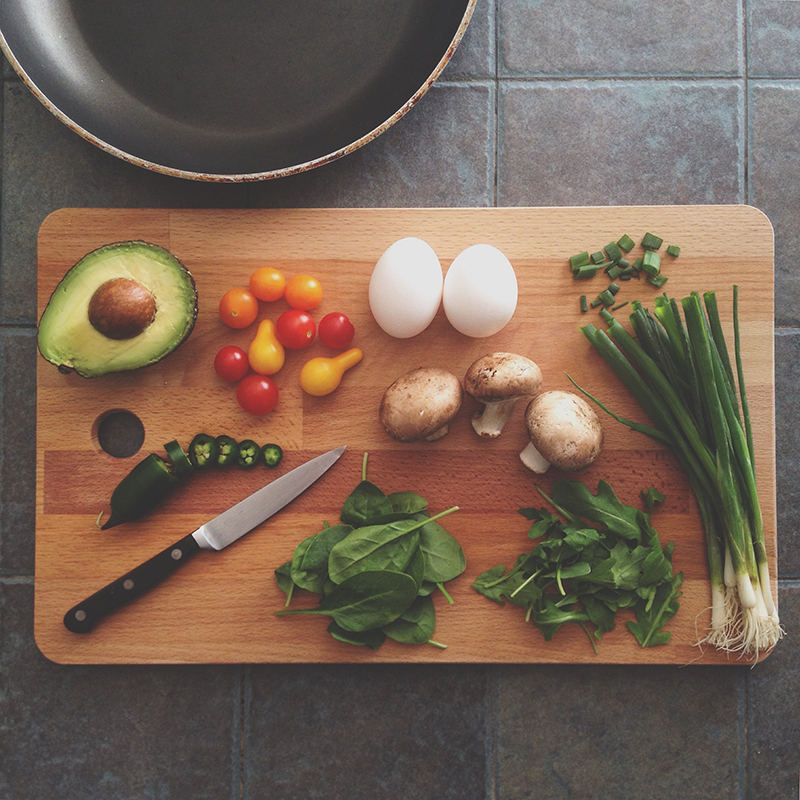
for alice, the action of cooking and mainly experiencing a new recipe is a complicated process
what do we mean by “process”?
The purchase of ingredients
It’s hard to know what to buy and the best quality options.
Food waste
I don’t want to buy ingredients to make just 1 recipe.
I’m not a Chef
I don’t know how to cook more than the basics (fear of failure).
08
how do we solve it?
We decided to create an original brand.
A recipe mobile application with the delivery of a personalized box with the right ingredients for each recipe.
Let’s show how it can be so easy and fun to cook. We give the users the ingredients and knowledge to create their favourite dish.
a box made to fit your hunger
the brand
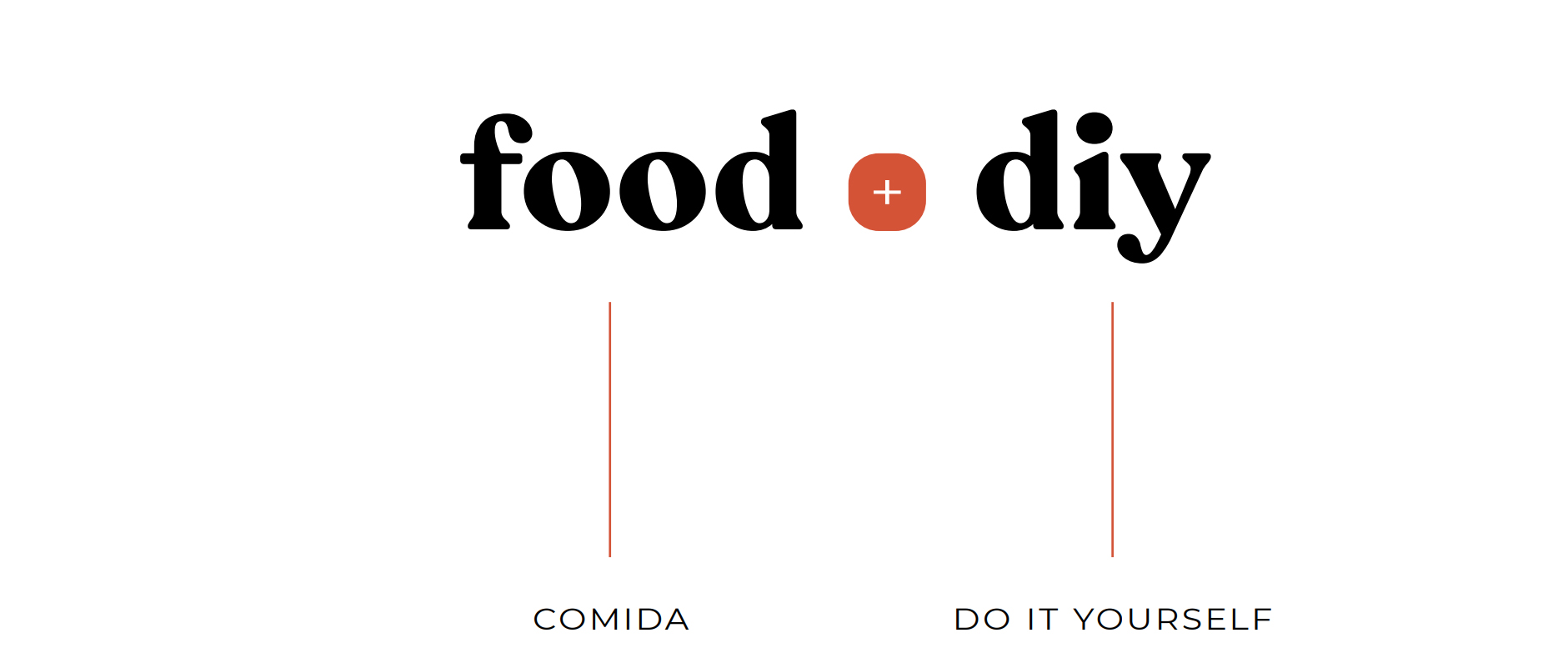
Our brand naming is a fusion between two concepts: “foddie” and “DIY – do it yourself”. Our tagline is “Your kitchen, out of the box”.
09
the mobile app
We developed the application as the best cooking assistant, with the recipes explained step by step, the ordering of the box and voice command, so the user can follow the recipe while managing all the ingredients with their hands.
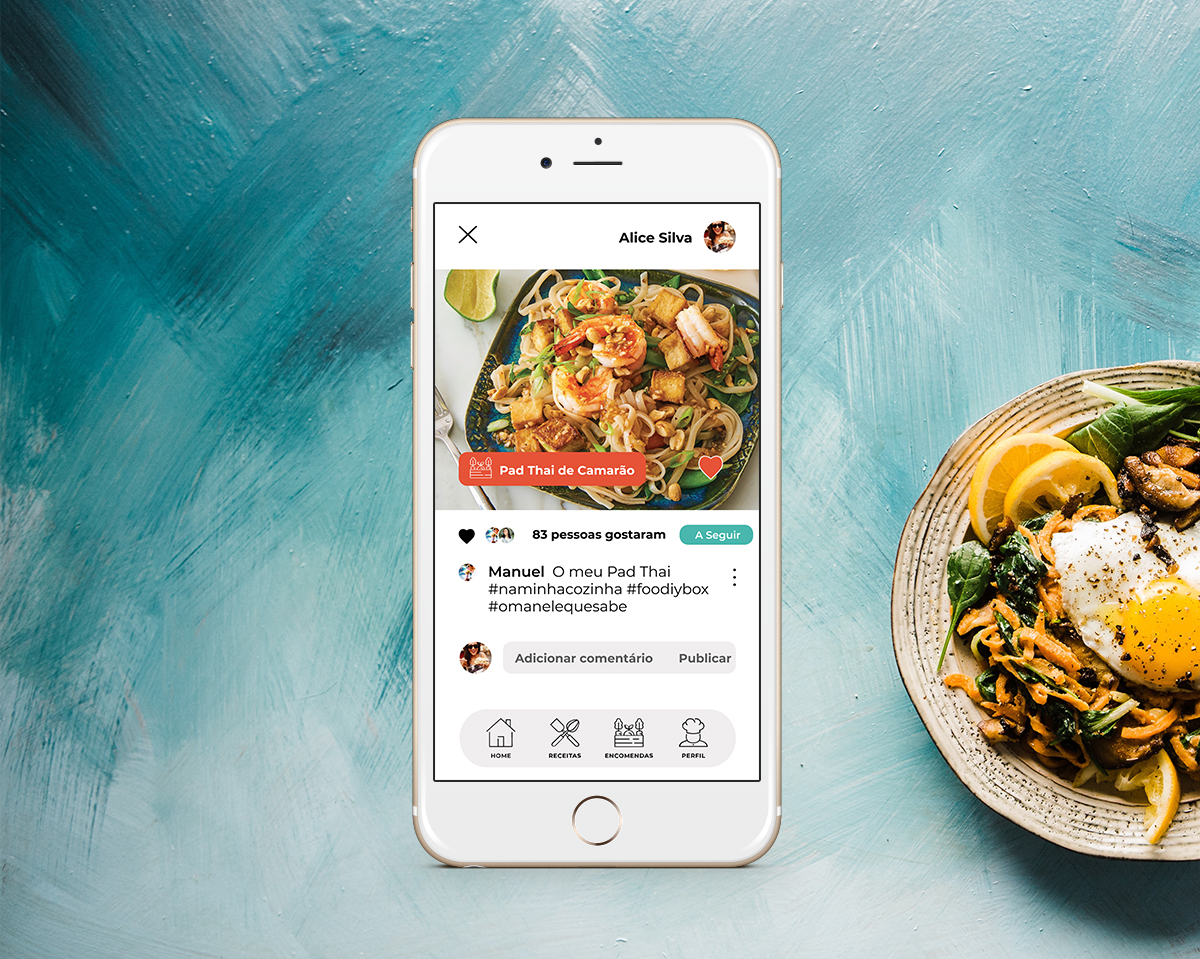
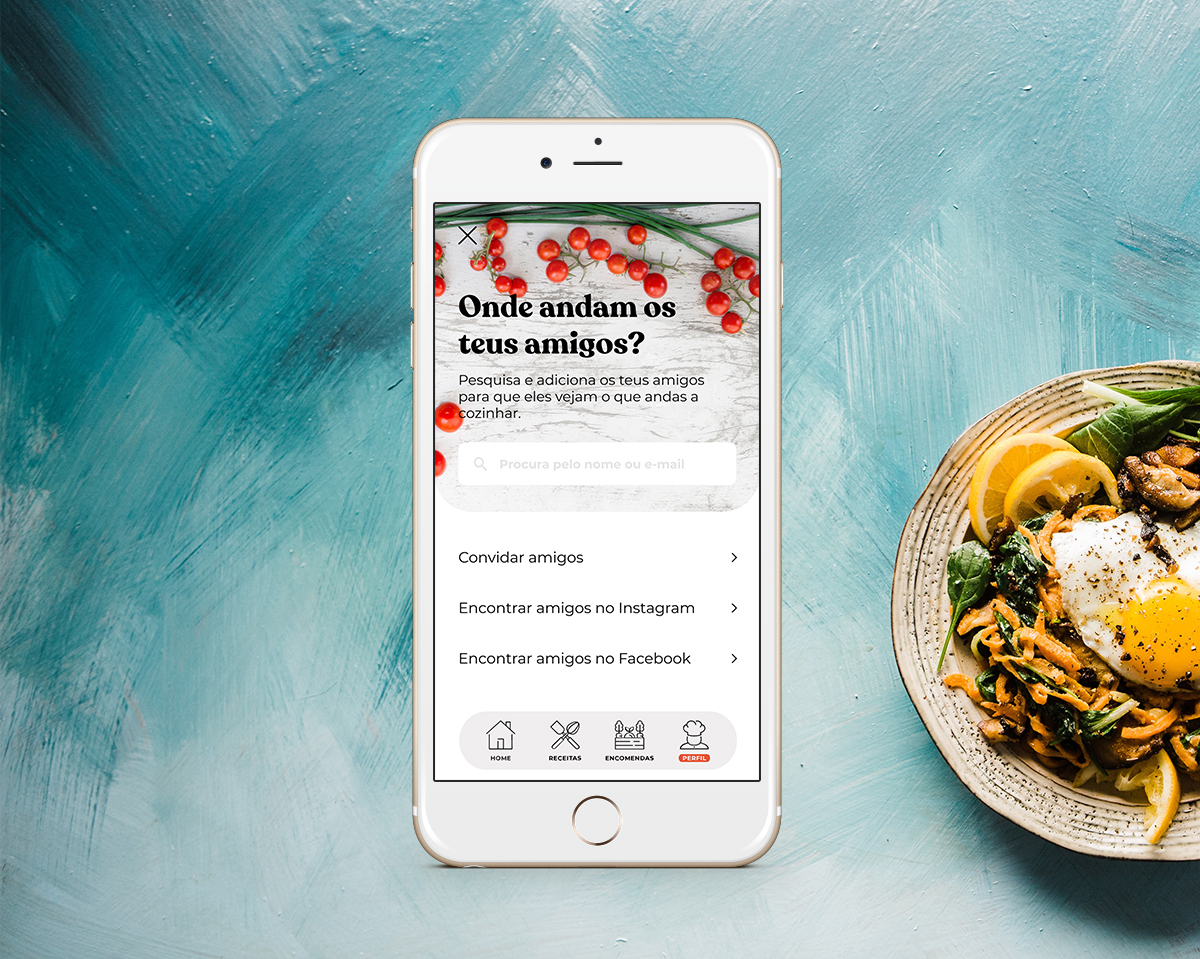
Because cooking is a social activity too we developed whithin the app a social network, where the users can share their dishes and comment on their friends’ ones, and see in each recipe some of the posts of other users who have already done it.
task flow
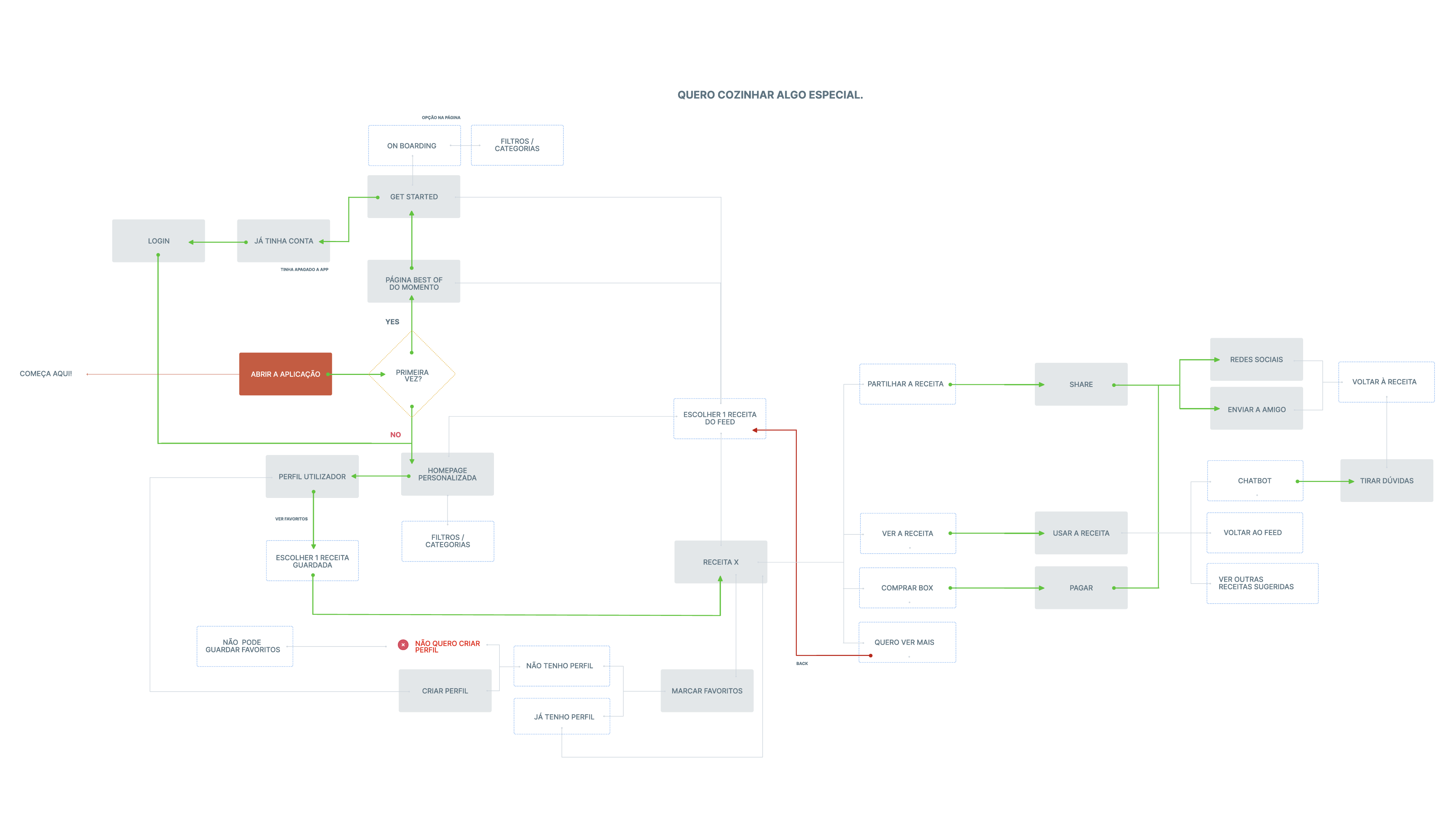
As a way to understand the best method for our user to perform one of the main tasks of our application – cooking a dish – we made a task flow.
It was very useful to map the user experience and optimize the process, skipping redundancies and using the right number of clicks to get there.
wireframes lo fi
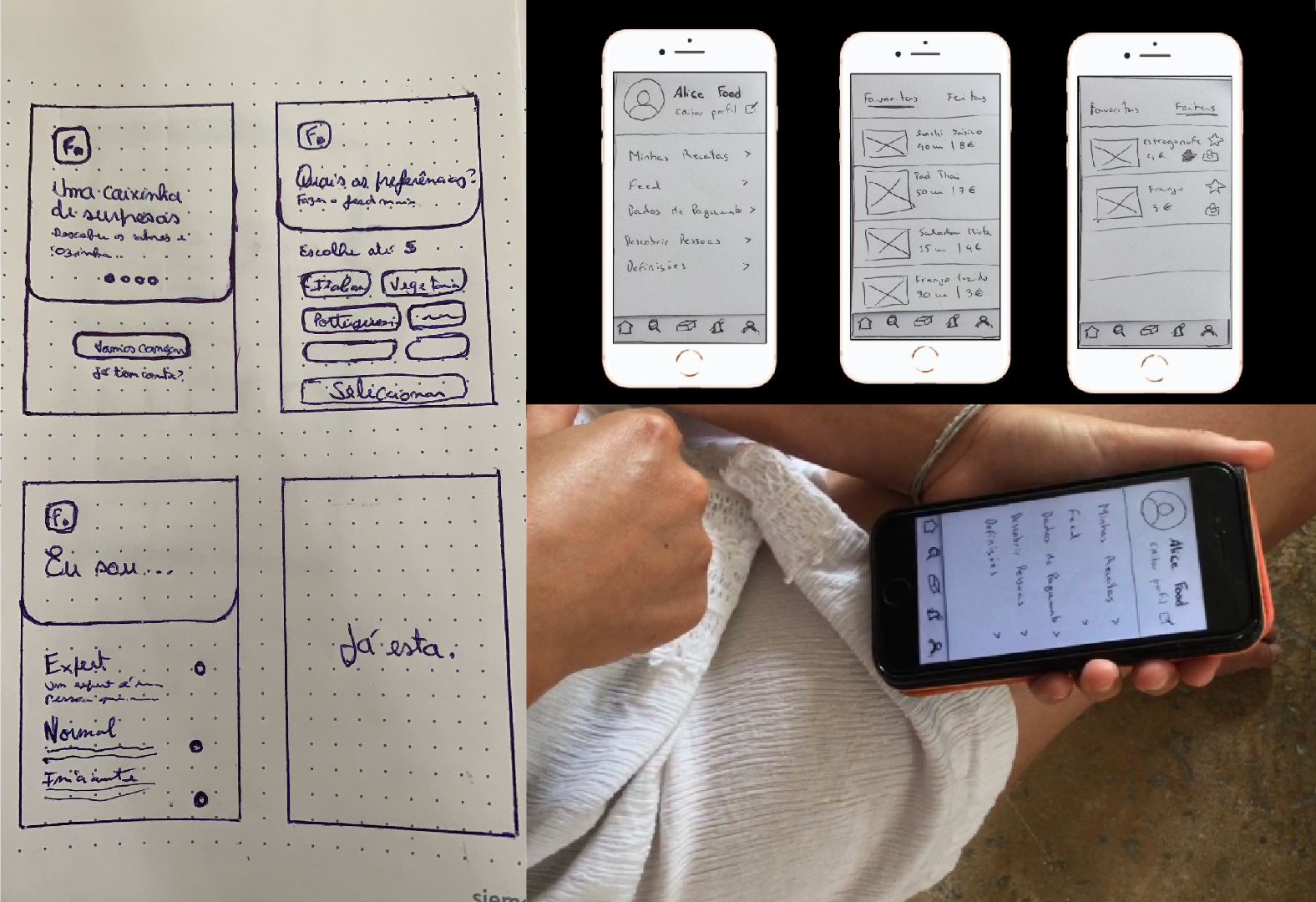
For the design of our app we started with paper wireframing. It is the best and most effective way to start, because it provides a way to sketch the interface and test it with less effort wasting.
user testing
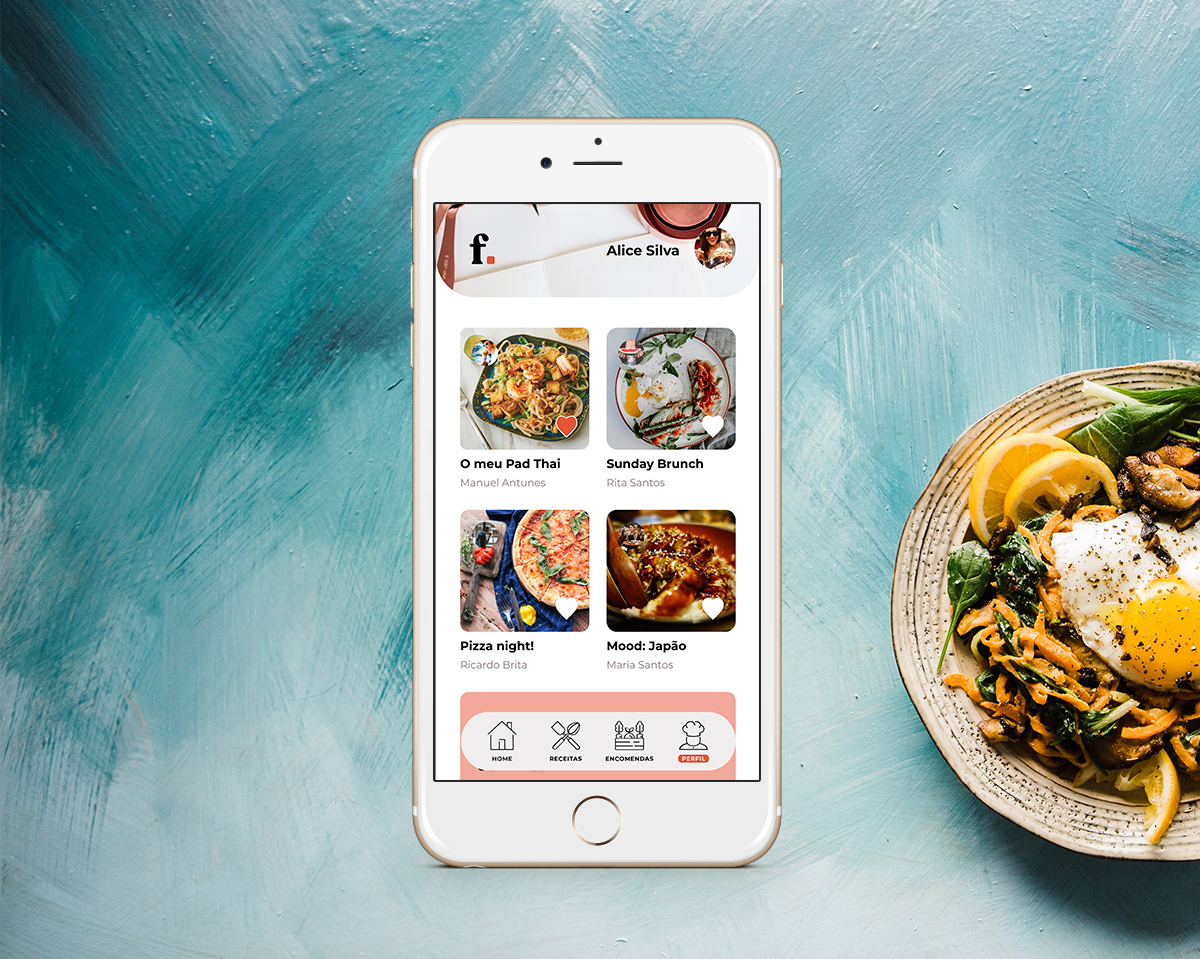
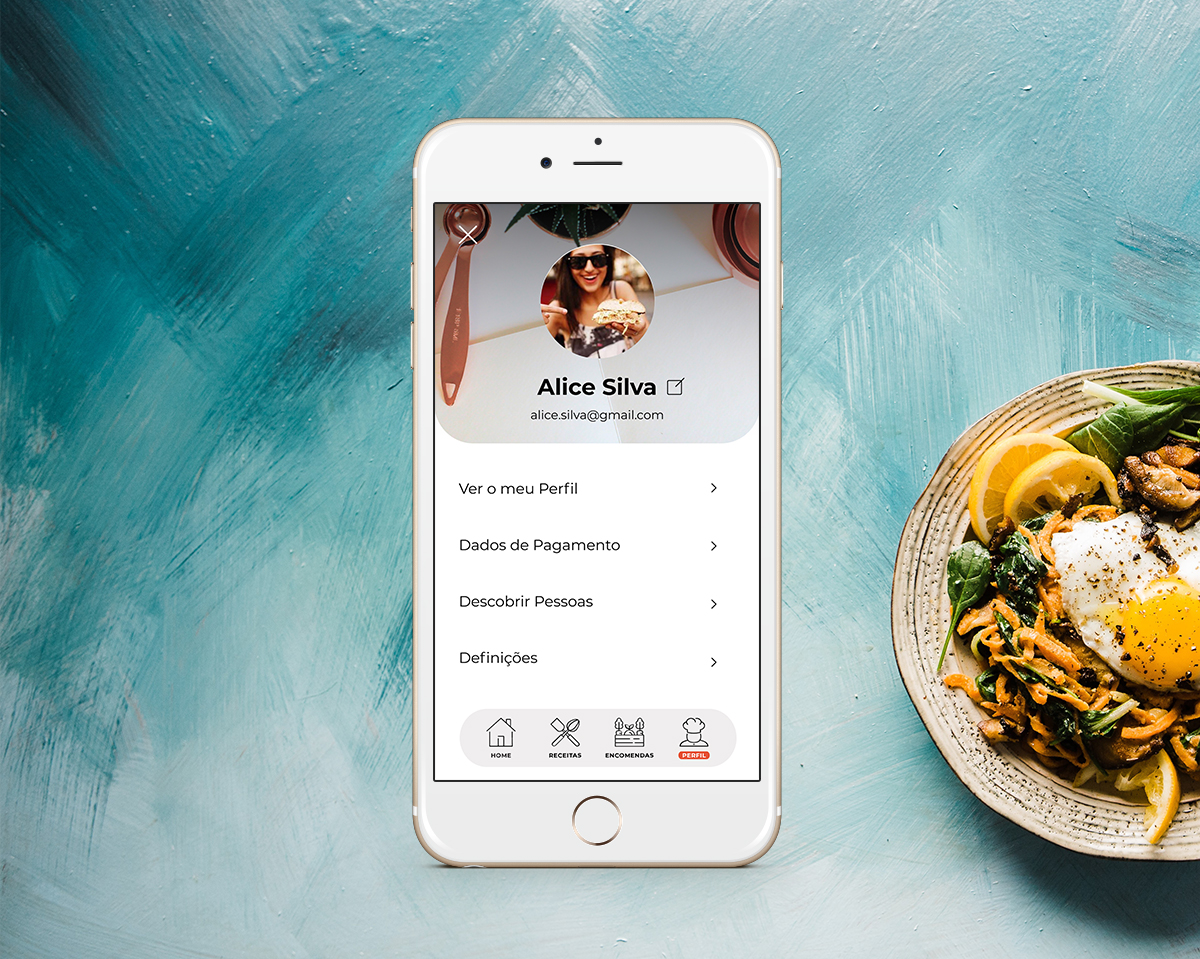
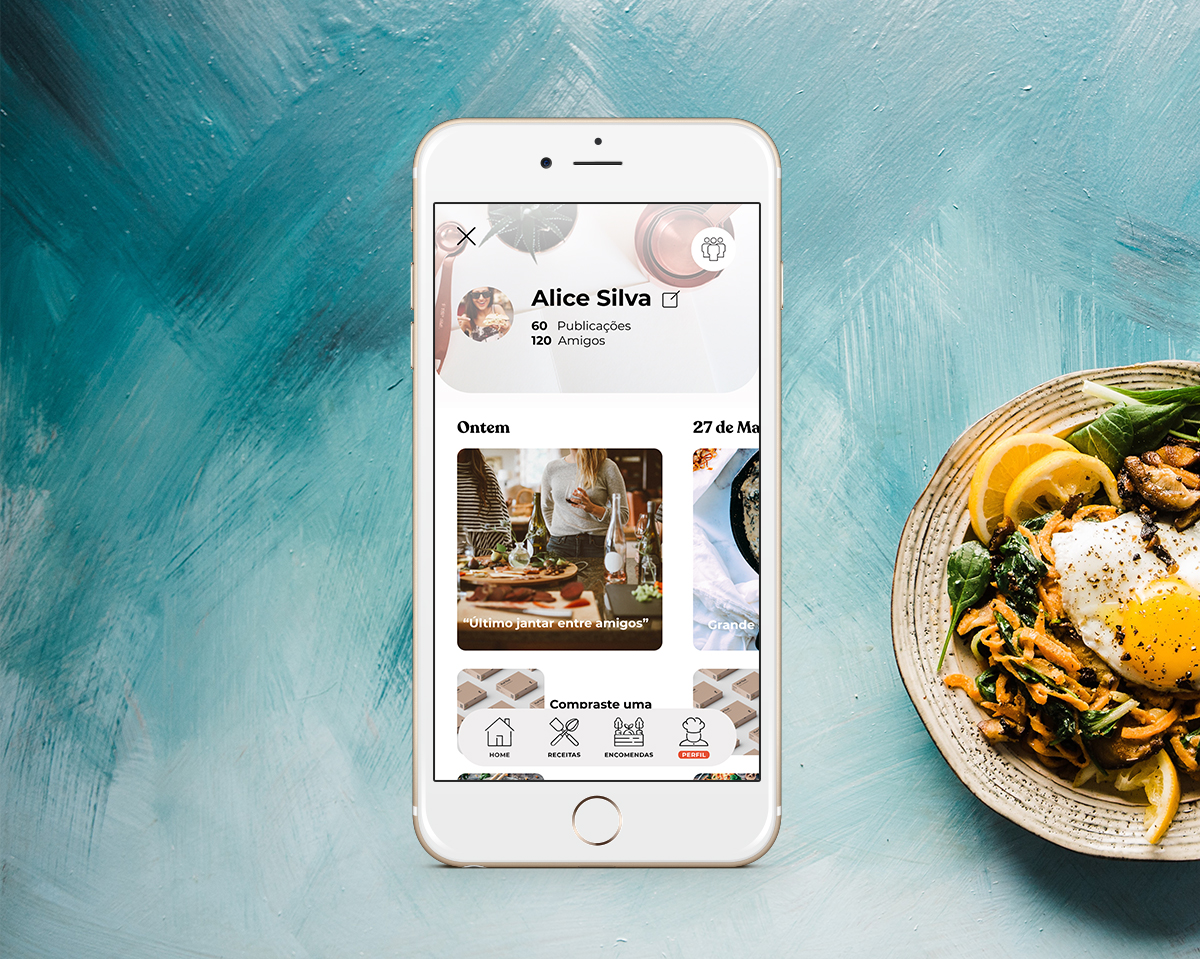
We tested all our wireframes, lo-fi, and hi-fi. It was very useful for iteration. One example was that in our lo-fi prototype, in the profile section, we found that it was difficult for users to understand where they could access their social posts.
wireframes hi fi
After testing and changing the lo-fi wireframes, we moved on to the hi-fi wireframes, to perform the last tests before the final design. These wireframes were already very close to the final design, lacking only the application of colours and images.
visual design and final layouts
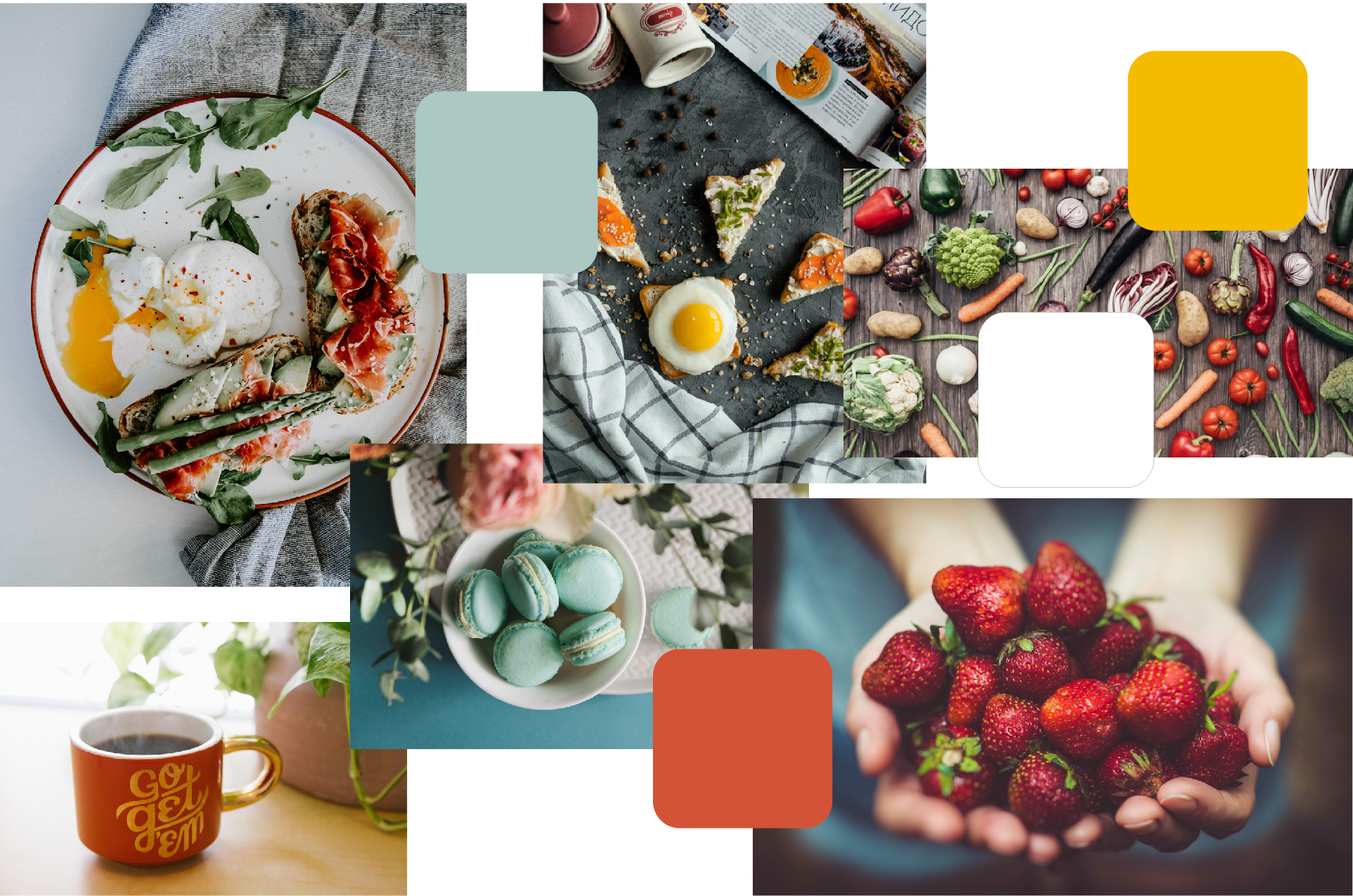
As a design line we opted for flashy images, with great food styling. Inspired by our persona and also the testimony of Samanta McMurray, we wanted to use appetizing and appealing colours, because the camera and the eyes eat first.
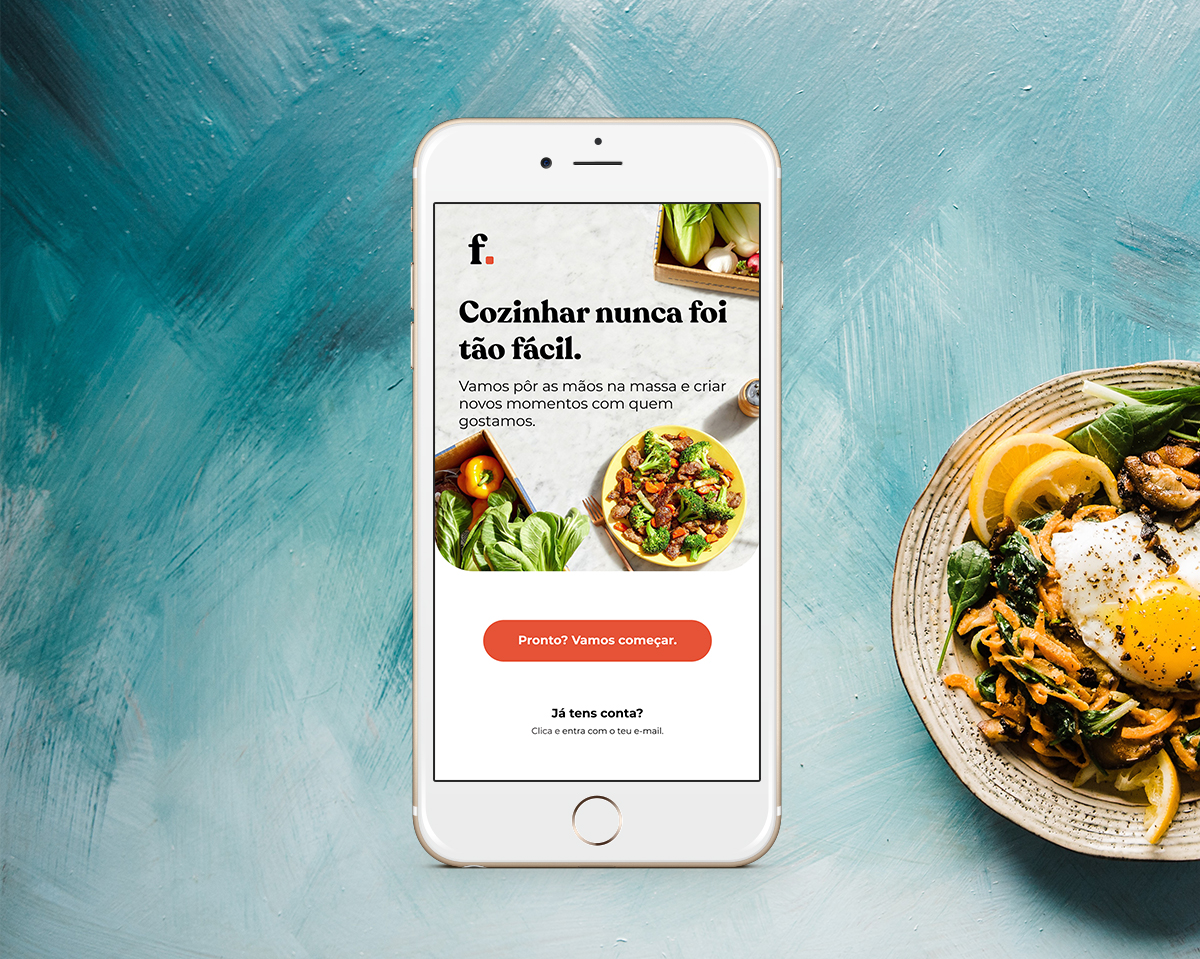
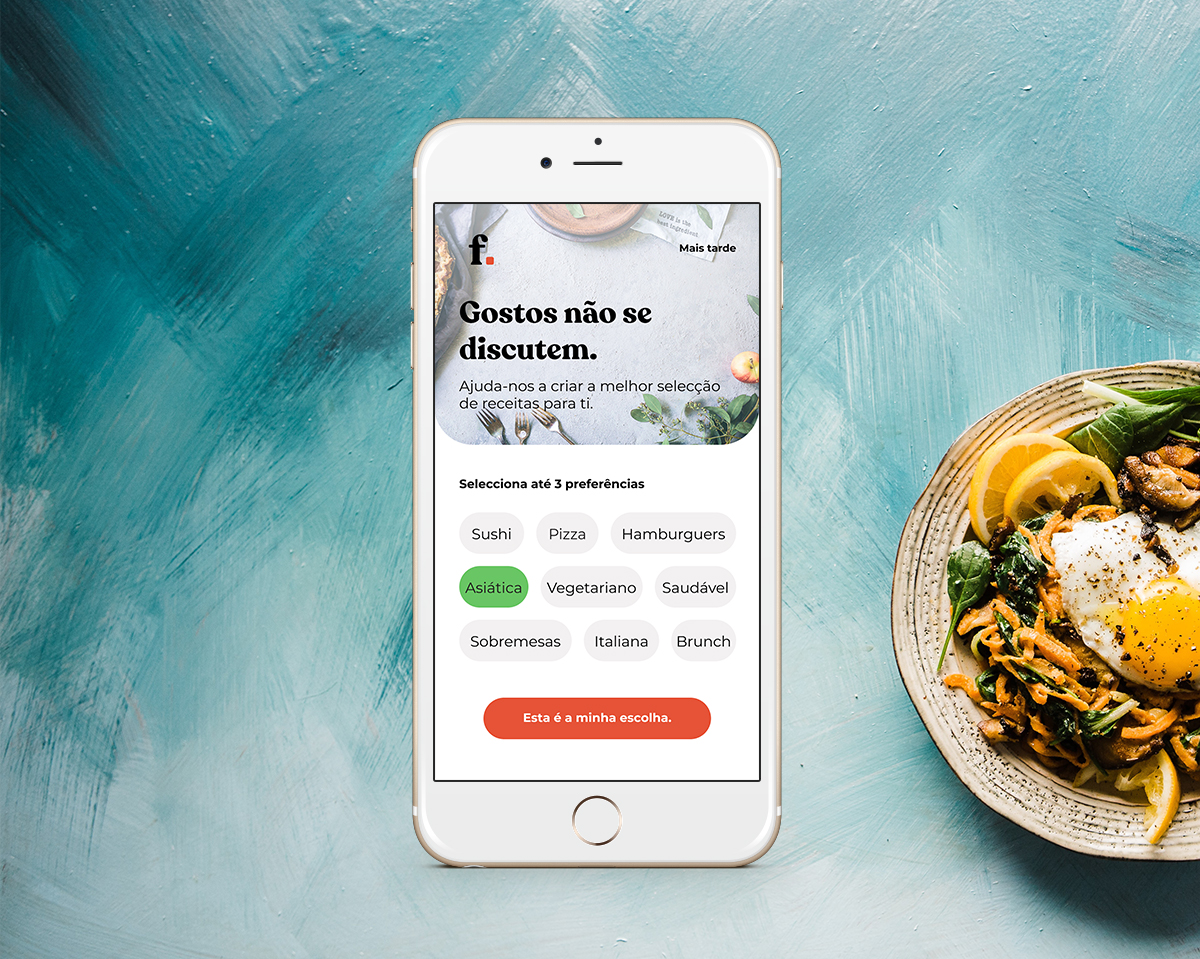
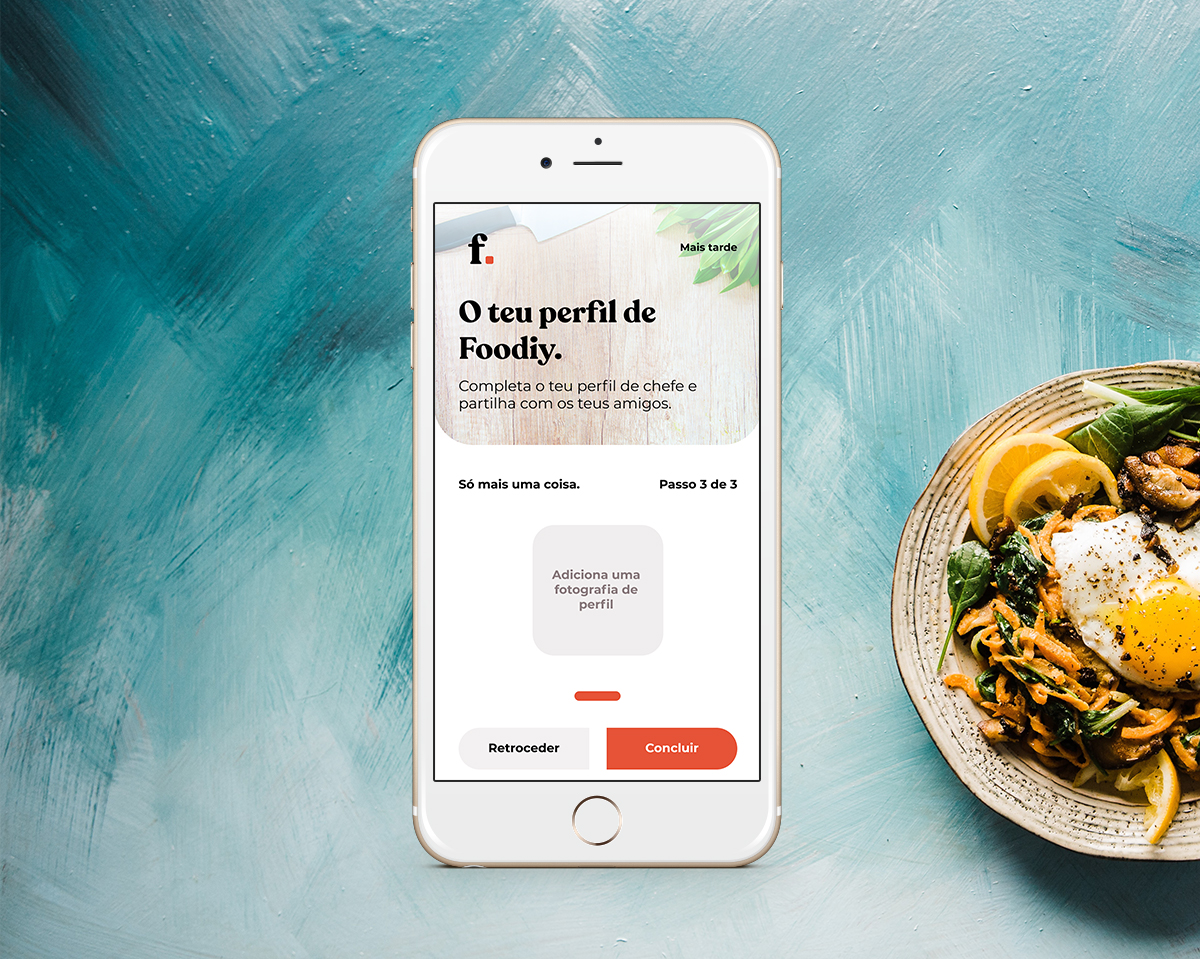
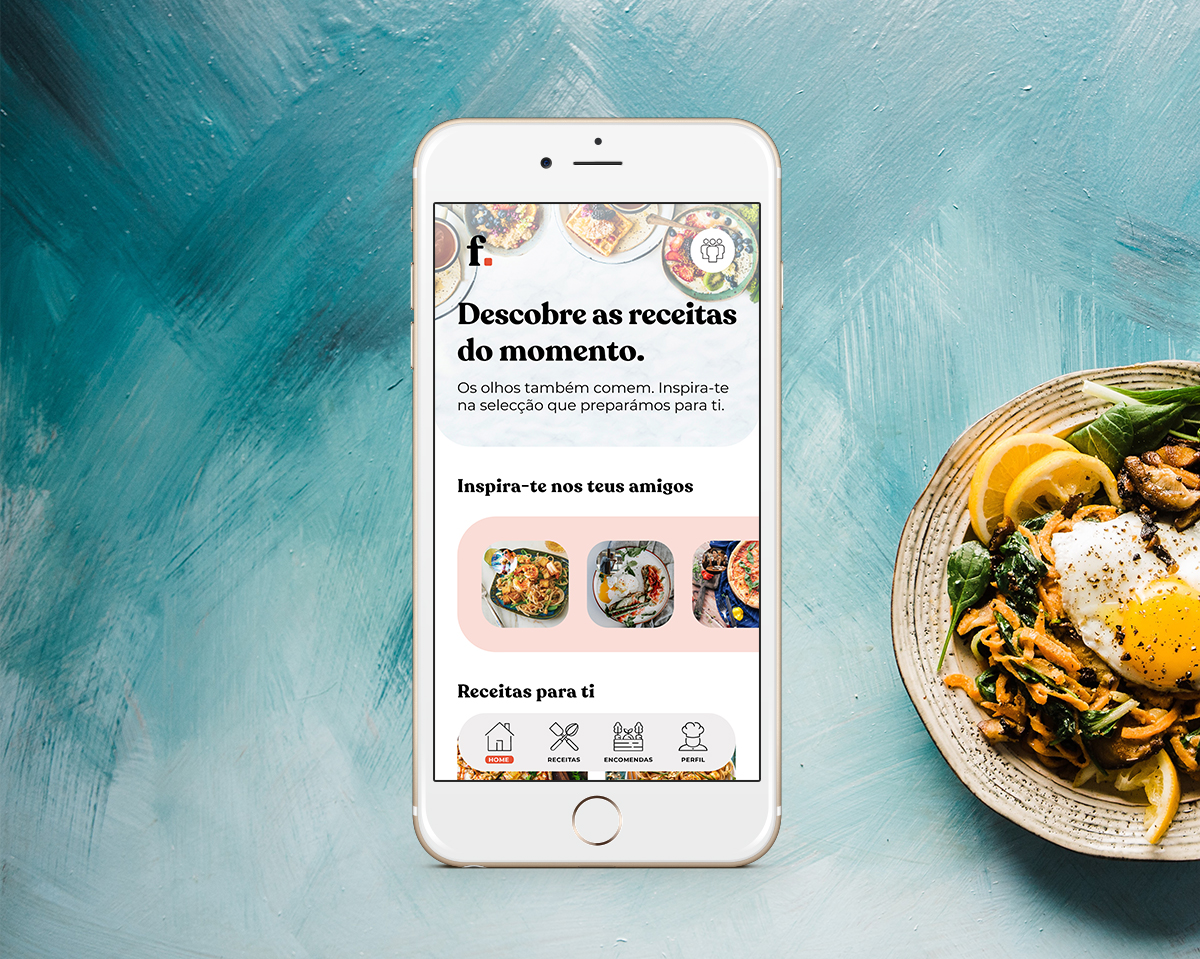
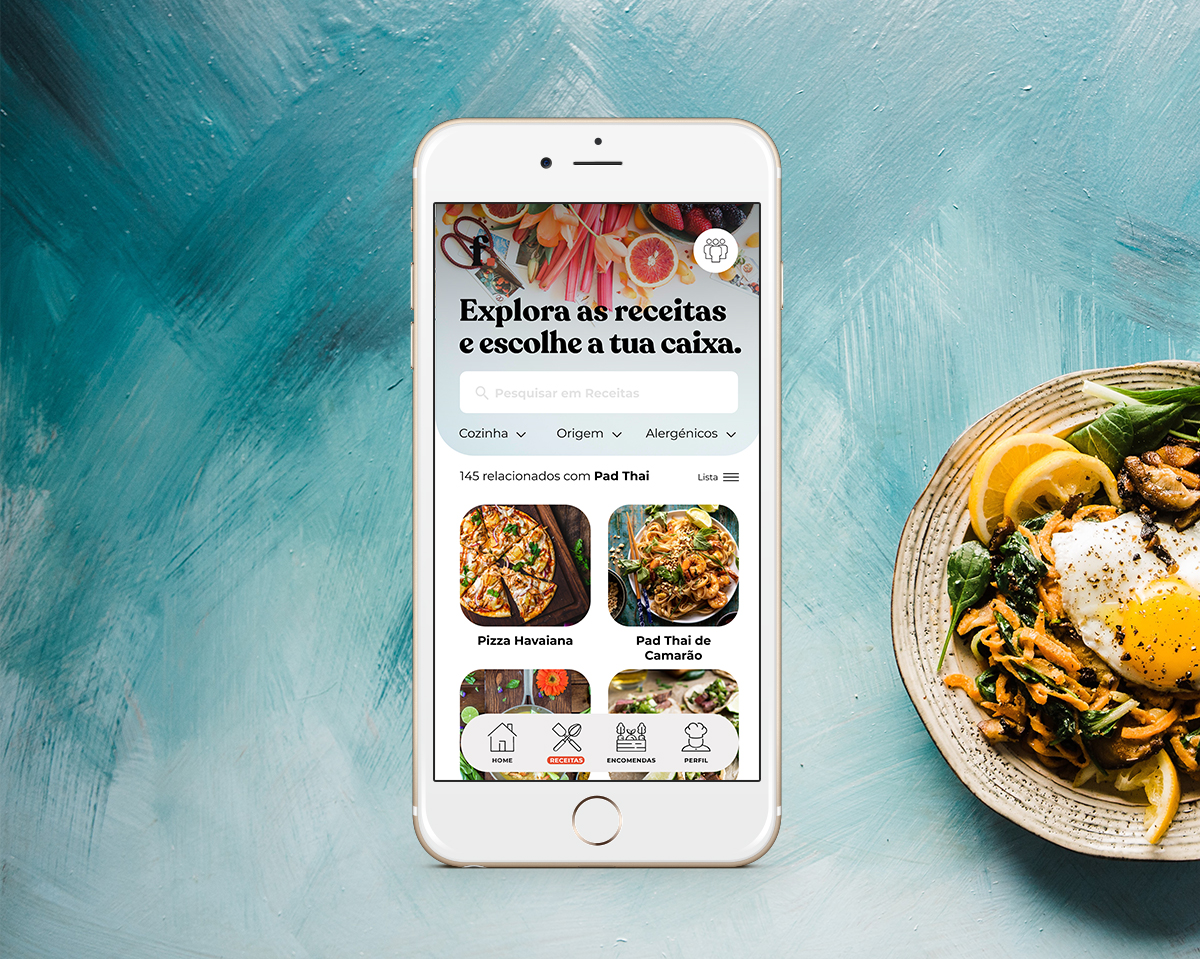
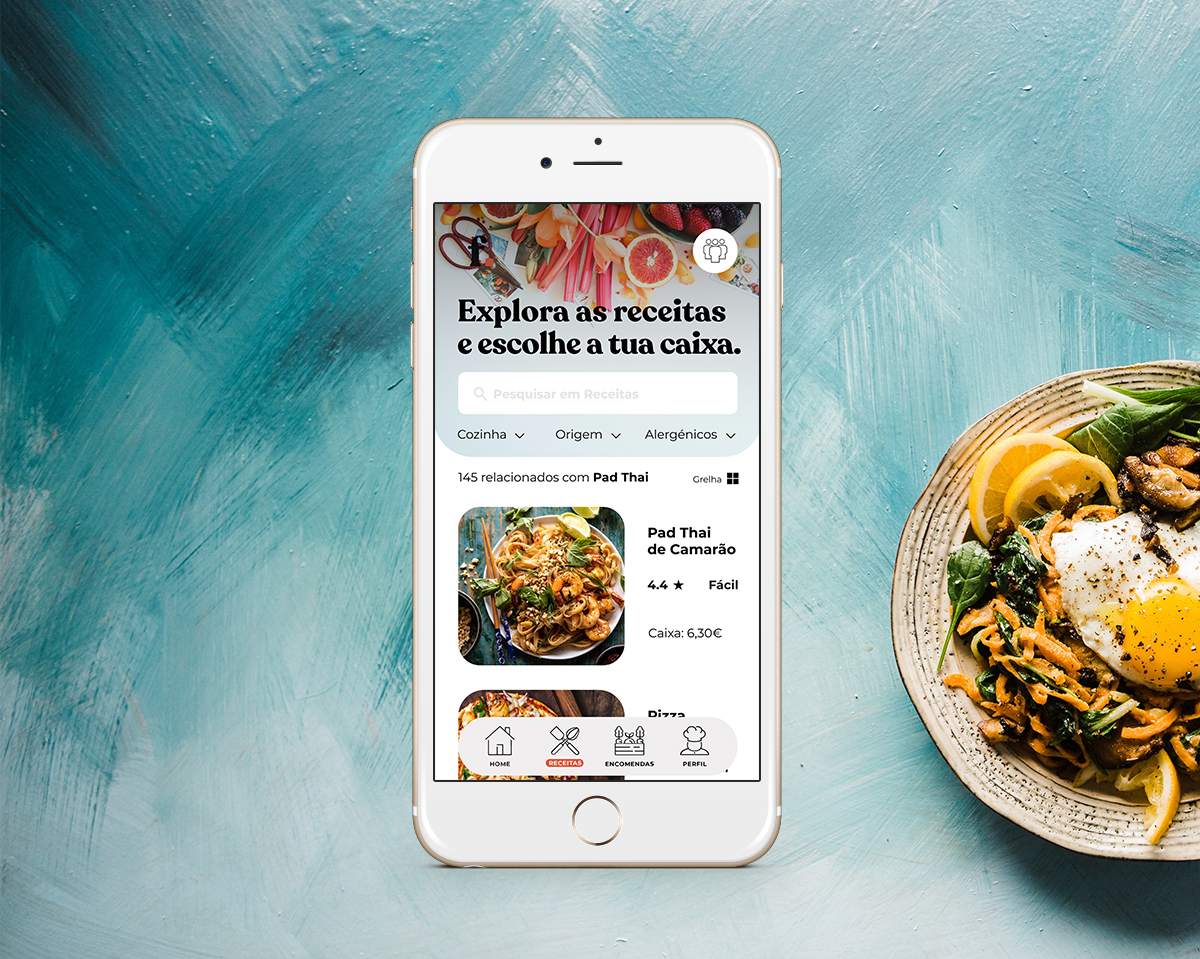
onboarding, personalized homepage and recipes
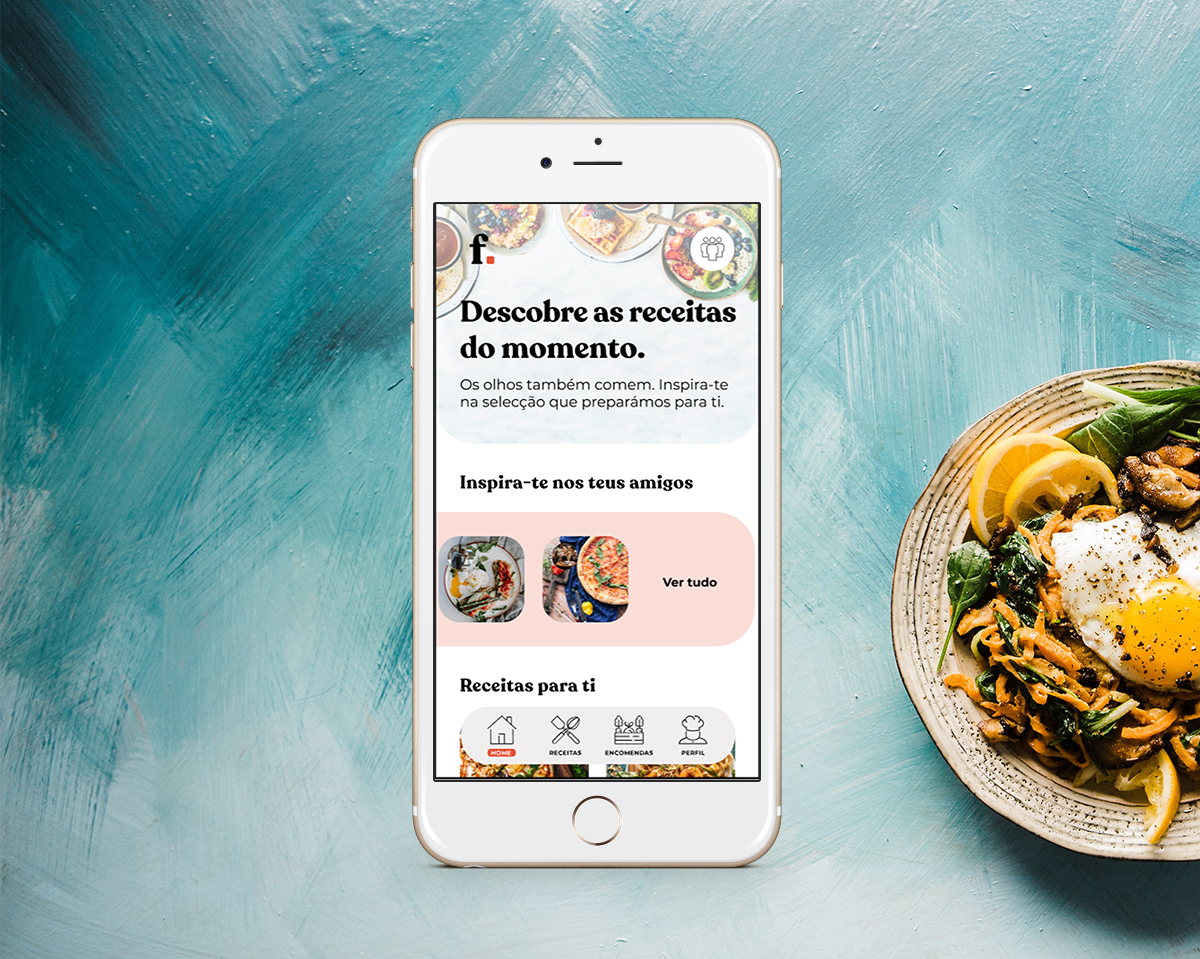
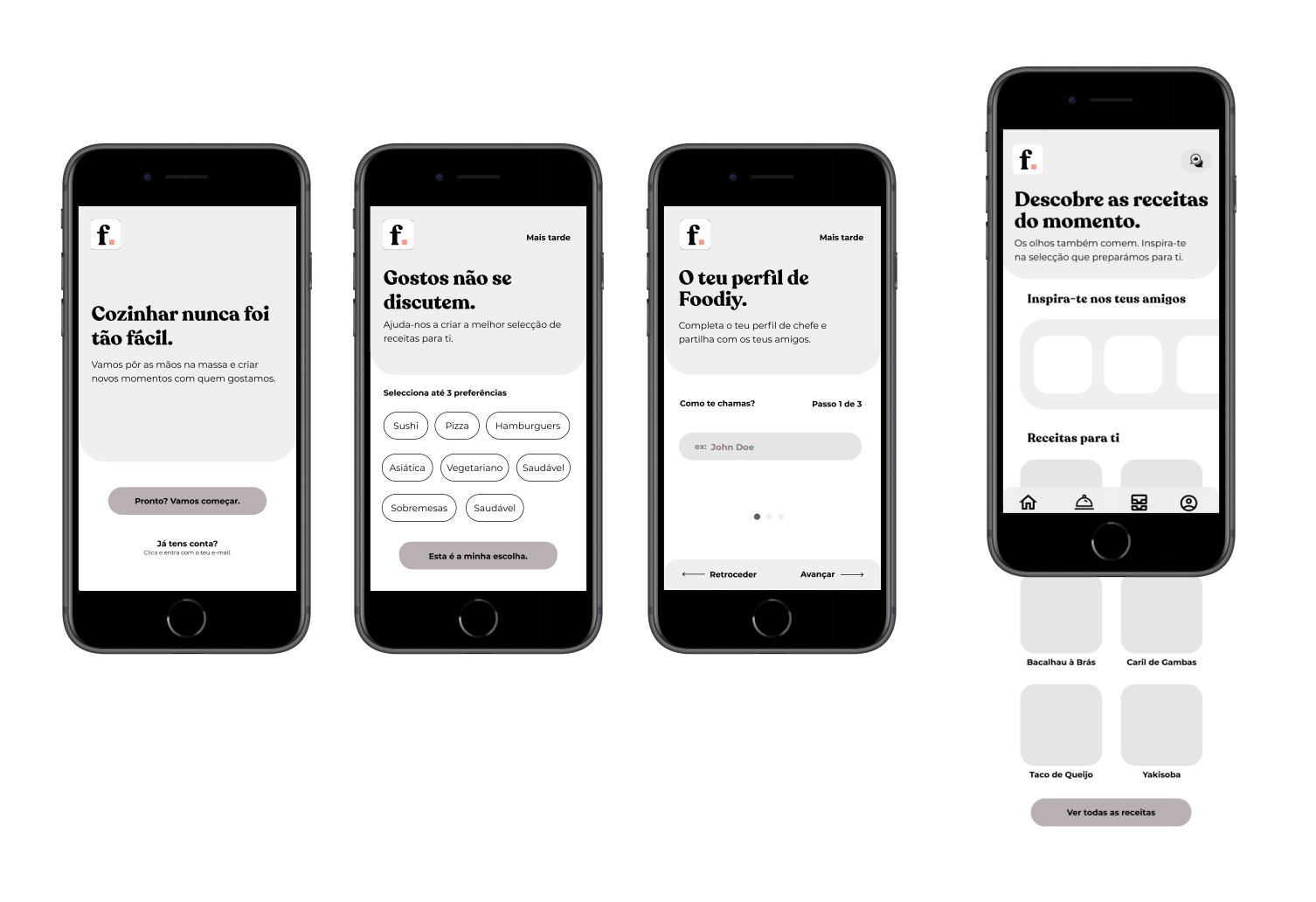
Our Onboarding is simple, intuitive, and asks for cuisine preferences in order to customize the homepage with the user’s favourite dishes.
On the homepage we have a first part of access to the most recent shares of friends, and then a selection of dishes according to the user’s preferences.
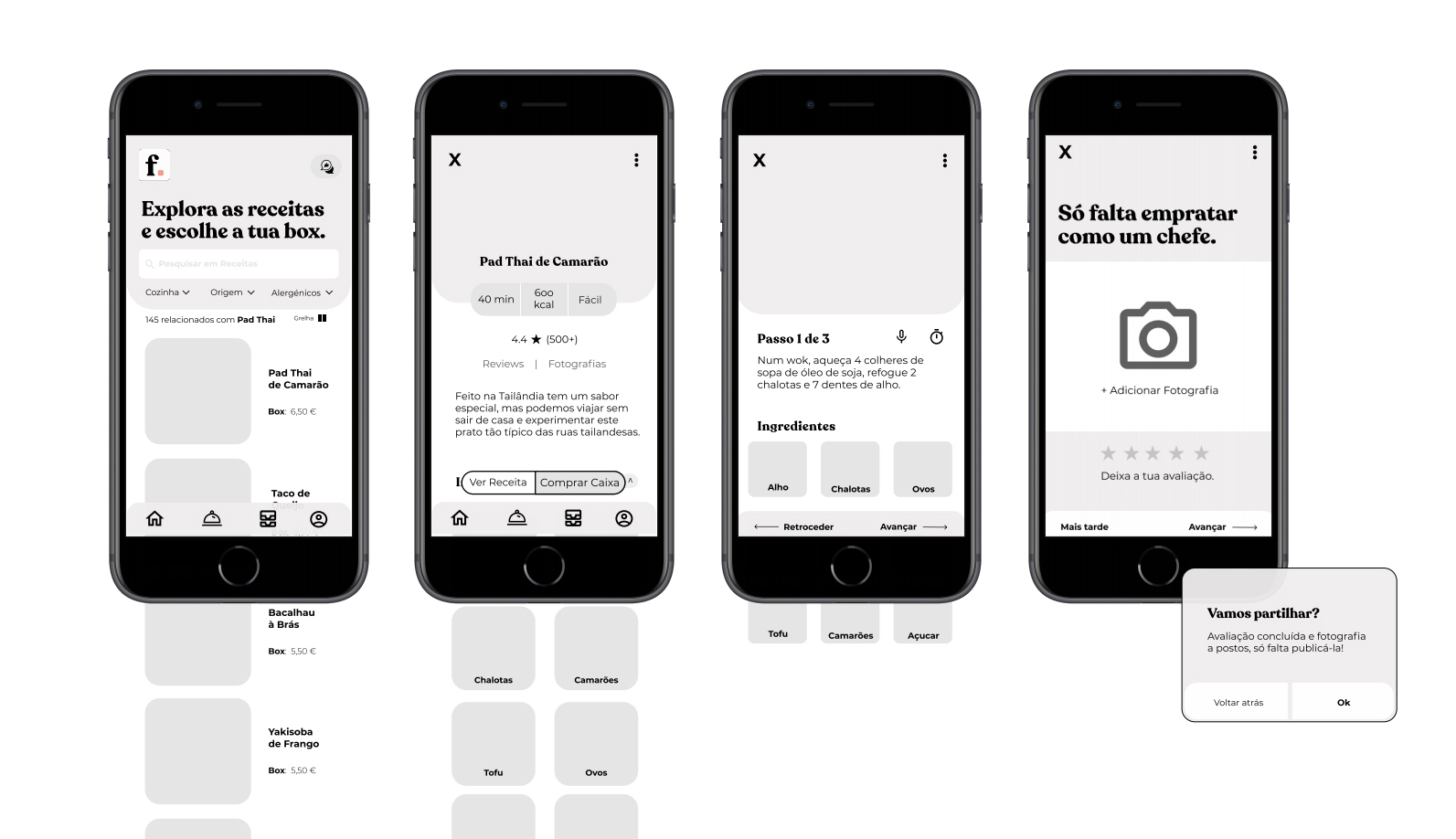
The recipes page has the possibility to filter the recipes by different criteria and the option to view them in a grid or in a list.
Access the prototype below.
ordering and following your order
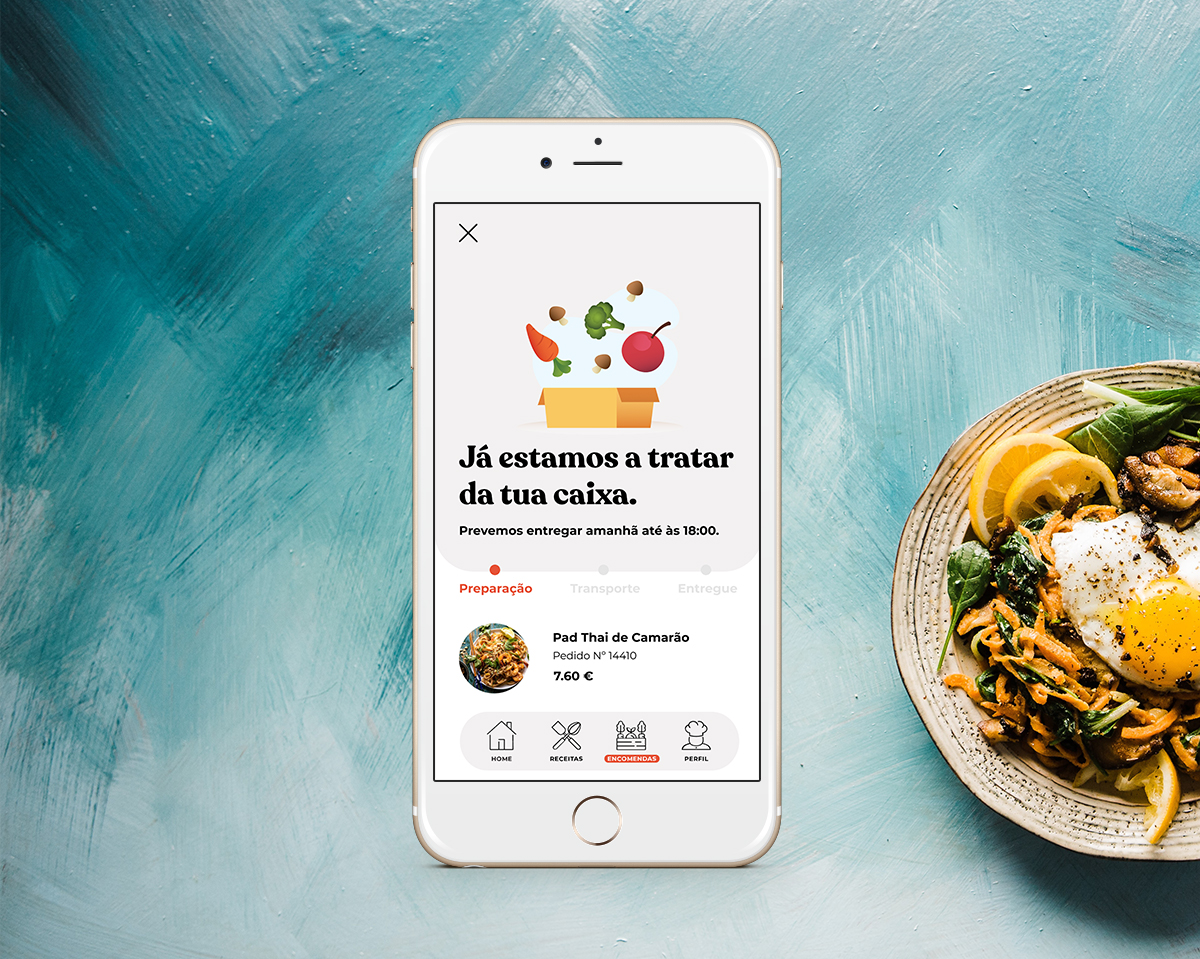
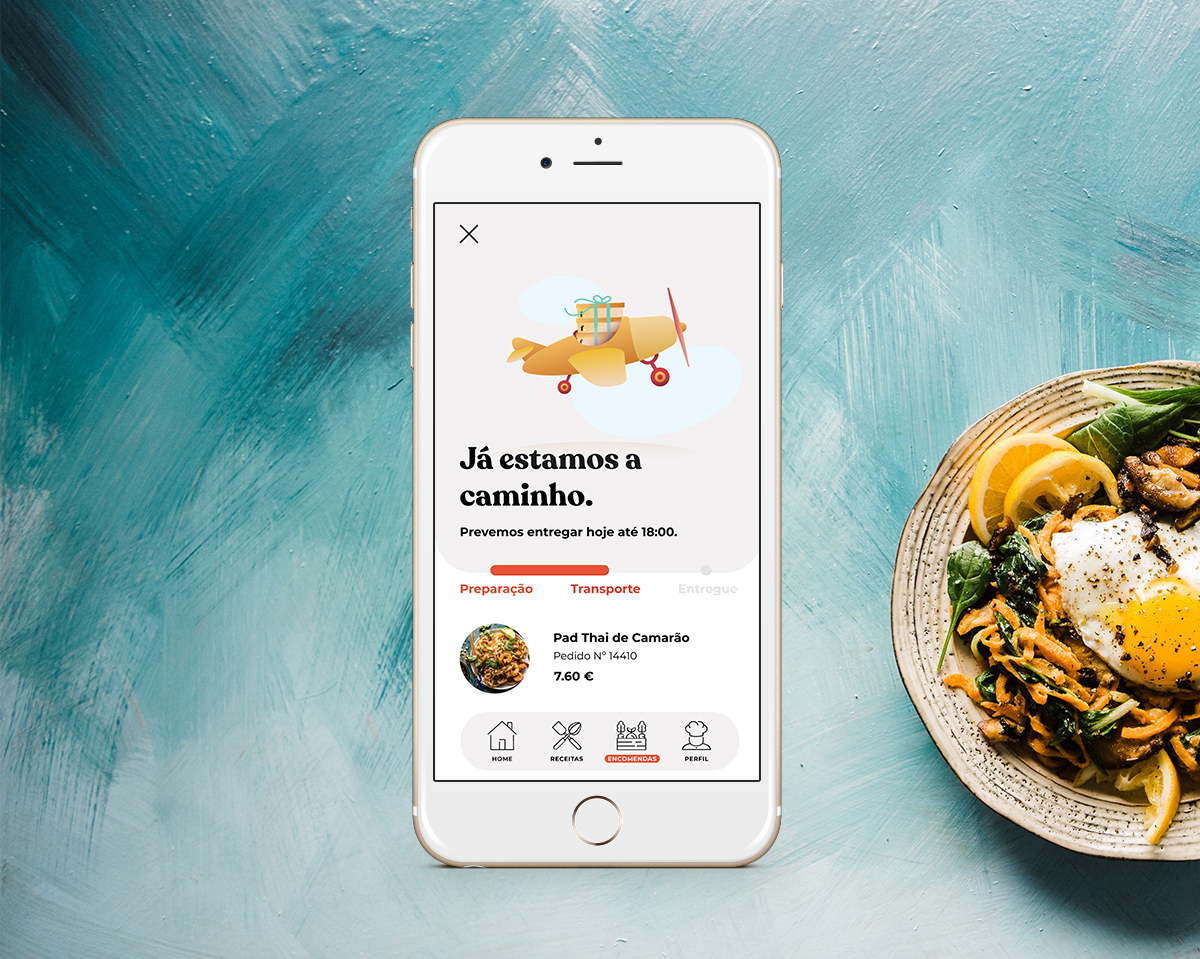
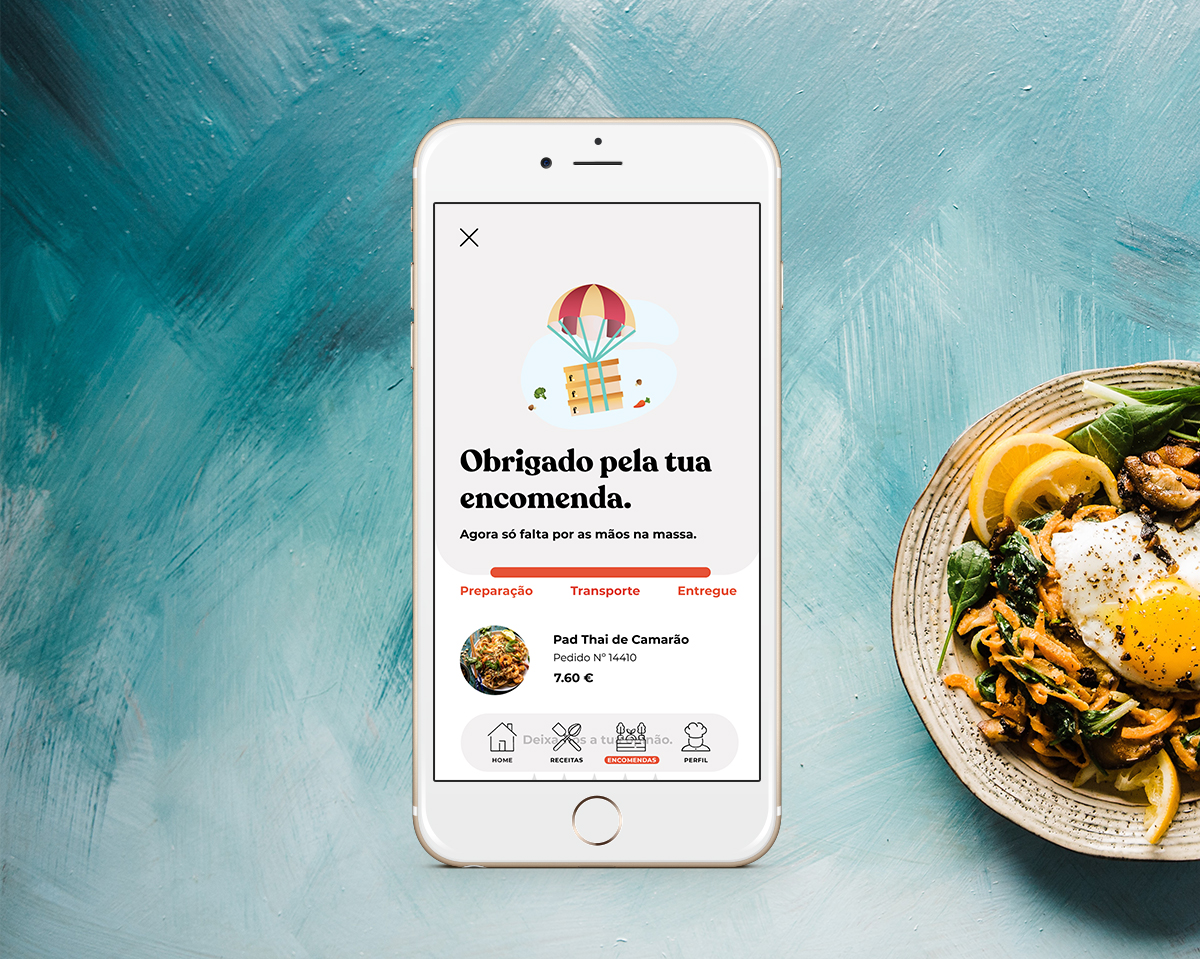
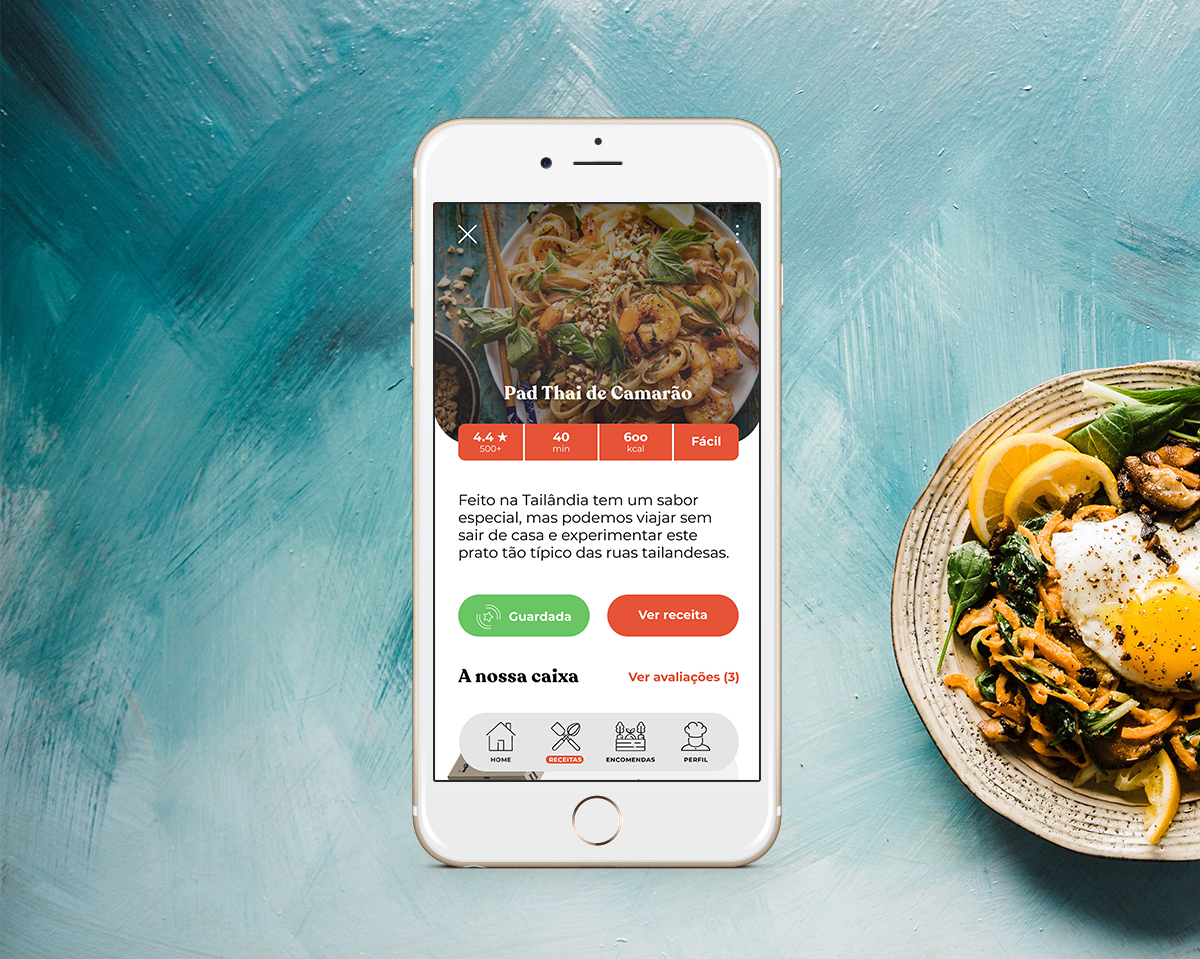
In each recipe, you can just follow the recipe or order a box.
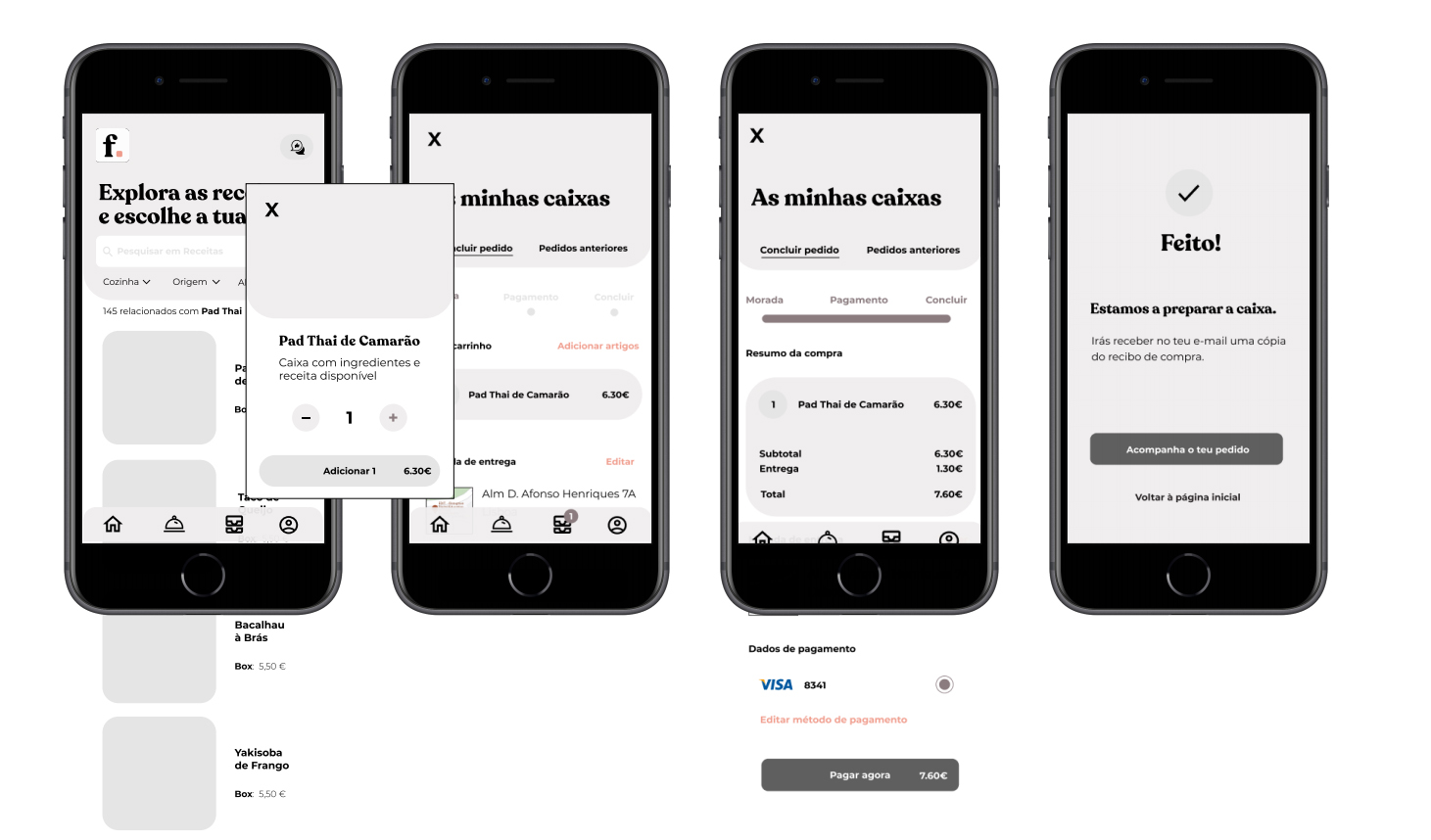
When ordering the box, the user proceeds with the payment using the default account data, or adding this data at this point, and then follows the state of the order.
Access the prototype below.
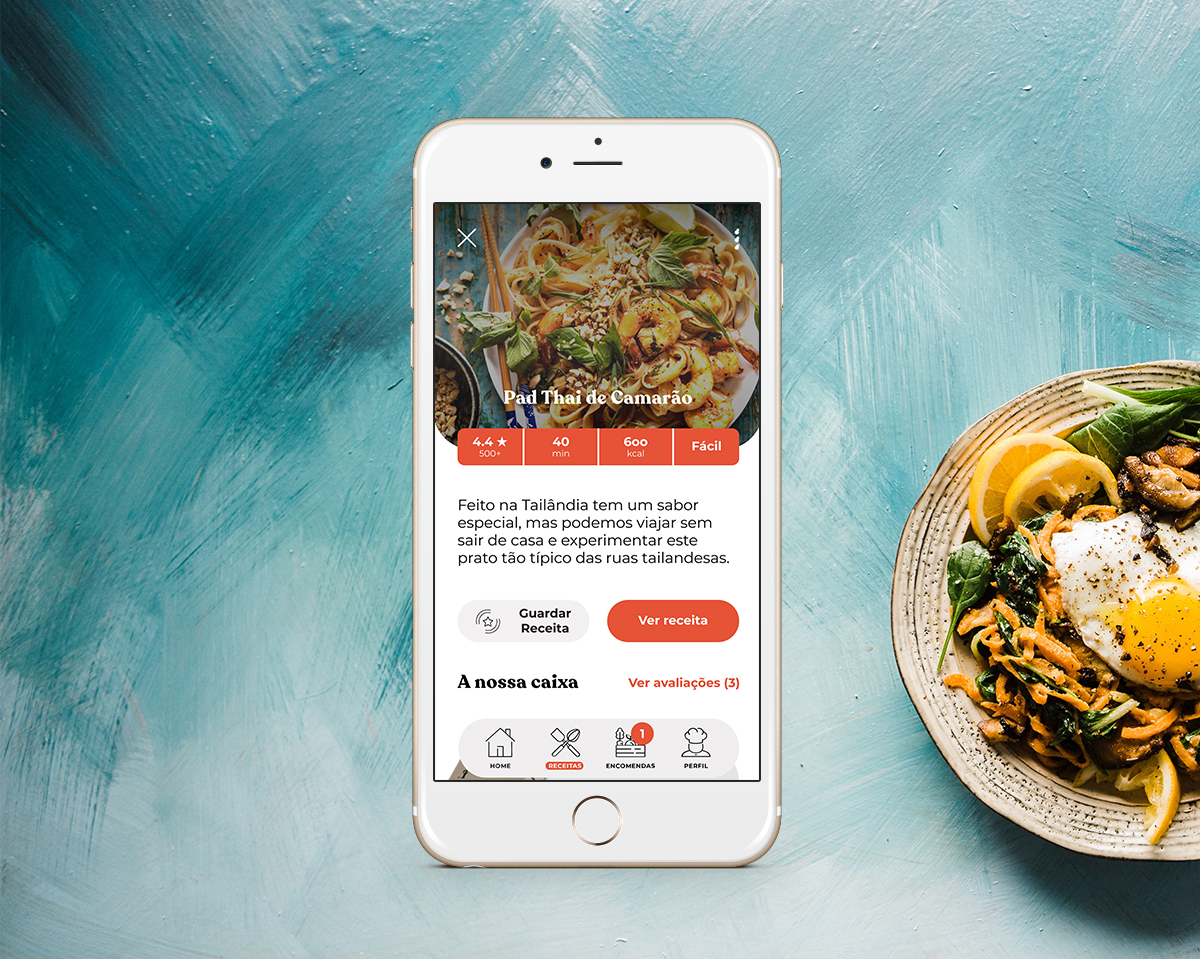
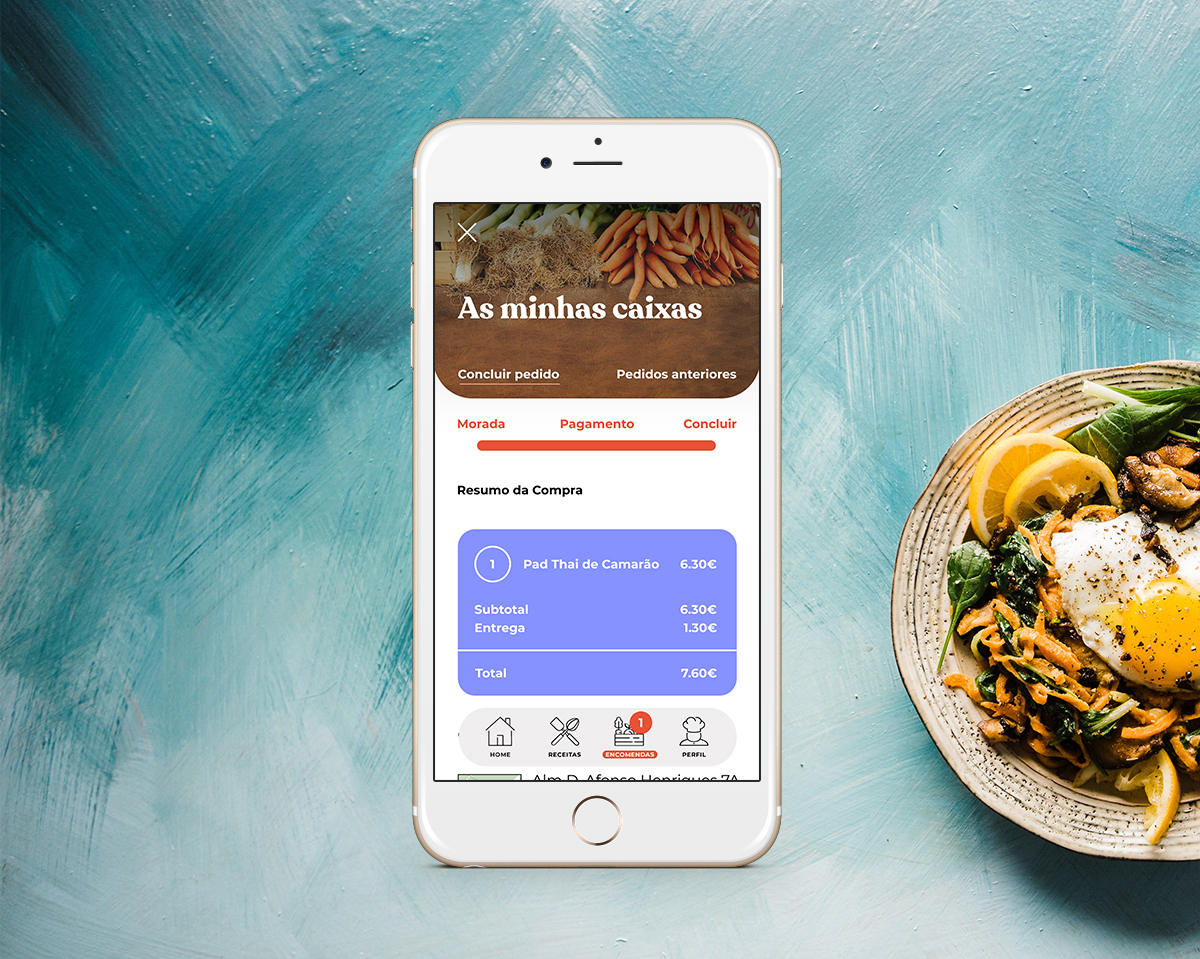
cooking and sharing
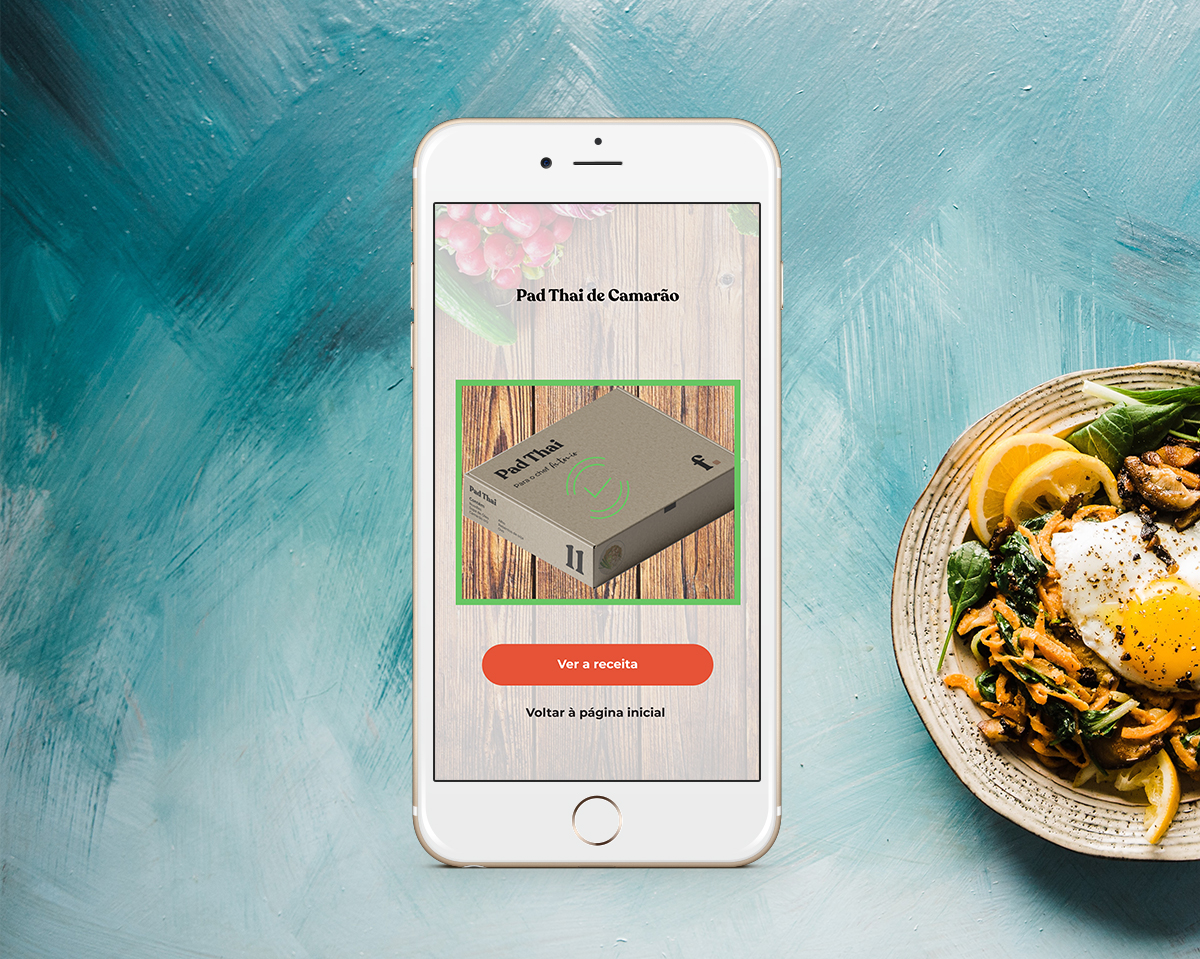
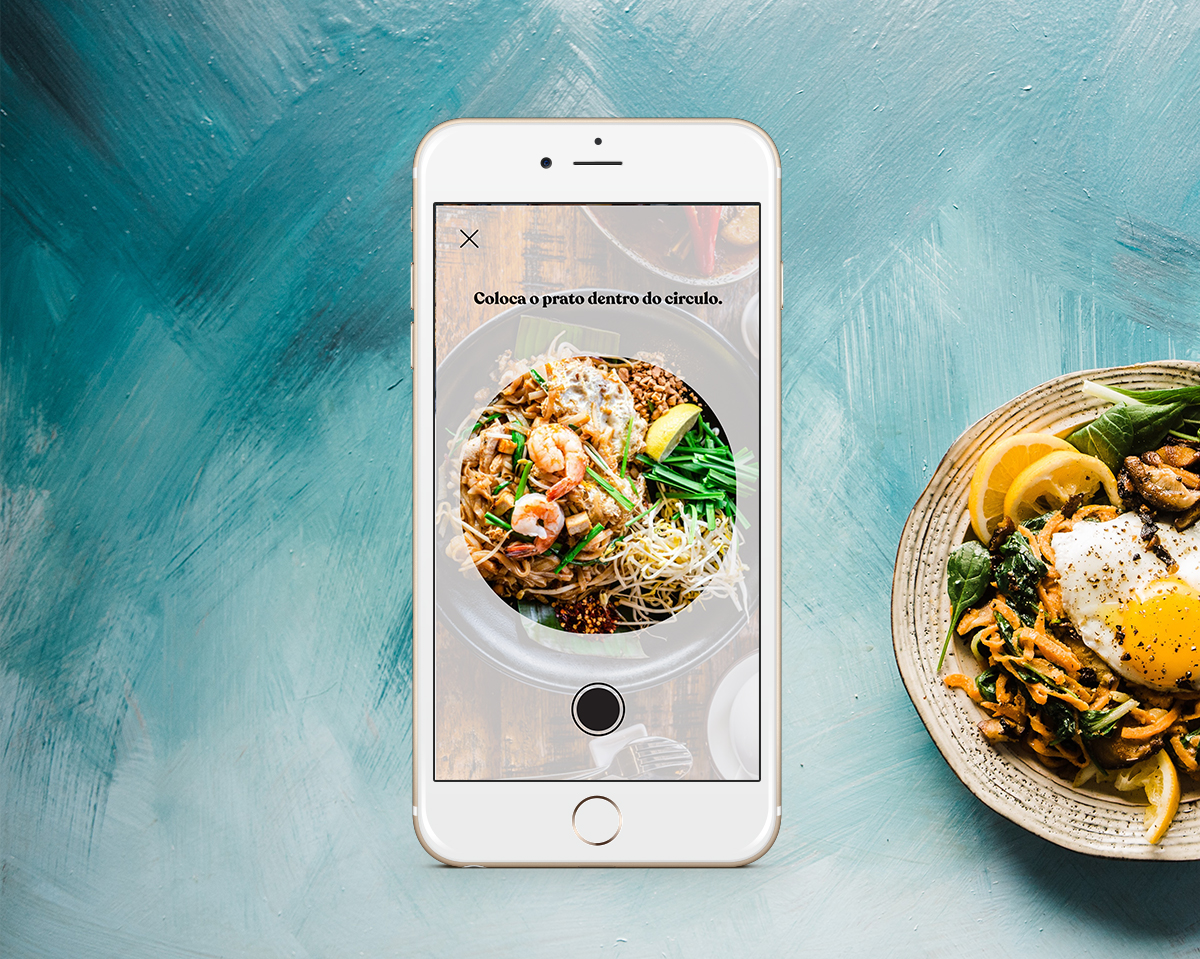
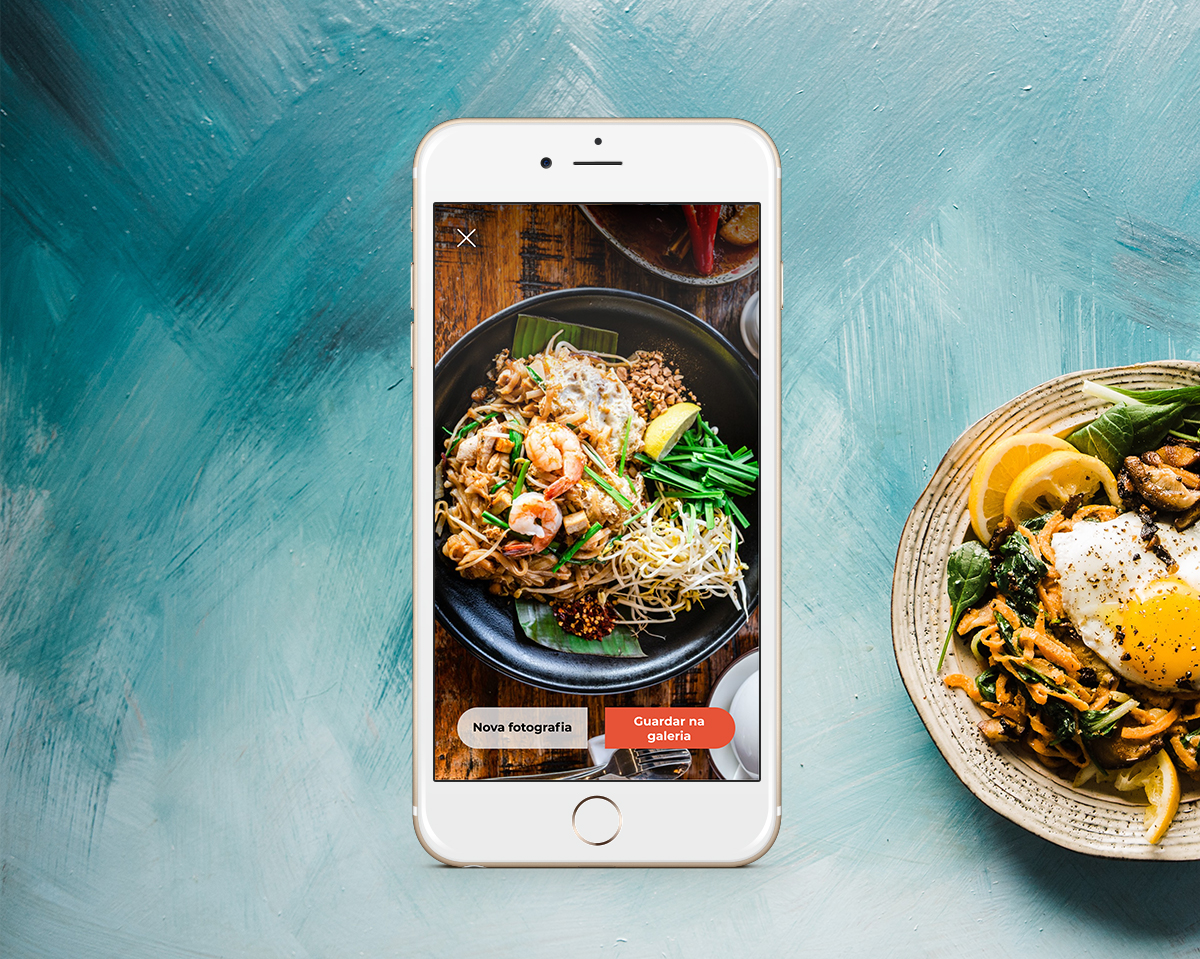
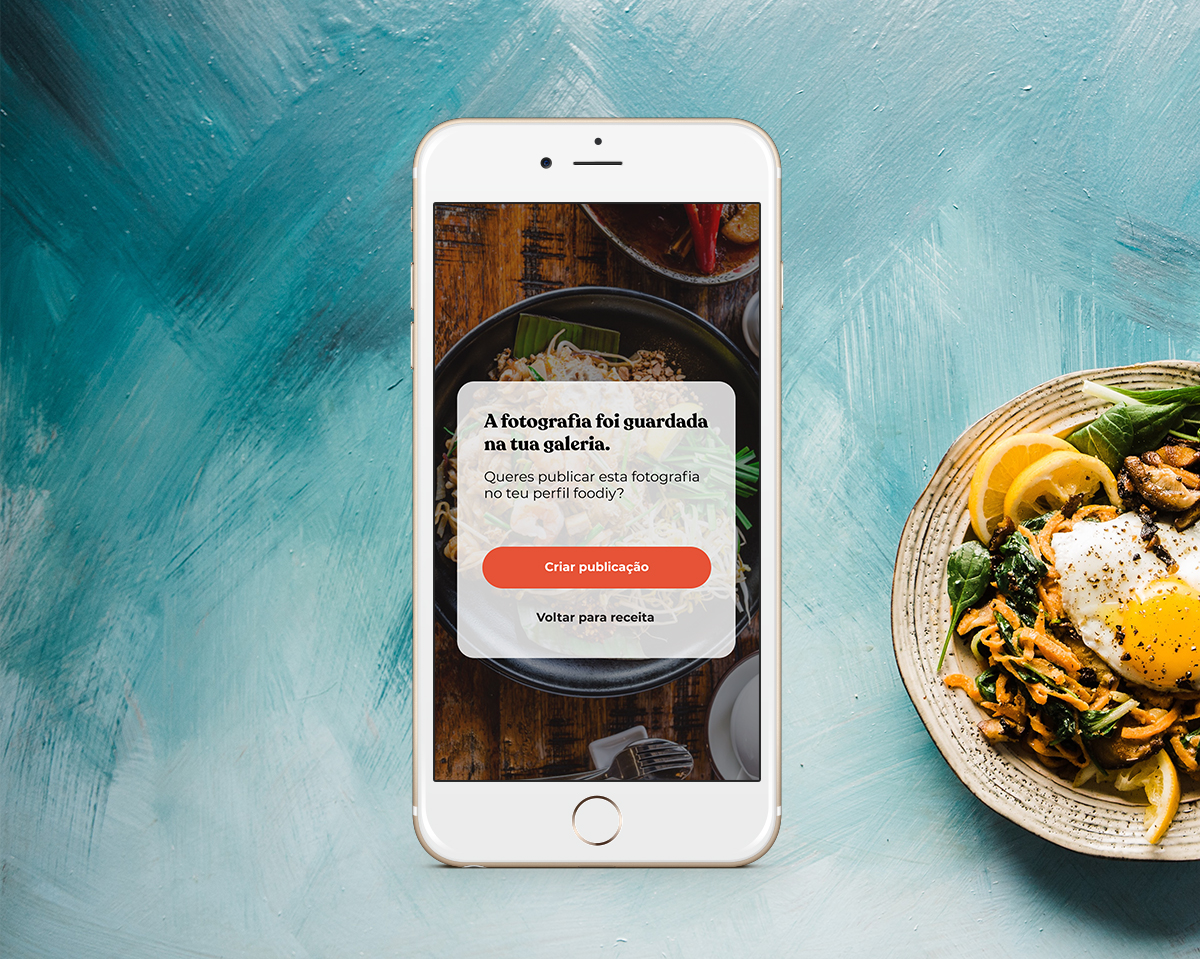
Once the box is received, the user can photograph the box and proceed to the respective recipe.
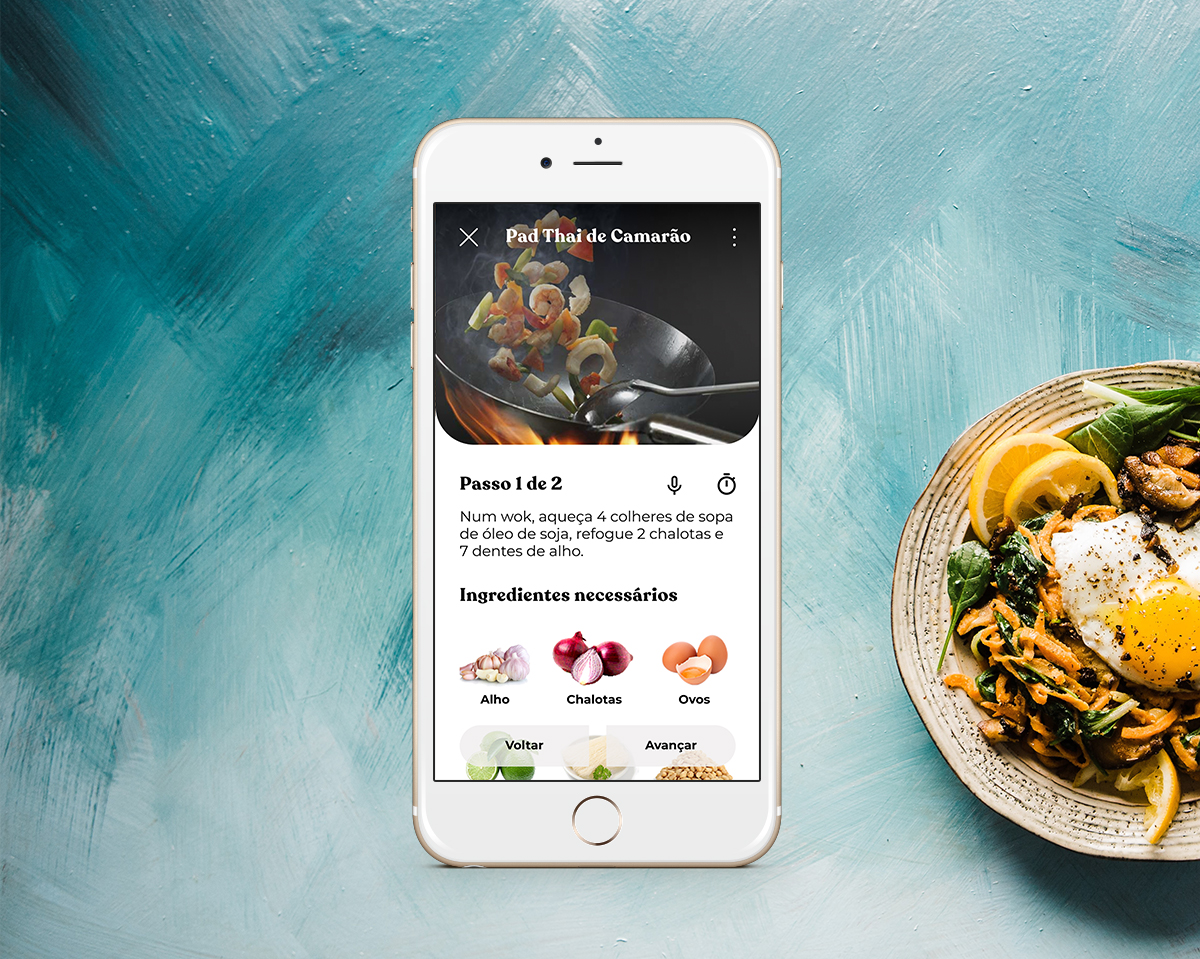
In the recipe, there is a voice command, so that the user can cook with dirty hands without having to touch the phone. There is also the possibility of a chronometer for each step, as appropriate.
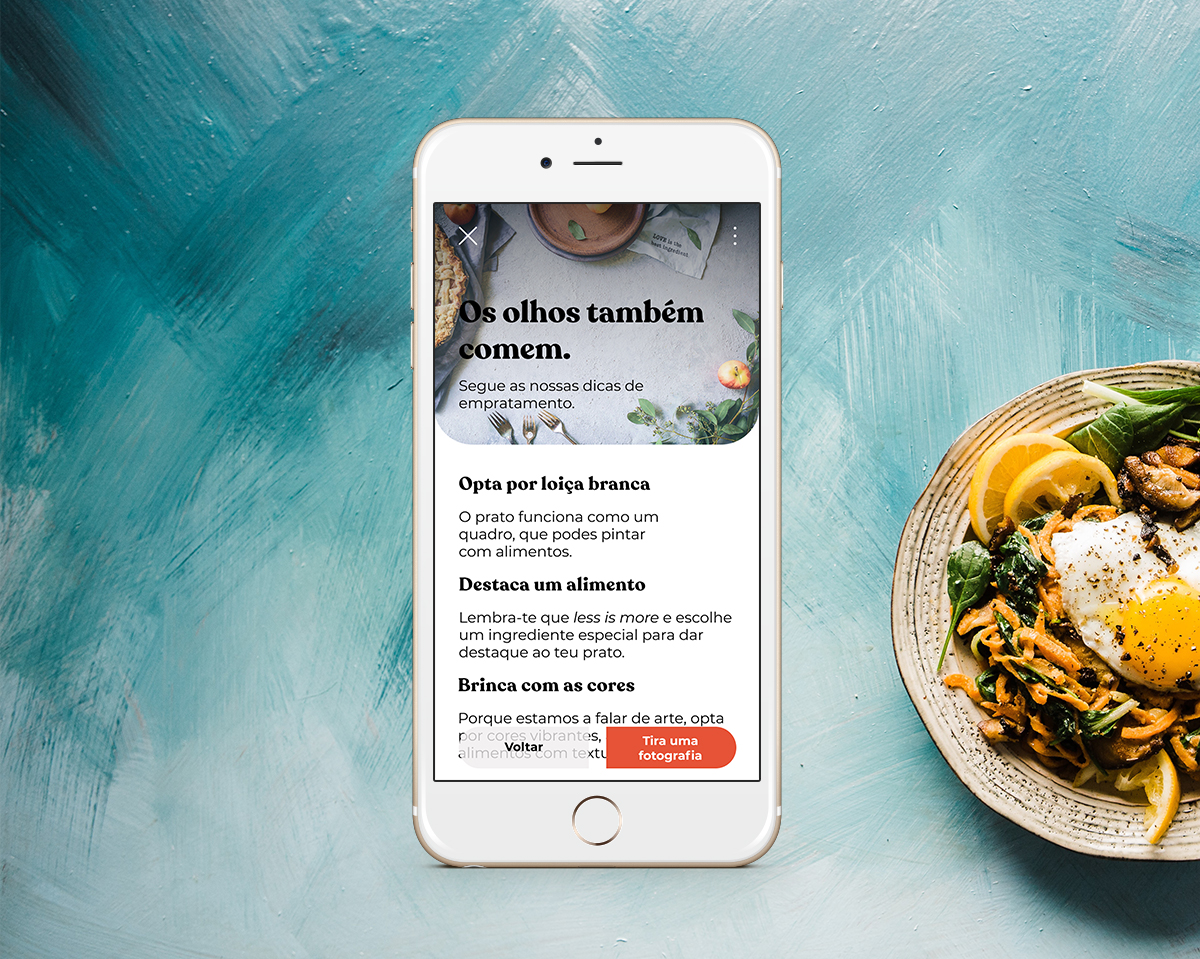
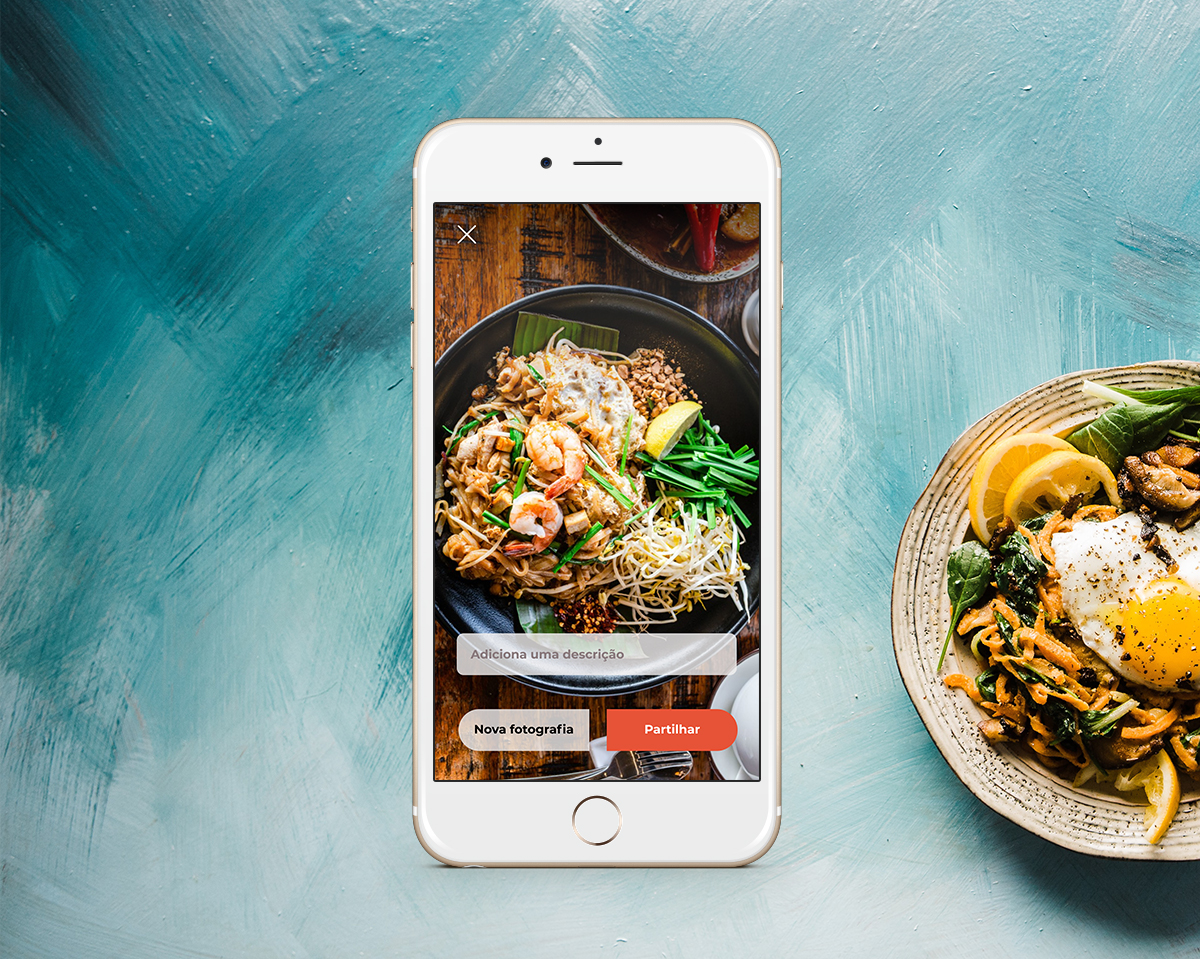
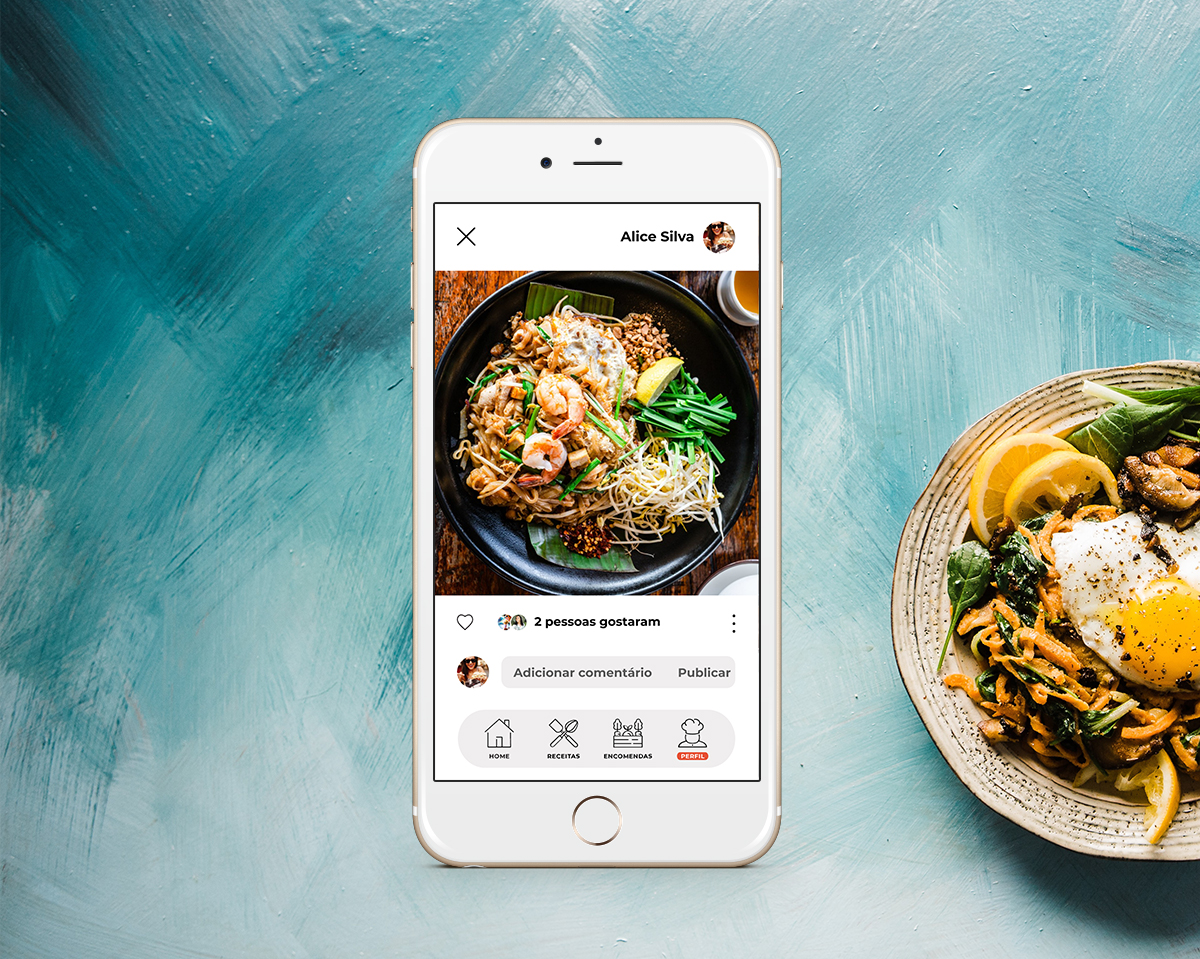
At the end of the recipe, there are plating tips and the possibility to photograph the dish and share within the application, so that the user’s friends can see the recipe and get inspired.
Access the prototype below.
social network
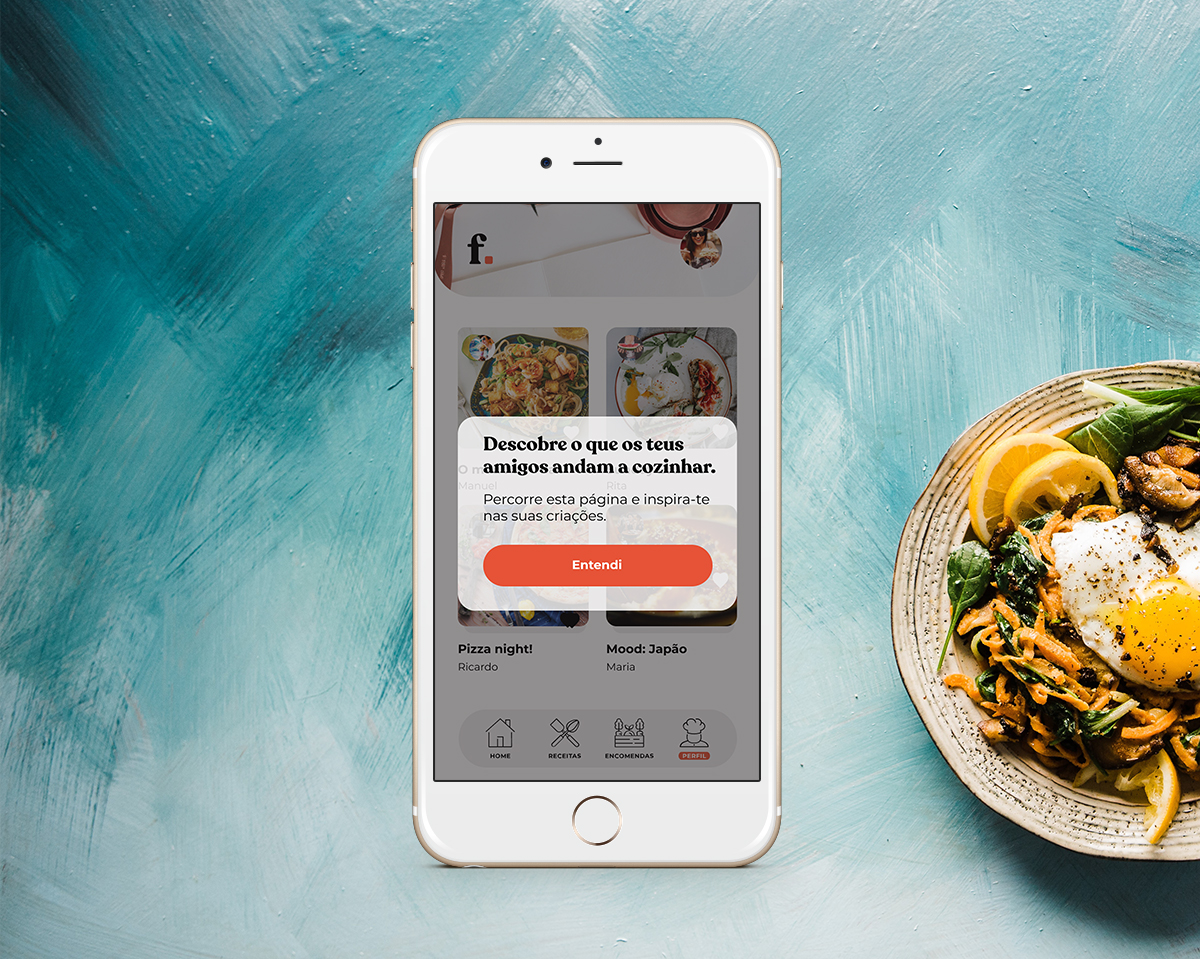
One of the strengths of our application is the social networking component.
Throughout our research it was possible to notice that friends like to exchange recipes, use cooking as a topic of conversation and not only like to share pictures of what they cook, but also get inspired by images to cook.
Therefore, on the homepage we have access to the feed with the friends’ shares, and in the profile, access to oneself’s activity feed.
In the general feed the user will also have access to foodstyling tips or other practical ones, such as knife skills, for example
Access the prototype below.