ccb
about
the project
Developed within the scope of EDIT’s User Experience and User Interface Design Course. In the final project of each program – Digital 360º Campaign – an integrated digital campaign was developed for CCB | Belém Cultural Center.
After presenting the briefing, students were organized into multidisciplinary teams, under the supervision of EDIT tutors and professionals from partner agencies, culminating in a pitch before a jury, composed of a CCB and 4 different agencies representatives.
My role was mainly focused on: doing the research about CCB, analysing the data obtained on questionnaire, mapping user needs and the user journey for one of our personas, paper wireframing and testing, help in declining the graphic line for the mobile application, pixel perfect alignment and prototyping.
Role
User Research
Interaction
Interface Design
Prototyping
Testing
Team
UX/UI
Andreia Teixeira
Mariana Pereira
Matilde Pacheco
FRONT-END
Pedro Fonseca
MARKETING
Adriana Barão
Cristina Marques
Rubina Latif
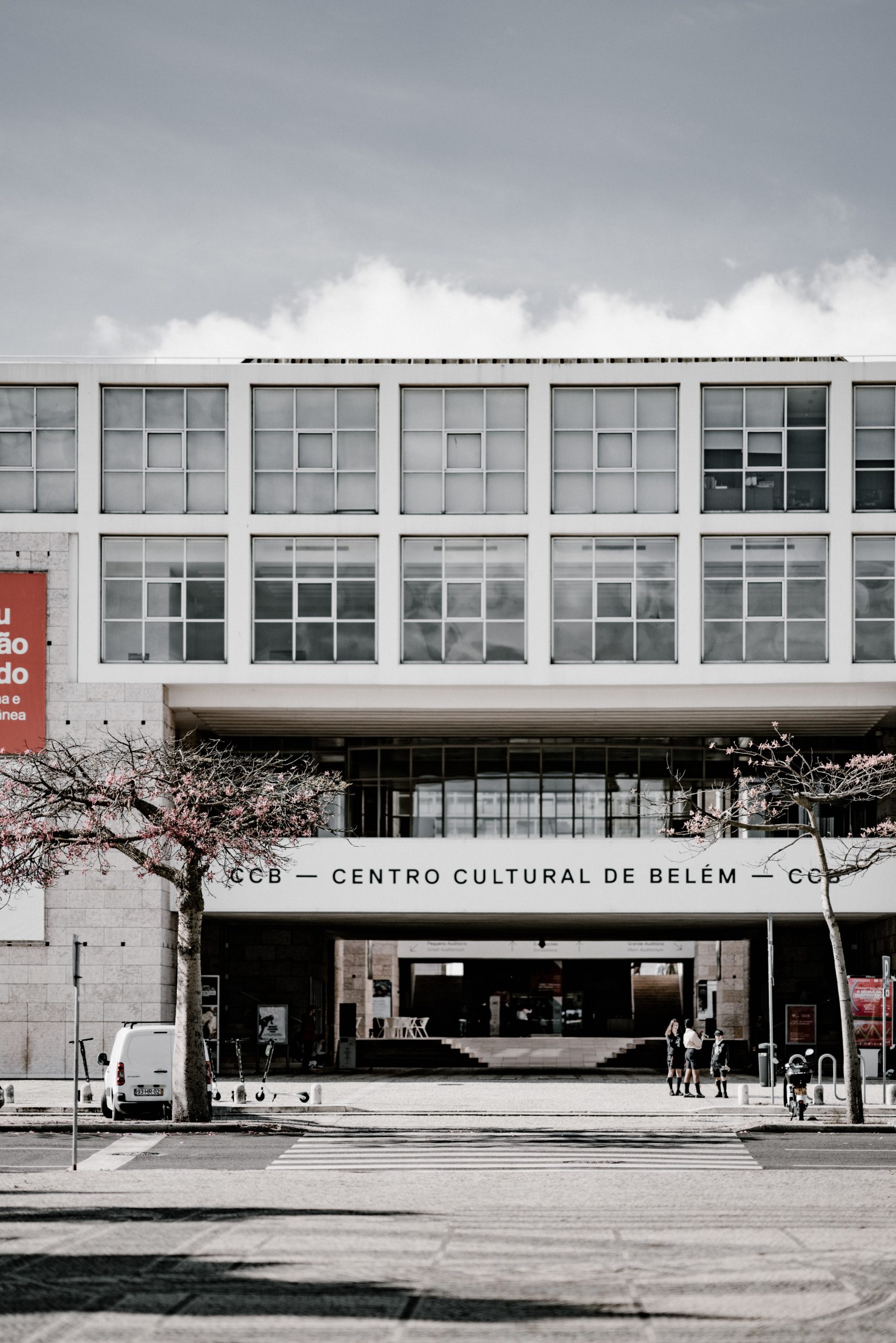
challenge
Get more CCB Card subscriptors, targeting a younger public through the creation of a Mobile Application.
Along with the development of the application, we were asked to develop a campaign to launch it, ensuring that we would reach the target audience.
designing
the solution
01
getting to know the ccb
The CCB was architecturally designed as an open city. That is inscribed in its DNA. Built in an iconic area of the city, it was designed with squares and streets with the aim of being a city within the city.
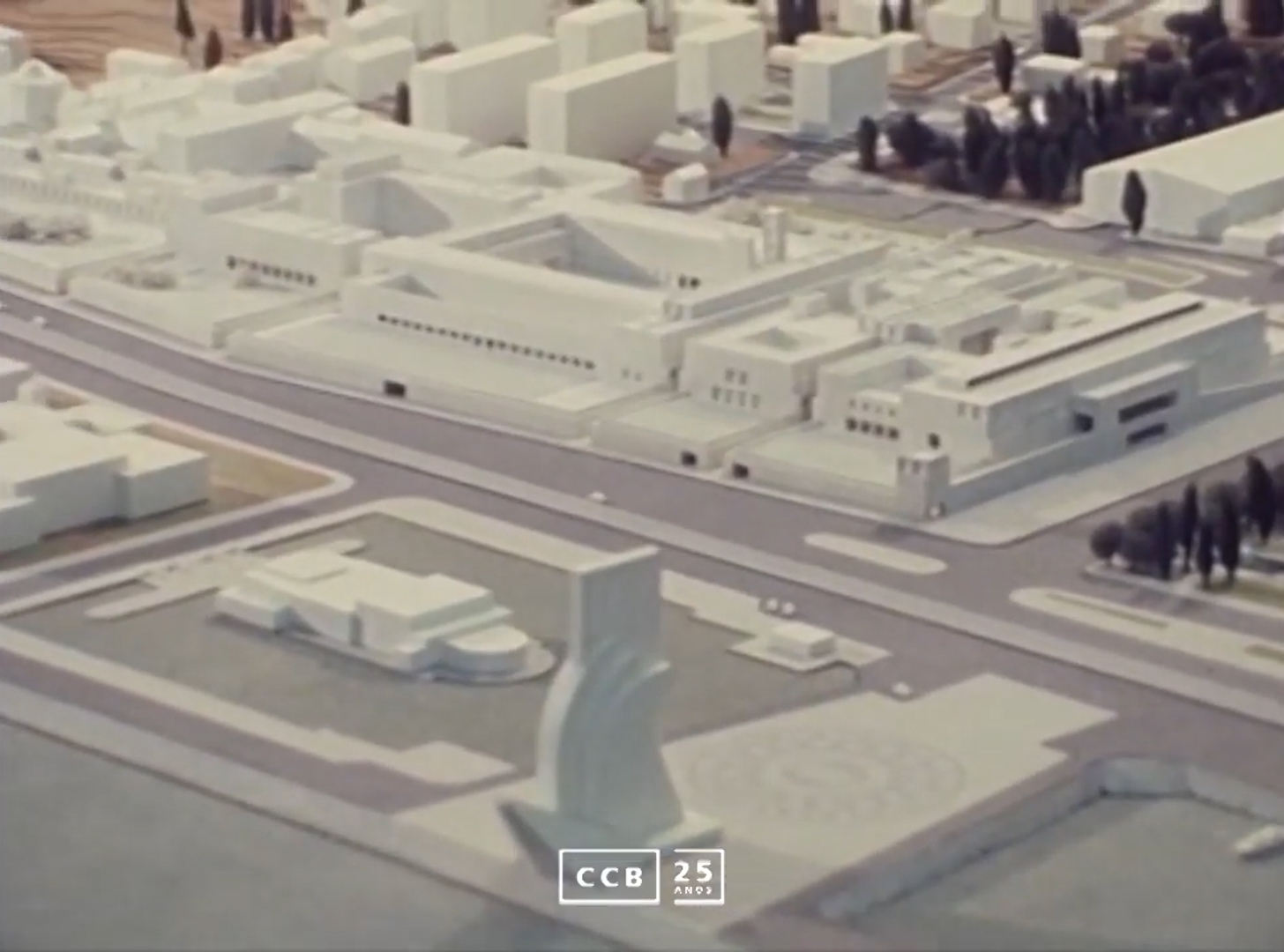
“the goal is for people to enter the center and live this space.”
Manuel Salgado
CCB Arquitect
02
research on culture consumption
Given the context of the pandemic, we tried to find out how culture consumption was influenced in Portugal.
Font: COVID E CULTURA – Estudo Barómetro 2020
%
of the portuguese population affirms that culture is still regularly present in their lives
%
of respondents are
available to pay for
concerts over the internet
Overall, there seems to be no decrease in cultural consumption, despite the revolution in the way of doing it
MOVIE
THEATRE
BOOK
CONCERT
VIRTUAL TOUR
2020
93,2
21,6
52,2
55,0
15,9
2019
82,4
29,5
57,1
41,1
–
%
increasing in movies
%
increasing in concerts
%
virtual tours (new reality, wasn't asked in 2019)
03
online survey
We carried out a survey of 207 people, mostly between 15 and 40 years old.
The data collected, in addition to providing very useful information, were also in line with other studies collected.
Going to Shows
Graphic that shows the percentage of respondents that usually go to Shows, sorted by their age
- 15 to 20 years 54%
- 21 to 25 years 74%
- 26 to 30 years 91%
- 31 to 35 years 83%
- 36 to 40 years 72%
- 41 to 45 years 57%
The audience that most consumes the cultural offer of the ccb is between 26 and 45 years old, being tendently younger when it comes to shows
Going to Cultural Spaces or Events
Graphic that shows the percentage of respondents that usually go to cultural Spaces or Events, sorted by their age
- 15 to 20 years 48%
- 21 to 25 years 54%
- 26 to 30 years 81%
- 31 to 35 years 76%
- 36 to 40 years 78%
- 41 to 45 years 79%
cinema
%
respondents classified as an area of great interest
music
%
respondents classified as an area of great interest
performative arts
%
respondents classified as an area of great interest
plastic arts
%
respondents classified as an area of great interest
Culture and entertainment-related service subscriptions
Percentage of respondents who consume cultural and entertainment services
- Netflix 73%
- Spotify 51%
- HBO 27%
Respondents are already used to subscriptions of cultural and entertainment content, which tend to be monthly
%
prefer monthly subscriptions
Technology and Culture
Percentage of respondents that use or would like to use technology in their relationship with culture.
- Virtual Tours 56%
- Electronic Devices (audio guides) 39%
There’s a trend towards the use of technology related to culture. The above figures were higher within the younger audience
Added value of a Cultural Service Subscription
The following benefits were the ones that our respondents prefered.
- Discounts 61%
- Exclusive Content 43%
- Visits with a Companion 42%
04
personas
To ensure a good experience to all our users we have built three personas, two of them representing the users that already consume the kind of culture offer that ccb has, and a third one that represents our focus, the users that we want to captivate.
João Neto
“O Arquitecto”
30 years old
Represents some of the users that already consume the kind of culture offers that ccb has
Financial availability
for culture consumption: Average.
– Very active life
– Very organized
– Independent – lives with friends
– Goes a lot to concerts, events and cultural spaces
– Likes photography, art and literature
– Likes more alternative music
– Heavy user mobile
Clara Almada
“A mulher Ocupada”
40 years old
Represents some of the users that already consume the kind of culture offers that ccb has
Financial availability
for culture consumption: High.
– Married with two children
– Higher education (Sciences)
– Very active life
– Very organized and methodical
– Always looking for family activities
– Likes to be always informed, cinema and relax when she can
– Medium user mobile
Ana Festivo
“A Persona Objectivo”
20 years old
Represents our focus, the user we want to captivate
Financial availability
for culture consumption: Low.
– University Student of Design
– Lives in Lisbon with her parents
– Active social life
– Enjoys going to concerts and music festivals
– Shares her whole life on Instagram
– Photography is a hobby
– Heavy user mobile
” I like to discover new places that inspire me, if one is bad, I’ll find better”
05
user needs, user journey, features and app map
Once the personas were created, we mapped their needs to define the relevant features, and then to design an app map.
In this phase, we also proceeded with the elaboration of user journeys and user flows.
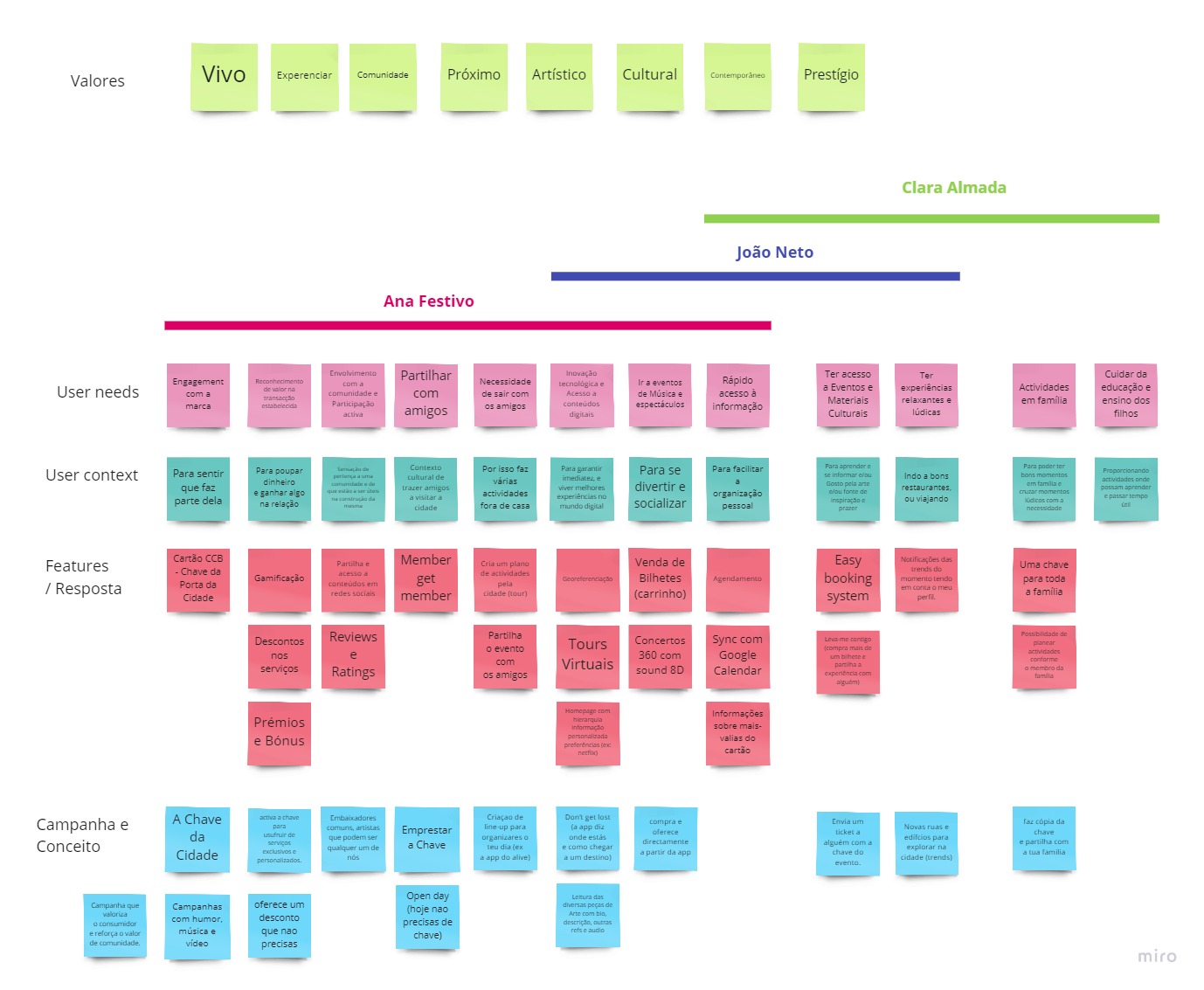
mapping user needs and designing the right solution
Mapping our user needs was the core of our solution’s design. For each user’s need, we defined a context, working out possible answers for it, primarily in terms of the app’s features, but also for the campaign associated with it, always keeping the brand values in mind.
We also crossed our personas needs, to make sure that no important need would be disregarded, and to focus on those shared by all of them.
where are our users, and what are they doing now?
To find out the possible touchpoints with our users, we made a user journey for each one.
The goal would be to identify when they would use the app, or the points throughout their day in which we could communicate with them.
06
creative insight
After studying CCB’s DNA, doing user and market research, we focused on all the information we gathered and came up to what we wanted to be the “glue” between all of it, the concept we wanted to communicate, the strenght and the value we wanted to propose to our users.
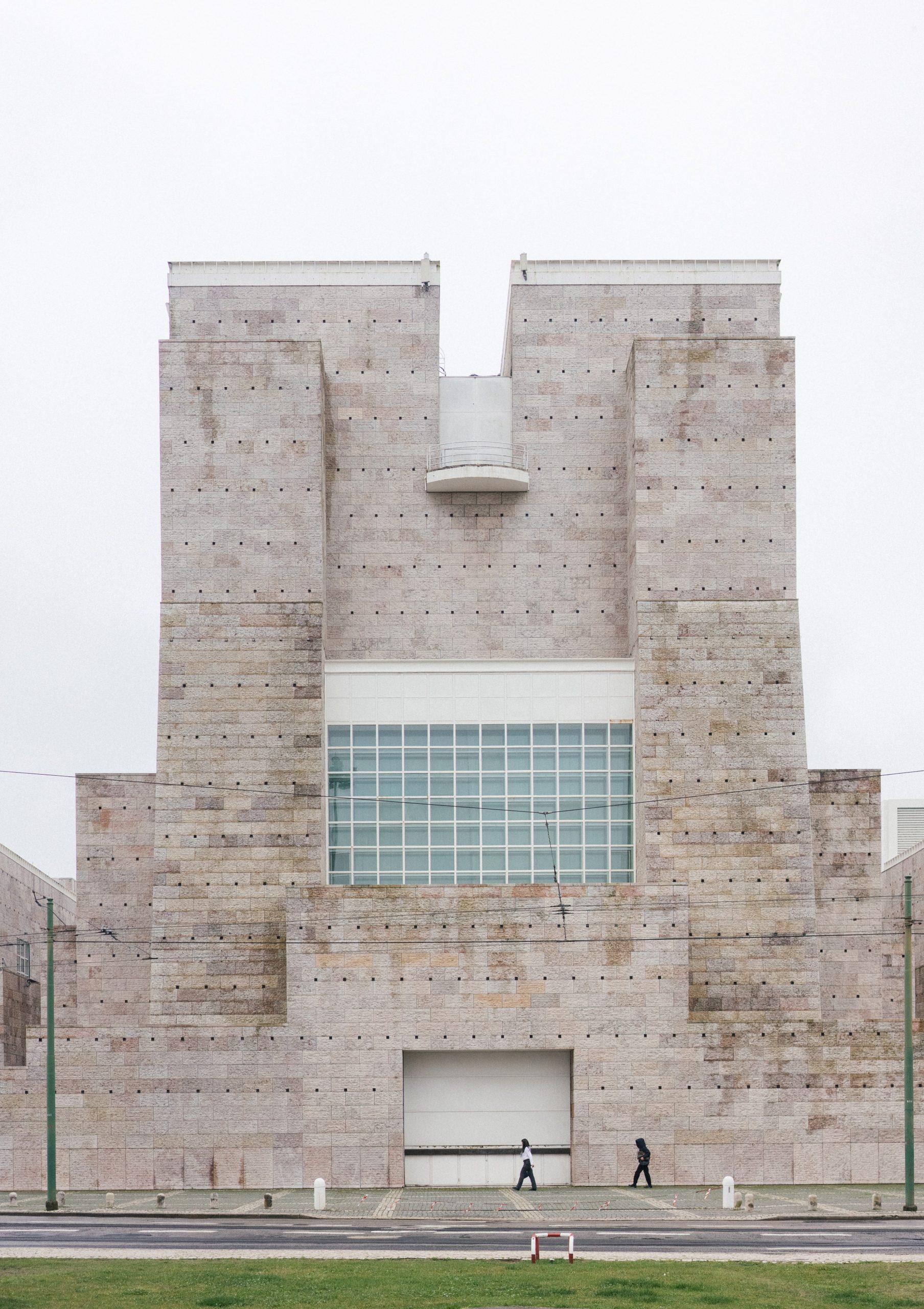
let’s live the ccb in the ccb
let’s live this city
As the CCB architect Manuel Salgado said, let’s live this space, this city, whether physical or digitaly, let’s explore its neighborhoods, its corners … visit friends and enjoy all that this living and open city has to offer.
the ccb card is the key to the city
We will bring the prestige of offering the key to the city for ccb card members, thus valuing the members of this community.
the power of the key
Let’s turn this physical card into a mobile app to open the door to the power of the digital experience.
Easy booking with personalized recommendations
Facilitation of the experience to make better use of space
Possibility of interaction with the CCB physical space
Exclusive contents both in space and outside
Information and freedom to choose my route
Recognition of what’s important to the user
07
visual design
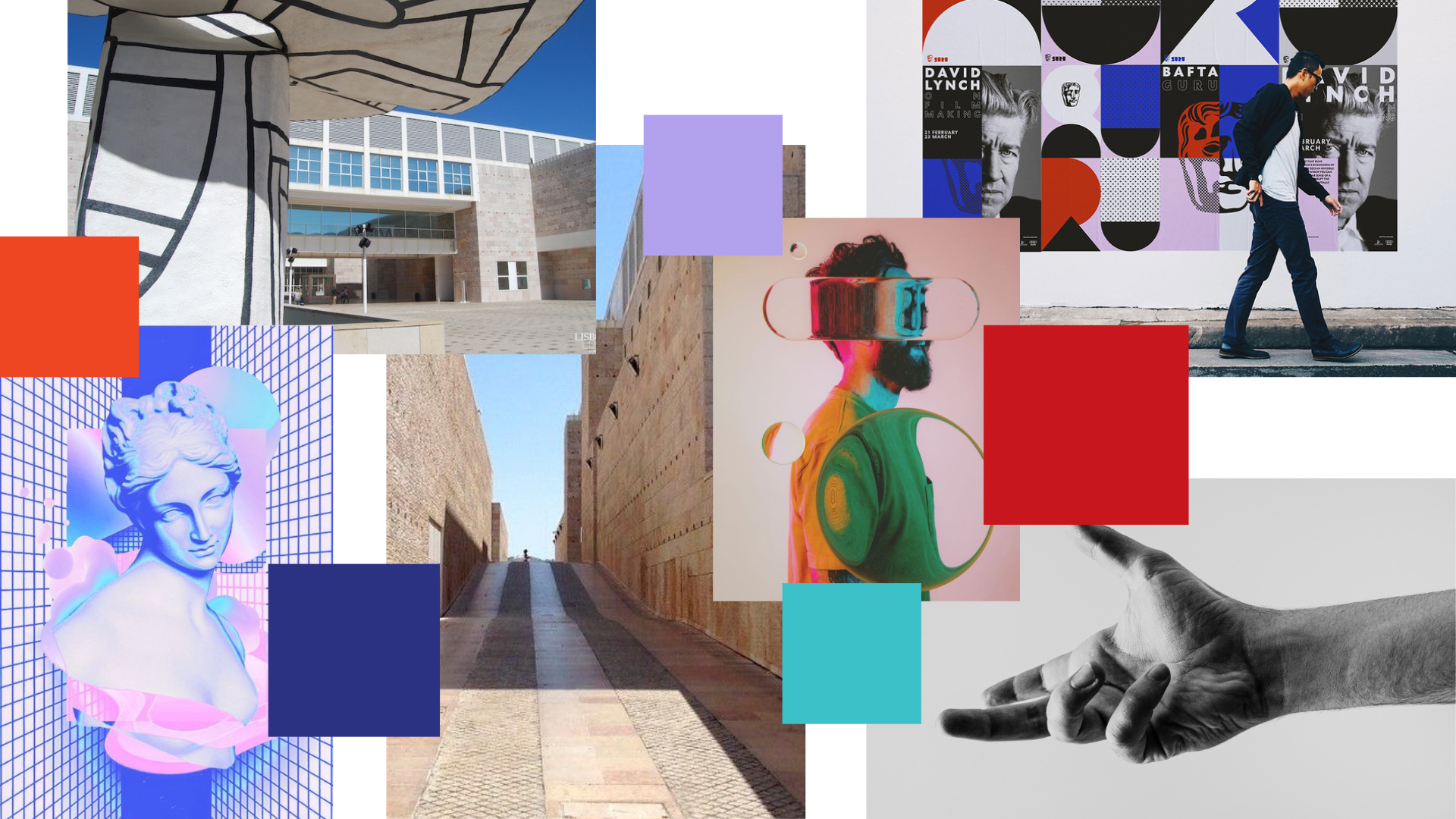
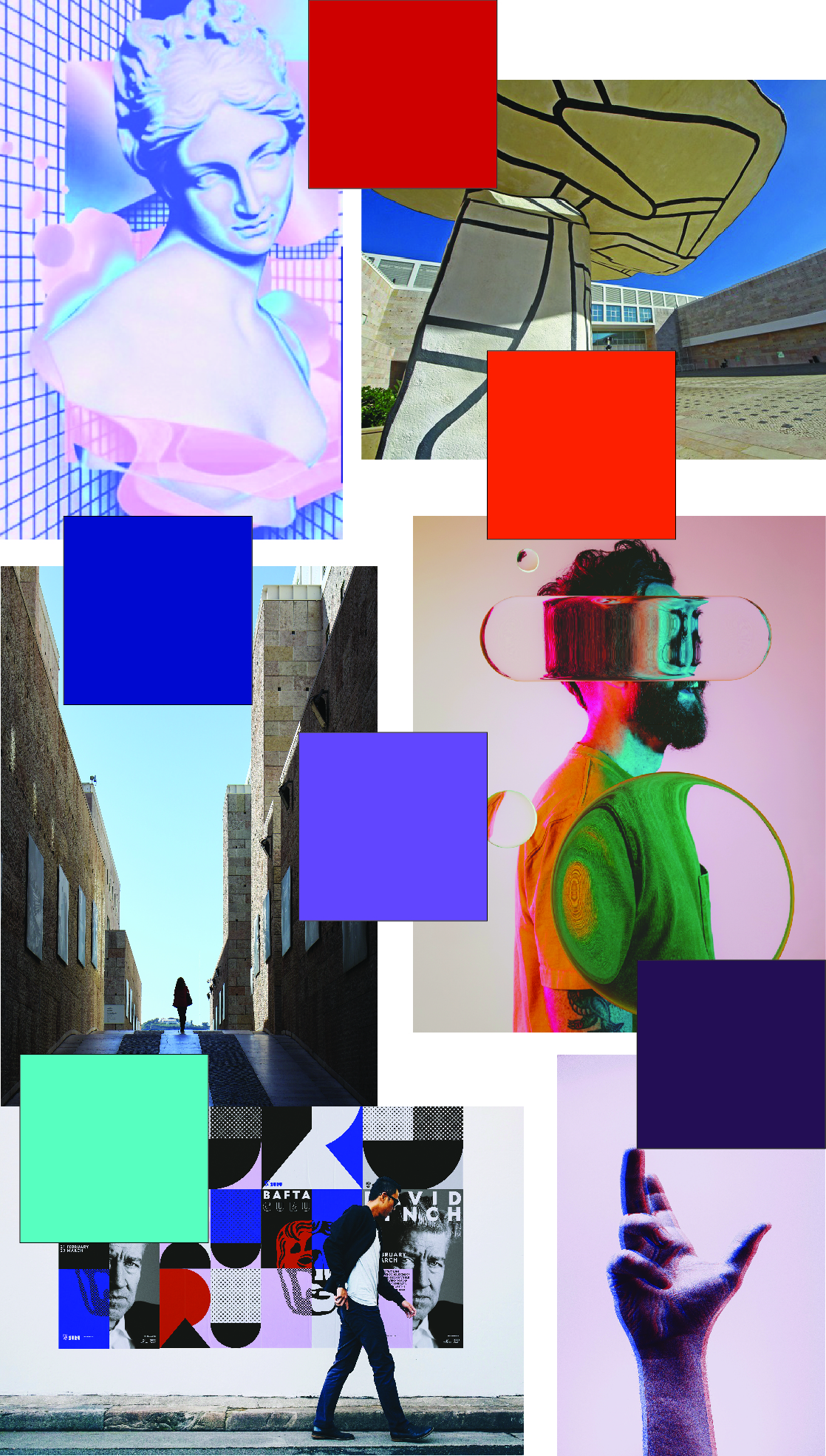
For the development of the graphic line we tried to look for artistic elements and colors in the digital world.
We also sought to convey the geometric and robust construction of the CCB through our design.
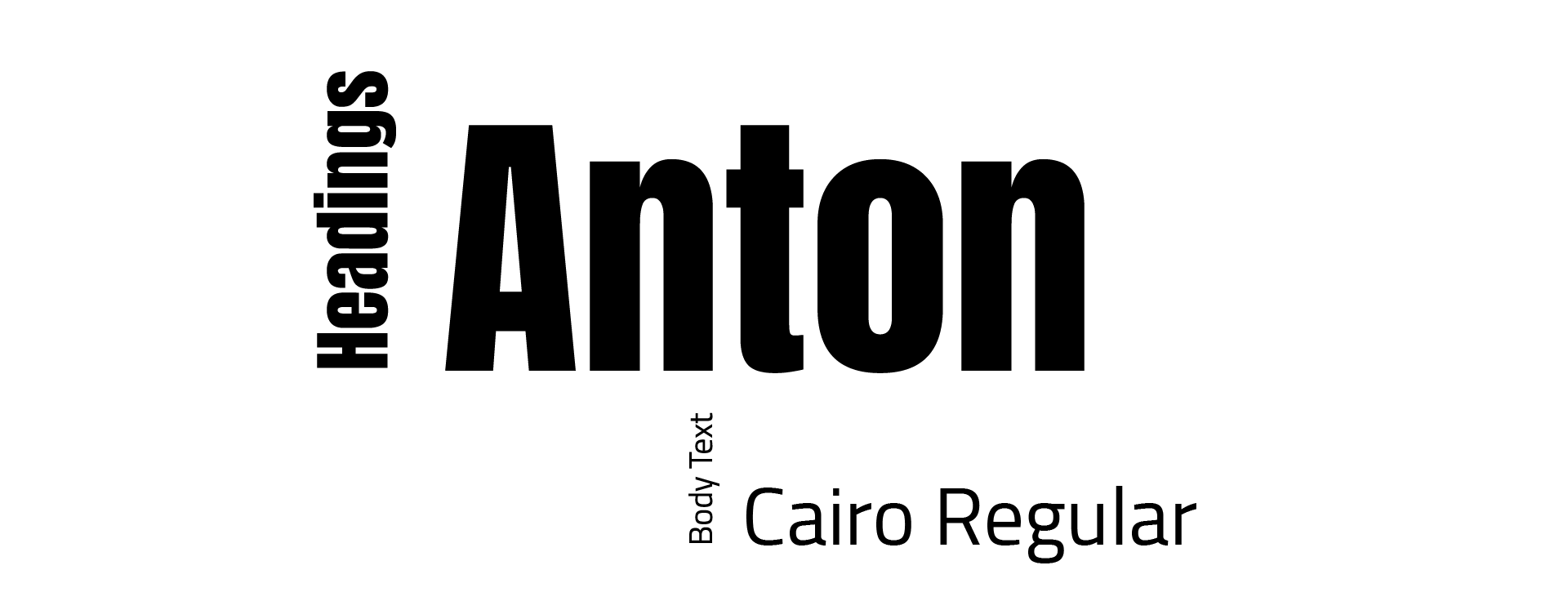
typography
photographic language
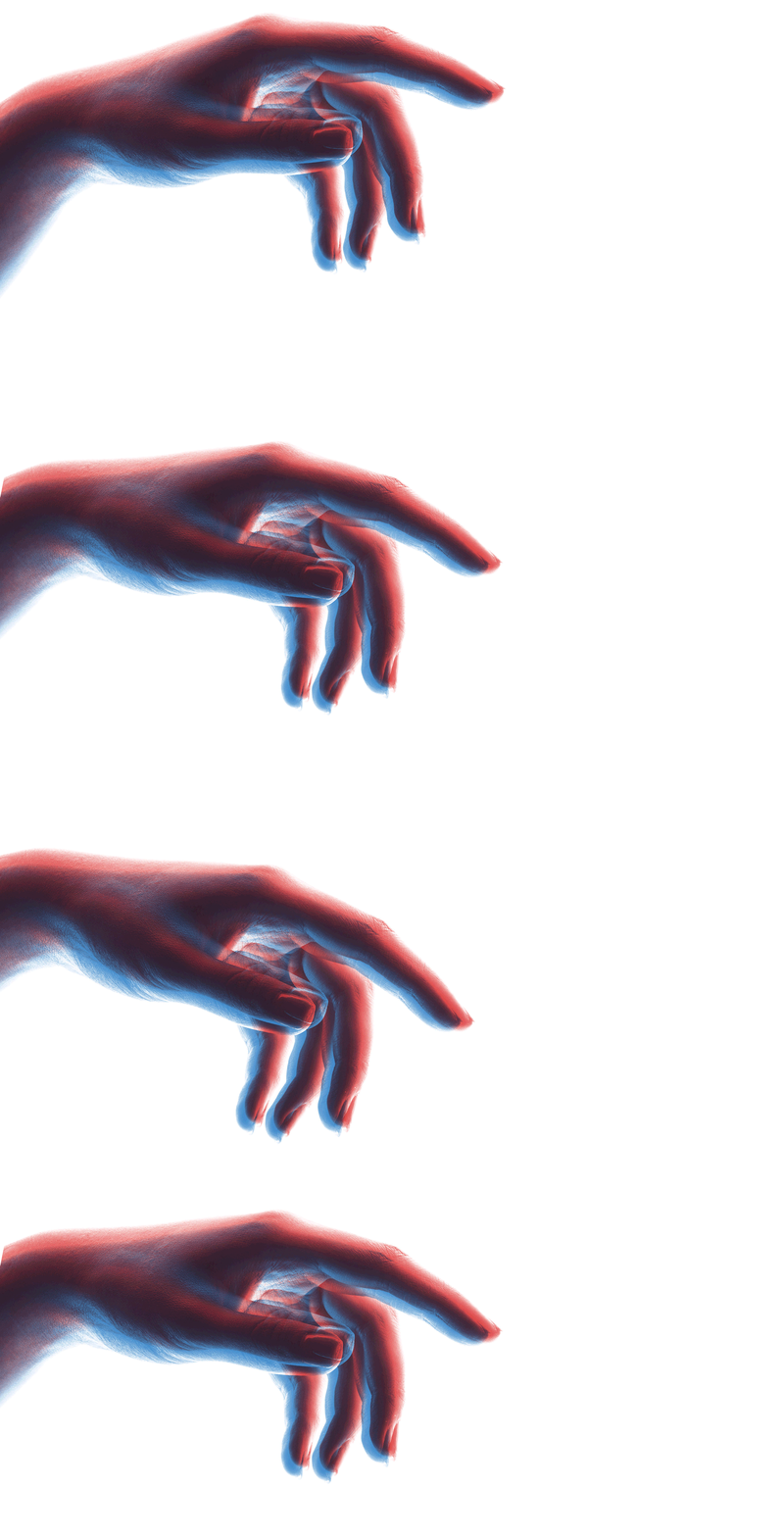
We chose the slanted overlay of the same image in two monotones, thus giving the idea of a duotone with a disruption depicting the distortion on the screen.
08
the mobile app
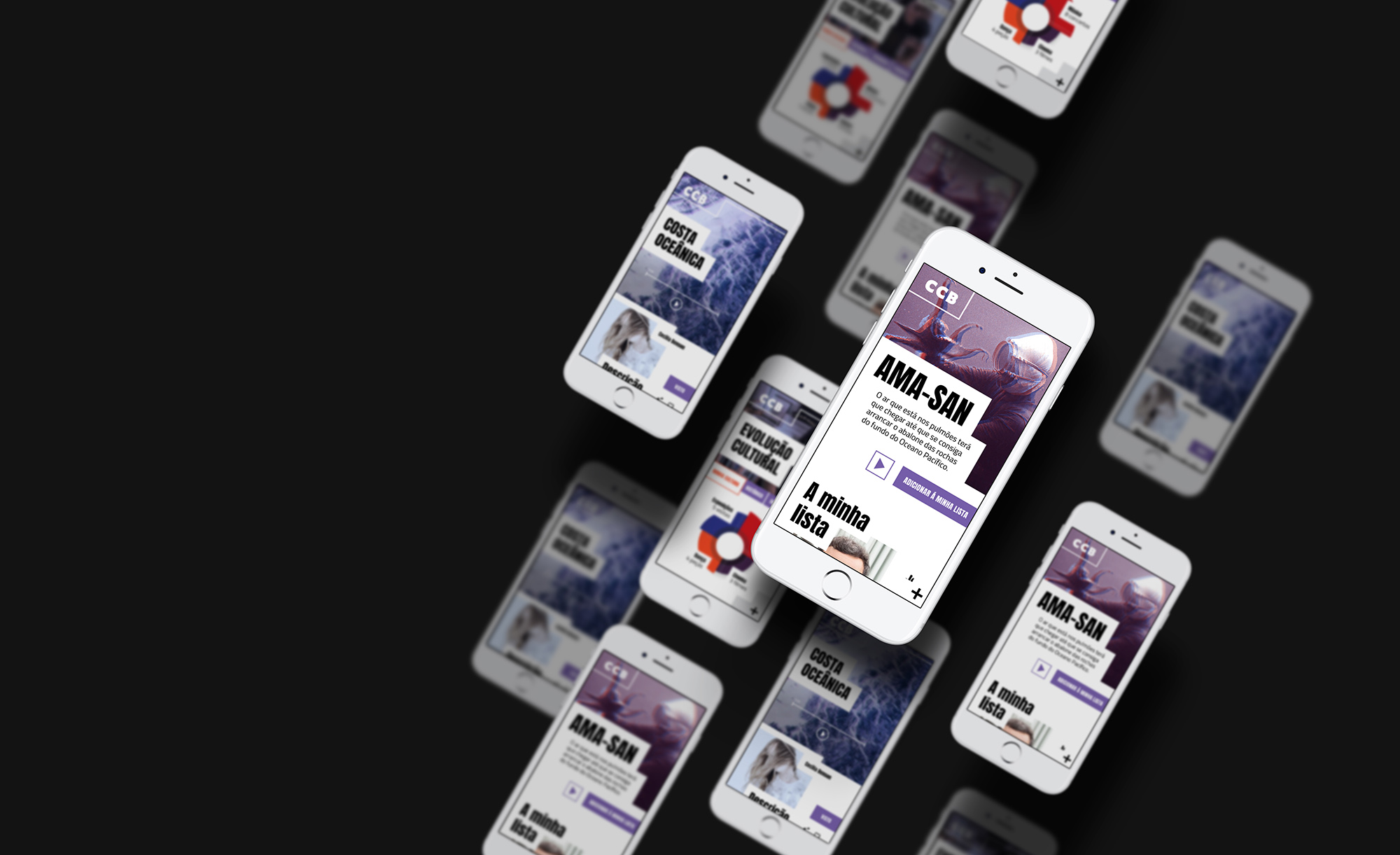
We developed the application as the key to the city, which allows a better experience both inside the ccb and outside.
The mobile app was conceived to have features such as interactive maps, event notifications, guided tours, or access to exclusive content.
Through the mobile phone the user can live more of the ccb in the ccb, or enter the ccb wherever he stands.
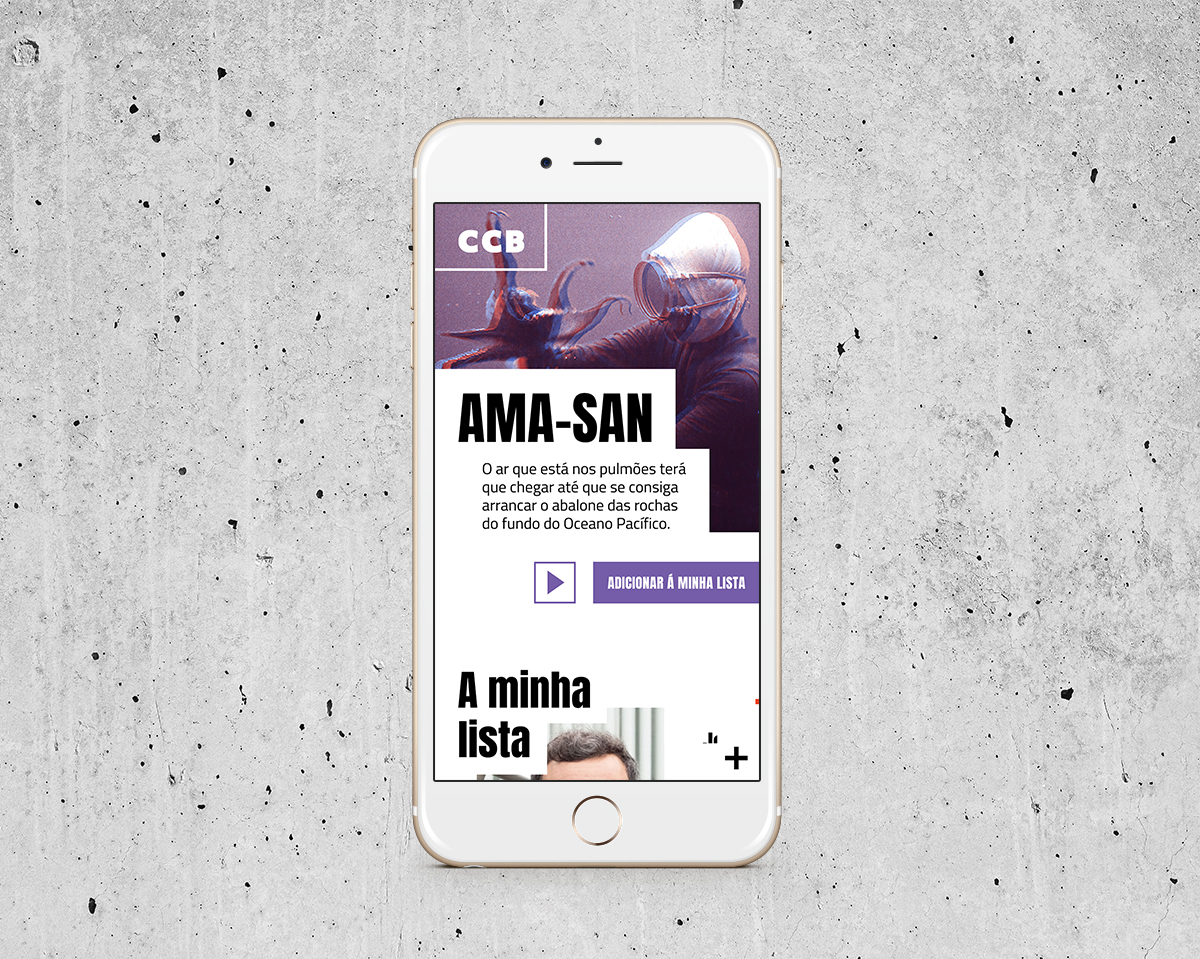
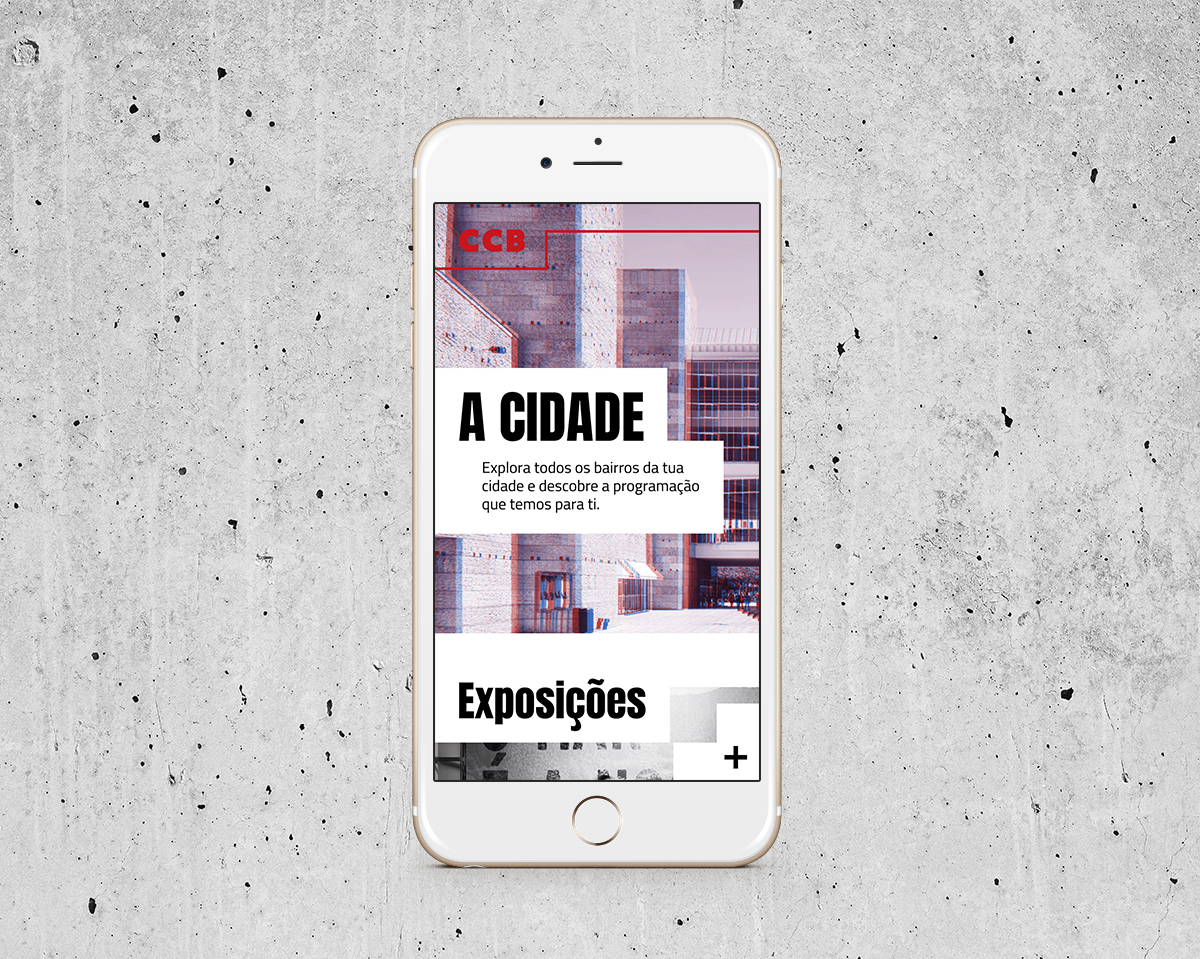
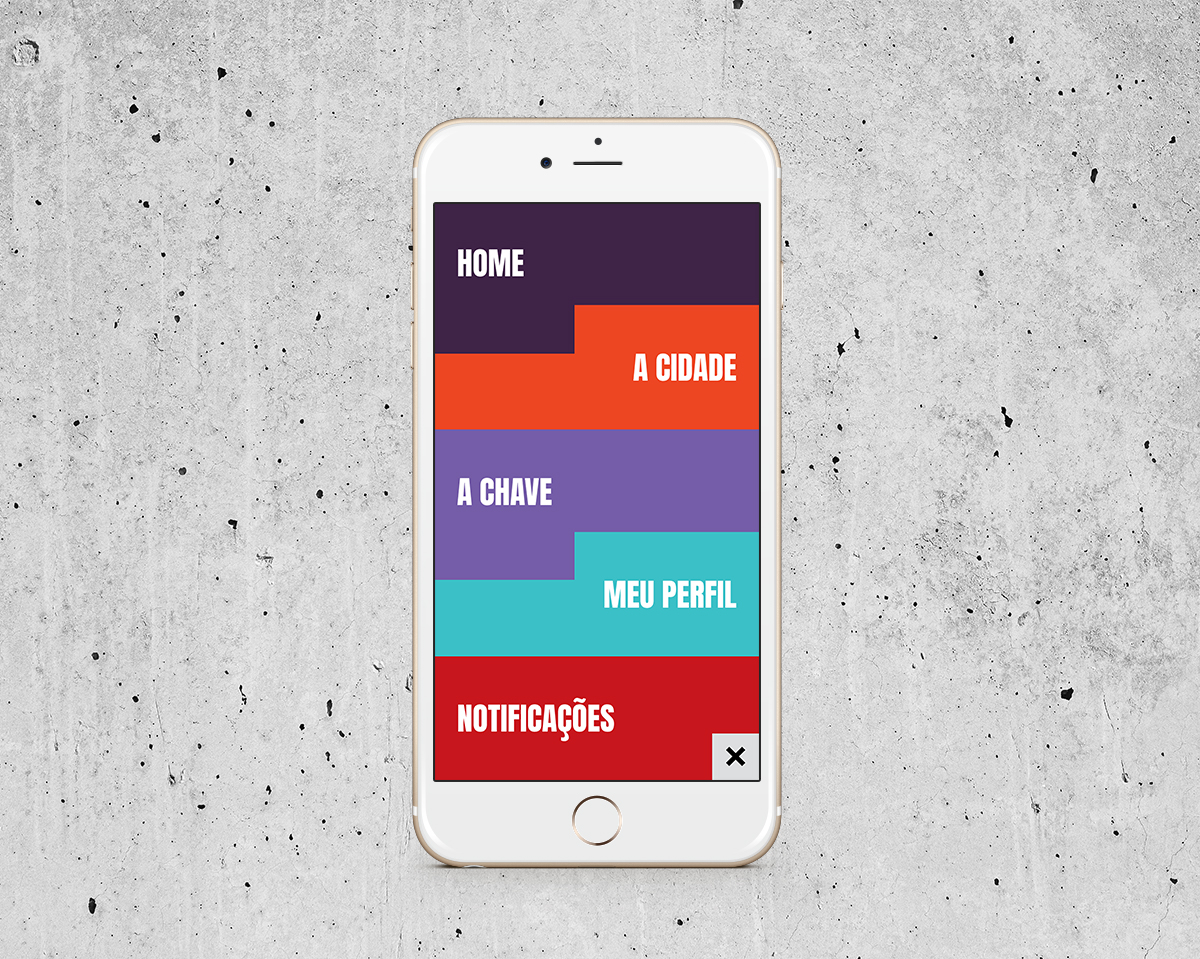
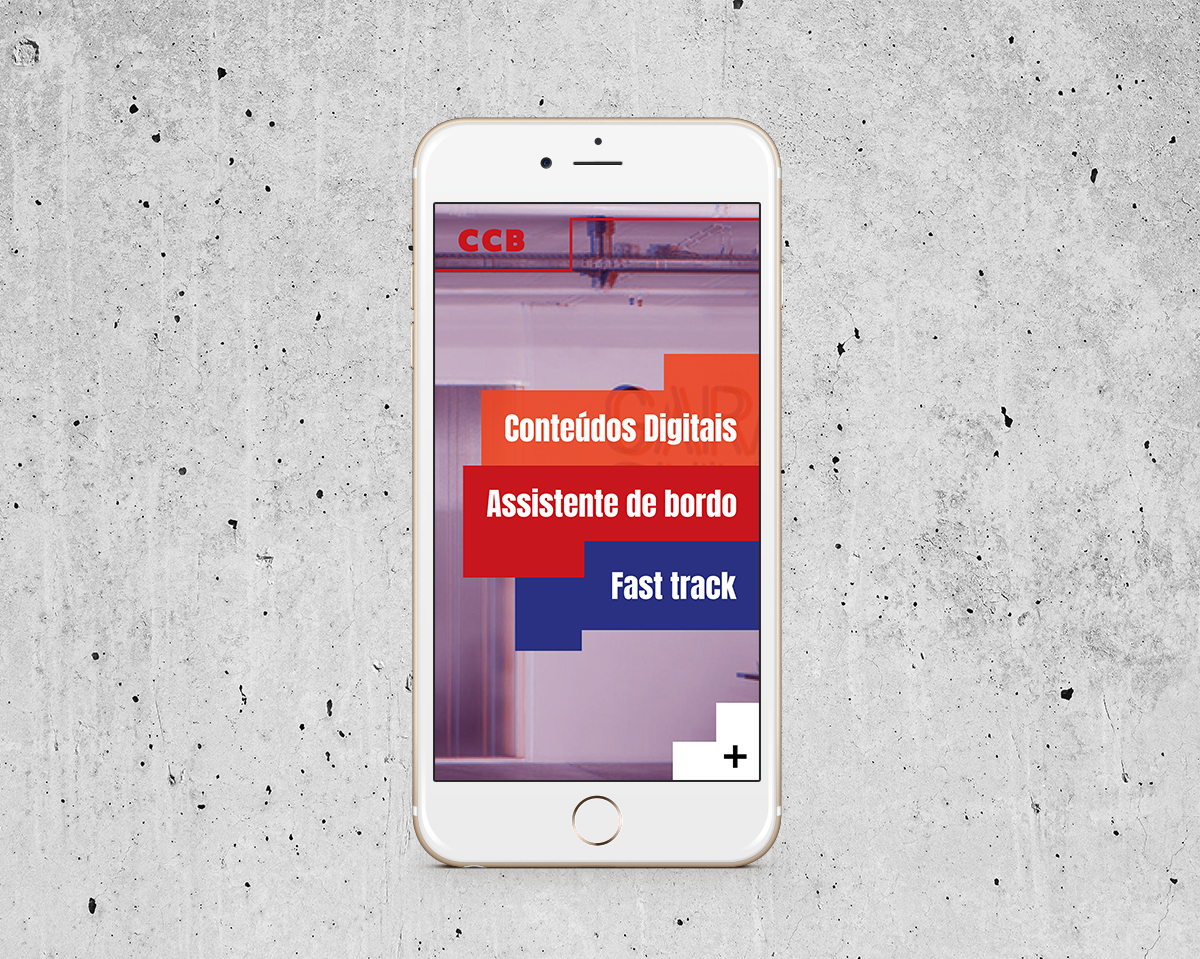
personalized homepage and exploring ccb
Following the data on our research, we seeked to give our user an experience they like and are already used to.
In the homepage they can access to everything they marked as favorite and can find personalized suggestions of content.
In the “City” (Cidade) screen they access to every event that is happening in ccb.
interactive tour
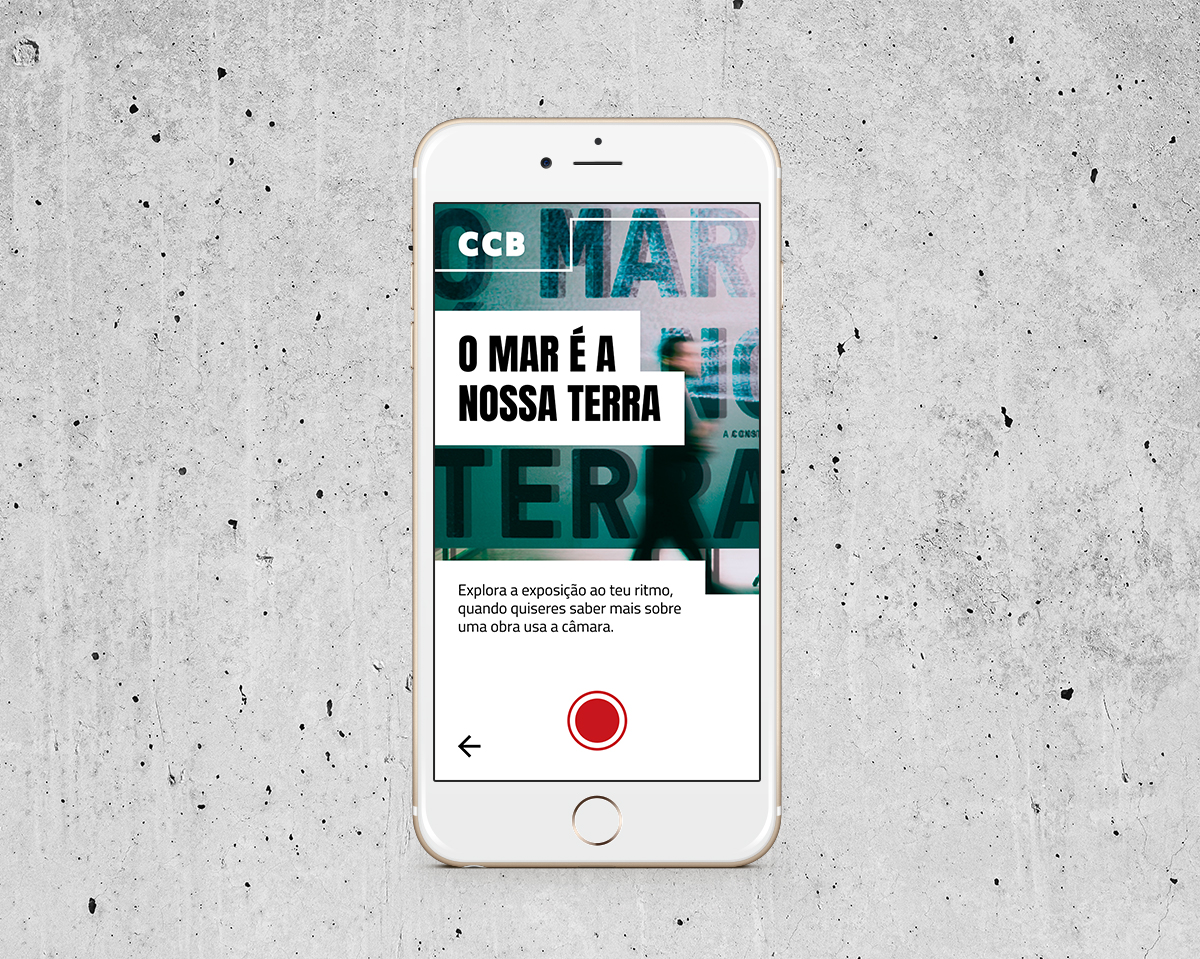
The key (Chave), is where you can live the CCB, whether inside or outside.
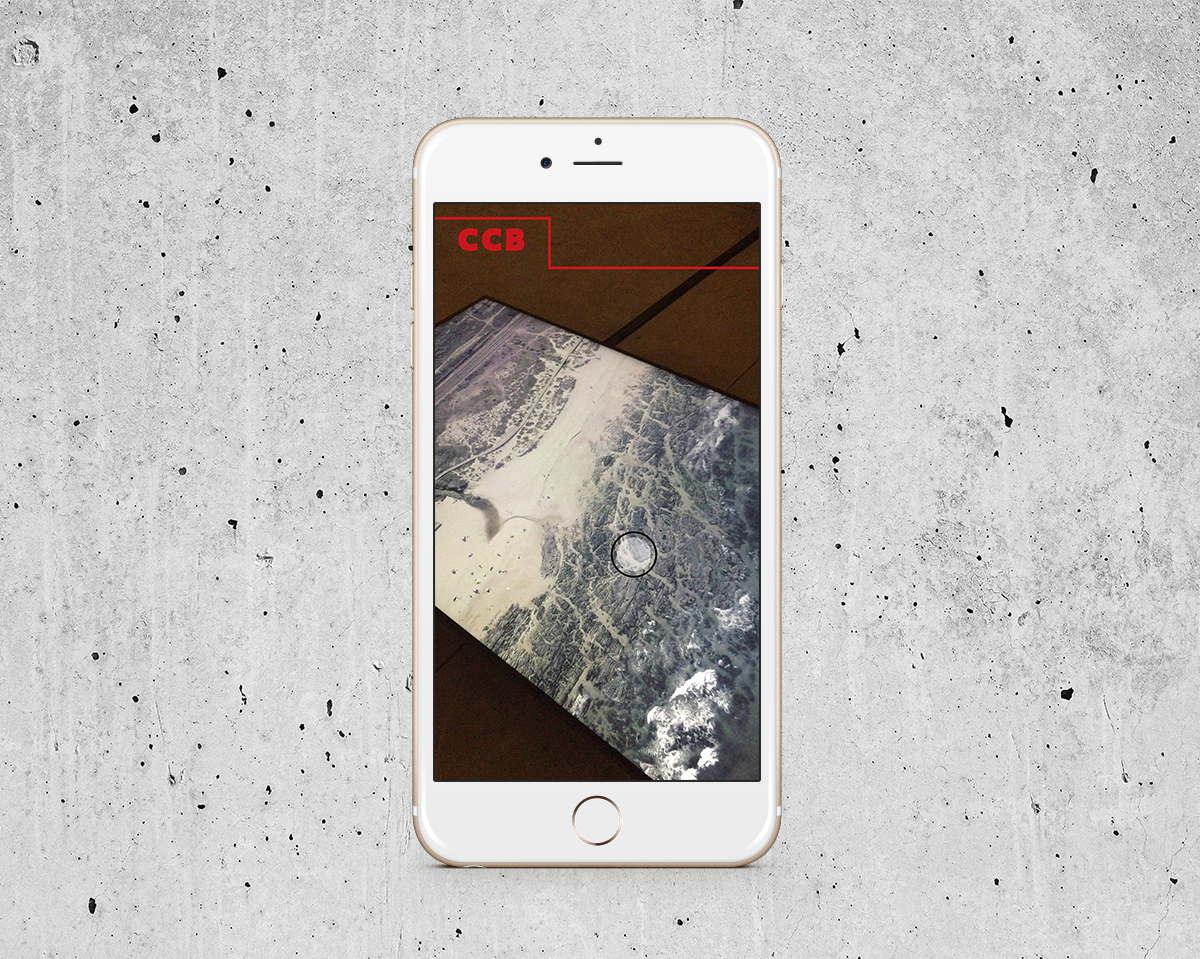
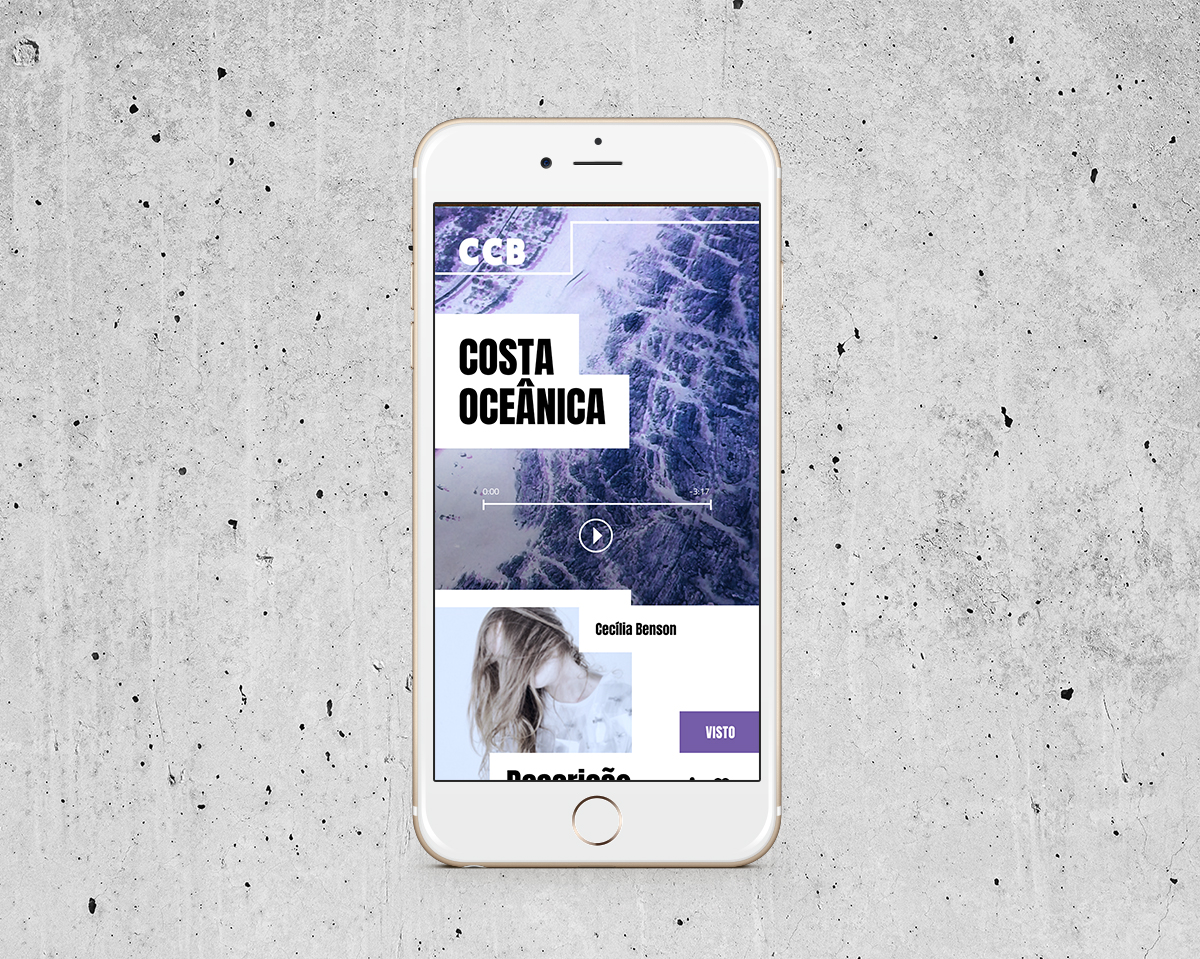
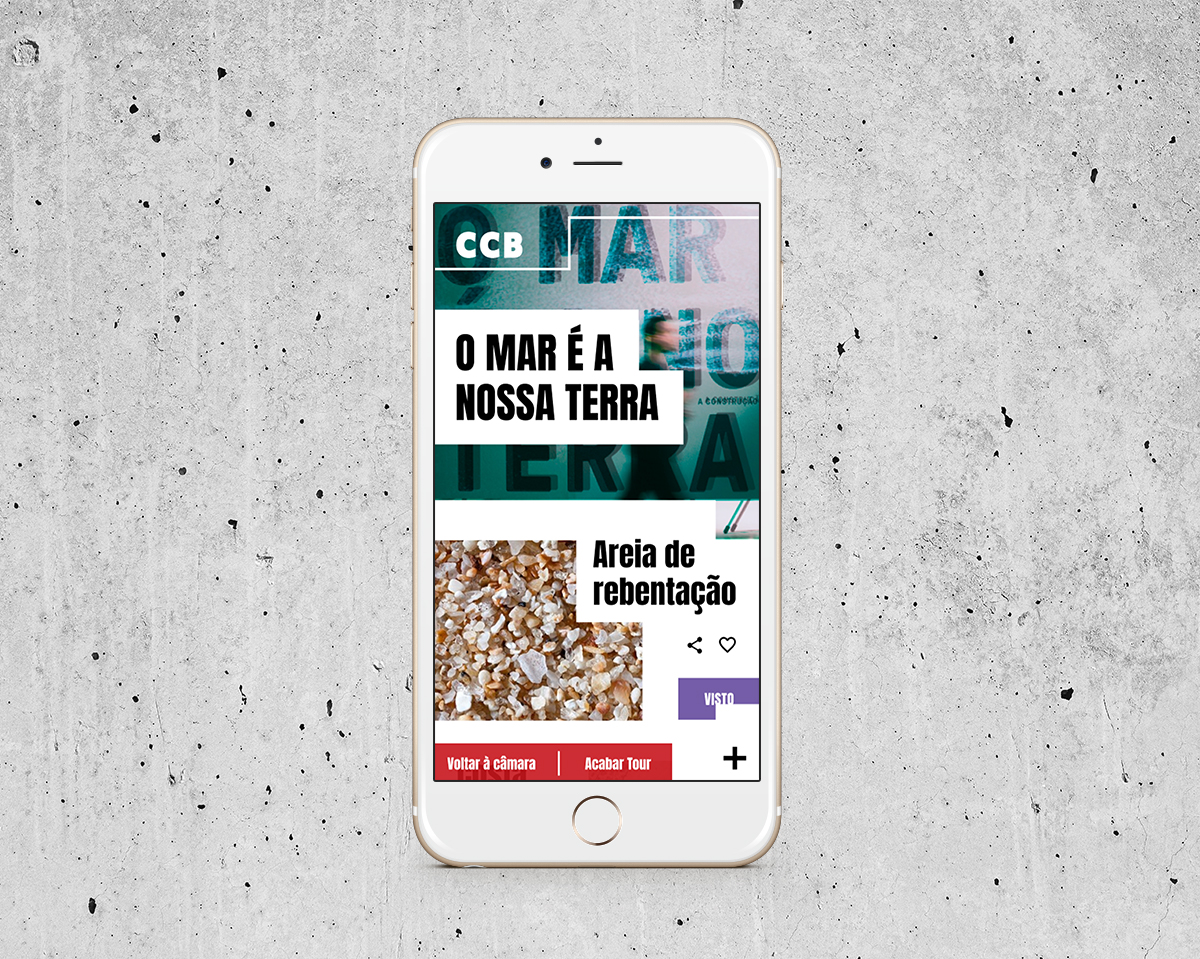
One option is the interactive tour, where the users can travel through an exhibition, point to the pieces, and access to a description and an audio explanation.
The user can mark the pieces that has already seen and have a full picture of all the pieces, those already seen and the ones to be seen.
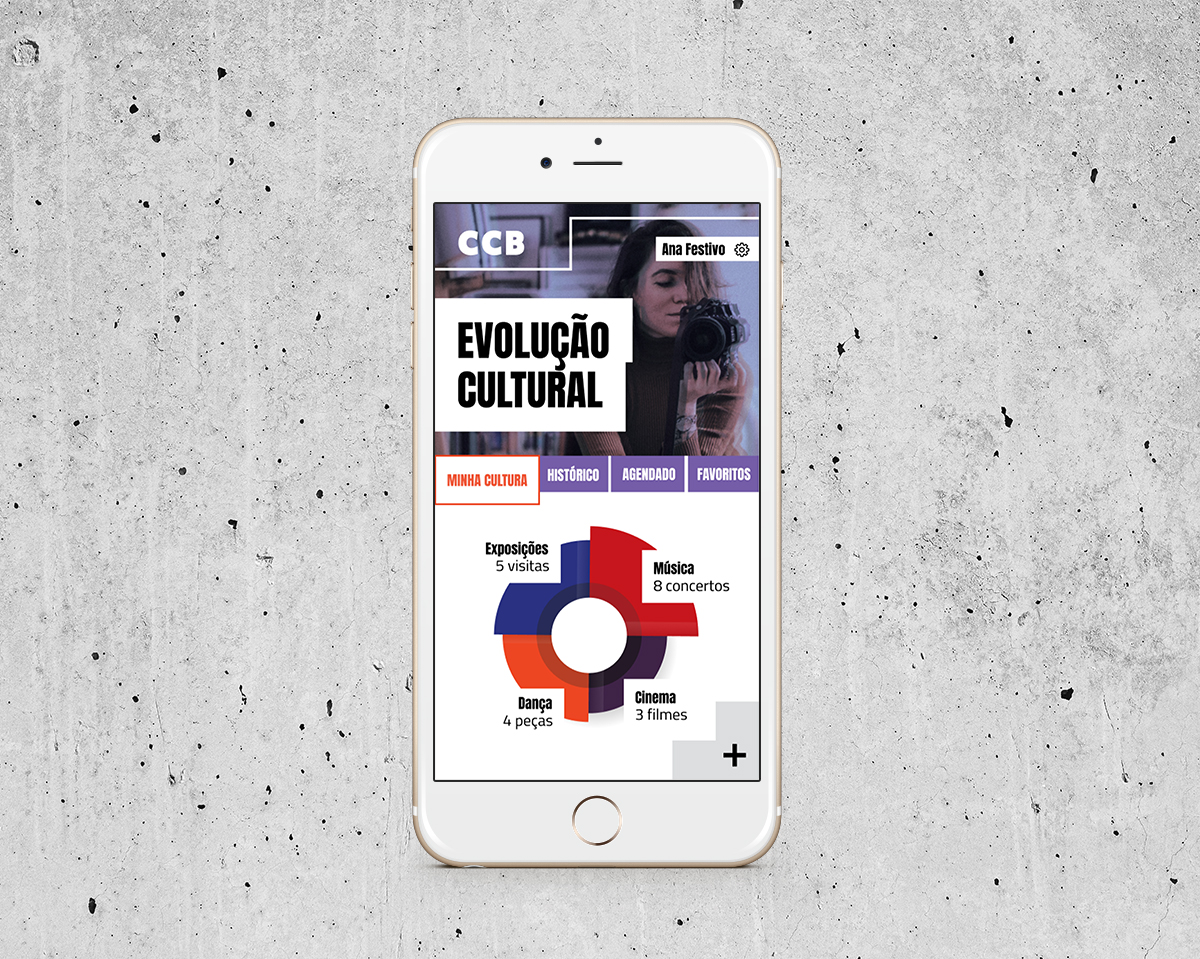
At the end of the tour the user sees a chart of their cultural evolution in every art area.
You may access the prototype below.
test the prototype
Explore the prototype below, you may navigate and exlore some of the features developed in this project.
to access prototype
click here
09
campaign
To accompany the launch of the mobile application, a campaign was developed.
This campaign goes through several channels, and through two main phases, a first one of teasing and a second one of revelation.
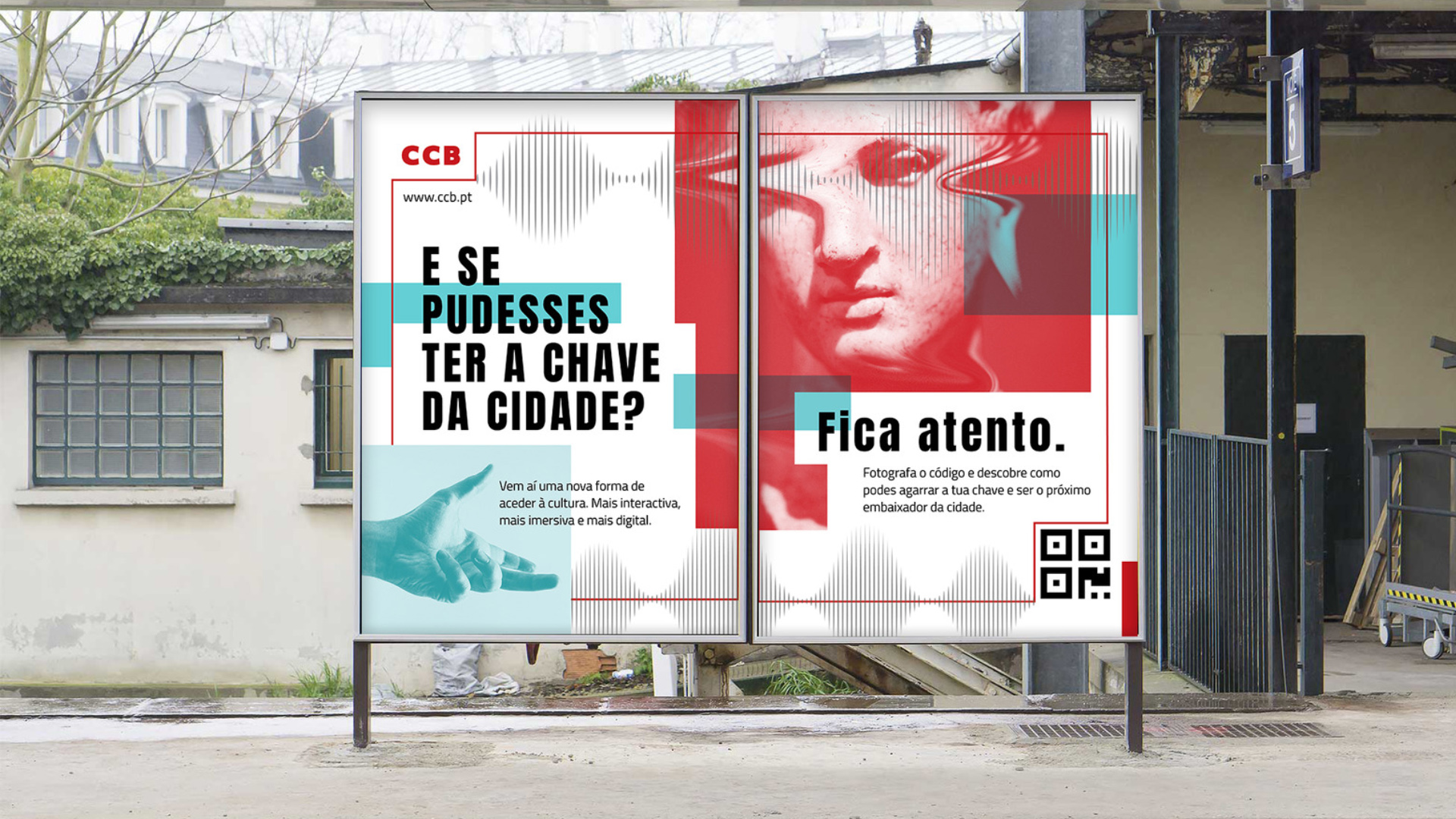
The campaign punchline is a teasing question: “What if you could have the key of the city?”.
campaign graphic line and tone of voice
The design of the campaign’s pieces was conceived to transmit the design already defined for the mobile application, such as the geometric and robust lines.
The structure is modeled, and in all the pieces we intended to create a sensation of mistery to be discovered, with hidden elements that were partially revealed.
To capture the youngest audience we proposed a relaxed, urban and direct tone of voice, with an informative speech but also near to them and human, reinforcing the brand’s friendly relationship with the user.
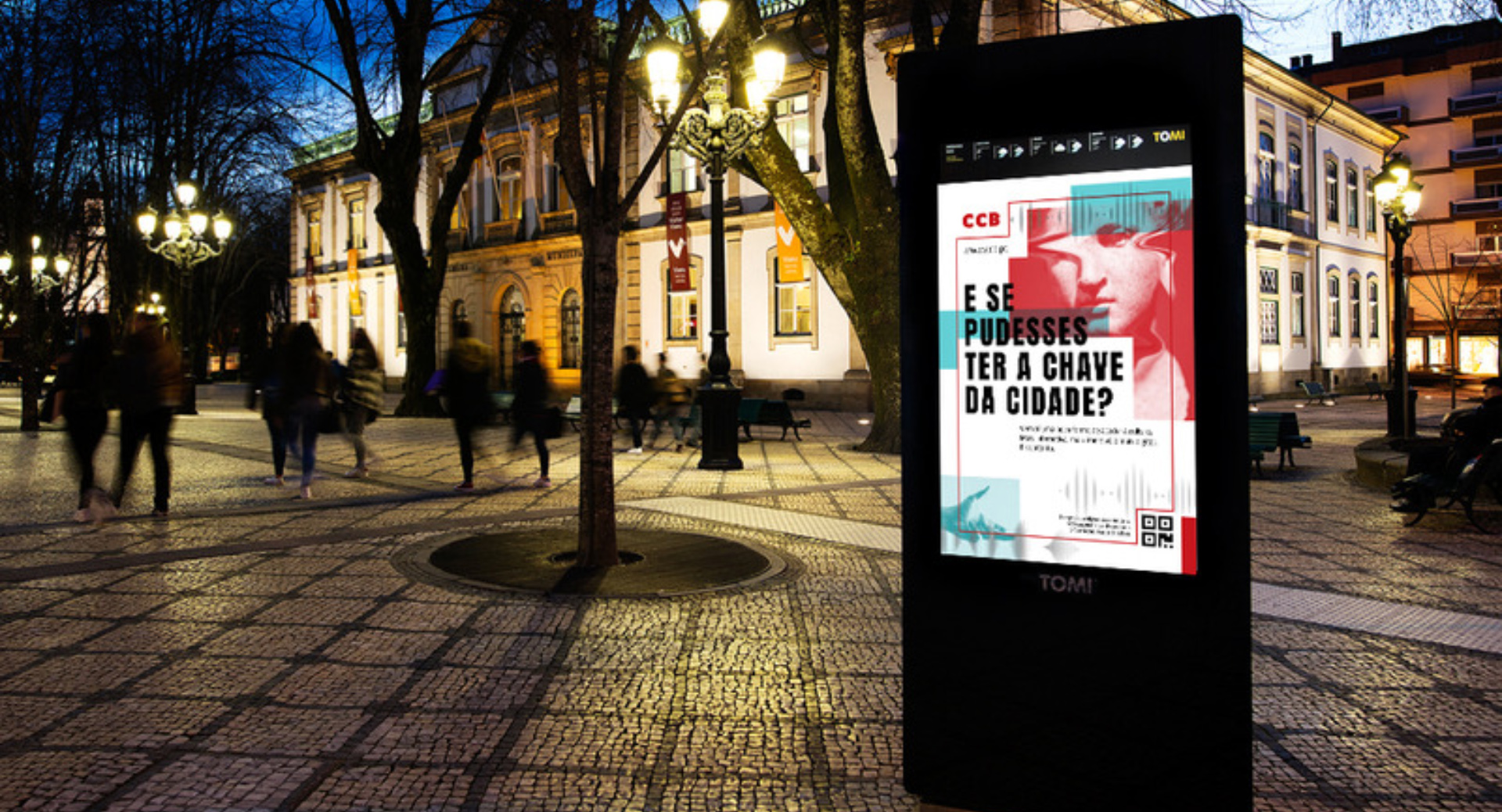
interactive mupi
The interactive mupis will be spread around the city so people can move the modules in order to discover hidden prizes.
banners
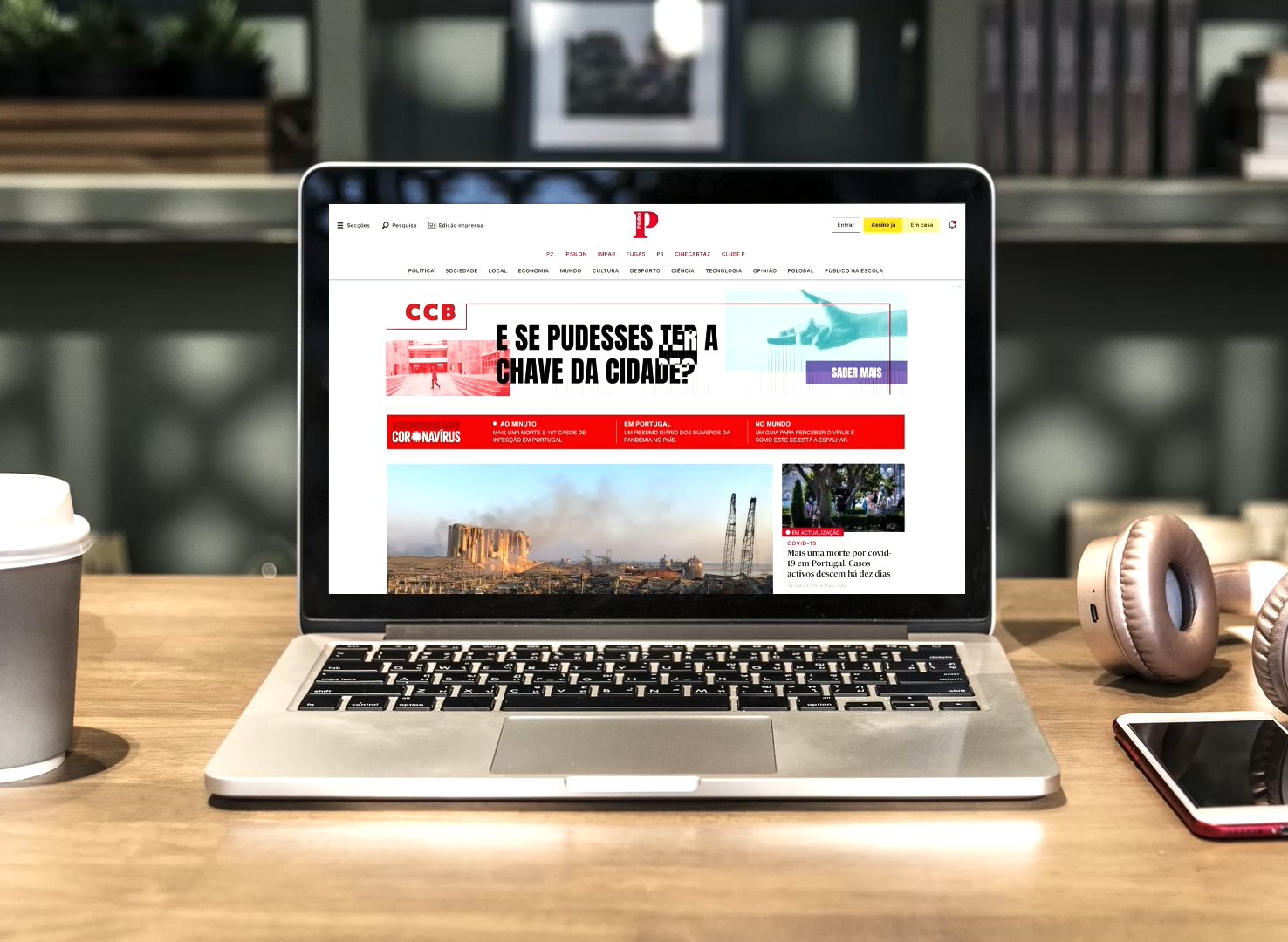
Banners will be placed on various online media that are most visited by our potential users, such as TimeOut, Niit, Agenda Lx, Público, Comunidade Cultura e Arte and Gerador.
microsite
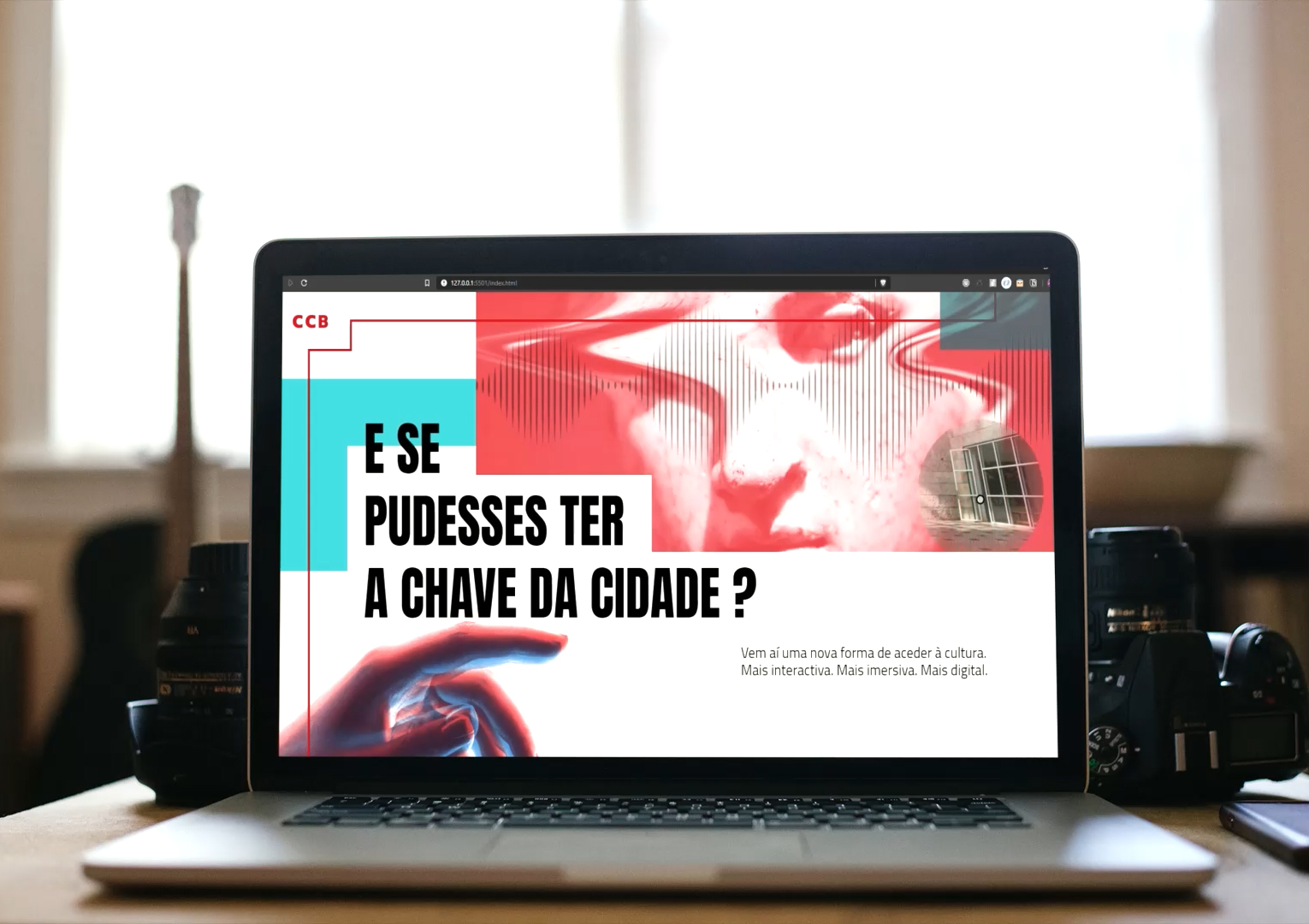
We created a microsite as the campaign’s anchor point.
Users who crossed with the other pieces are invited to access this microsite where they can see the countdown to the campaign’s revelation, and can leave their data if they want to receive the necessary information on the day of the disclosure.
teaser
The teaser will be on our chosen media, such as our microsite or social networks.
The idea is not only to sharpen the desire to understand what is about to happen at the ccb, but also to communicate with a younger audience, through the choice of images and music that are close to them.
ambassadors
Another relevant point of the campaign is the choice of ambassadors from various artistic areas, whose work is known and appealing to the younger audience.
In the teaser above we can see Vanessa Teodoro, who would be the chosen ambassador in the field of fine arts.
raising the curtain
In this phase, the countdown ends and the mobile application – the key to the city – is revealed, as well as its benefits.
Everyone can experience it because it is a freemium app.
whoever has the key gets the most
Push notifications, based in Beacon technology, when you approach the CCB – “Plans for today? Open the CCB city door and find out what you have to do today” – a new door? Exclusive discounts? a special offer?