
breatho
about
the project
Developed within the scope of EDIT’s User Experience and User Interface Design Course. The scope of this project was to create a subscription and respective termination of a service, contemplating several interfaces: desktop and mobile version of the website as well as a mobile application.
My role was mainly focused on: conceptualizing the brand, service and visual design, designing the interface for desktop, mobile and mobile application, mapping user flows, desktop paper wireframing and testing and prototyping.
Role
User Research
Interface Design
Visual Design
Prototyping
Testing
Team
Inês Freixinho
Joana Oliveira
Matilde Pacheco
Sara Machado
Sofia Leitão
challenge
Create a subscription and cancelling service process, combining different interfaces with an integrated interaction between them.
We were asked, as a team, to find a theme we would like to work on, and we chose gardening.
designing
the solution
01
attitude and habits towards plants
The first thing we did was a desk research to understand how people relate to plants, how important, they are in their lives. We tried to evaluate the habits and attitudes in this area.
plant-loving millennials
In a 2018 article of the New York Times (link), we have the testemonial of Summer Rayne Oakes, the founder of Homestead Brooklyn, who was 33 years old at the moment of the interview.
When her roommate moved out of the apartment, she felt that “All of a sudden the apartment felt so cold and empty,” and she “needed to find a way to make the space feel warm and full of life again.”
Her solution to fill that void was the purchase of the first plant of the nearly 700 houseplants that she now has (on the right we see an image of her living room).
“I just saw how much energy and life the plants brought to the space and kept going.”
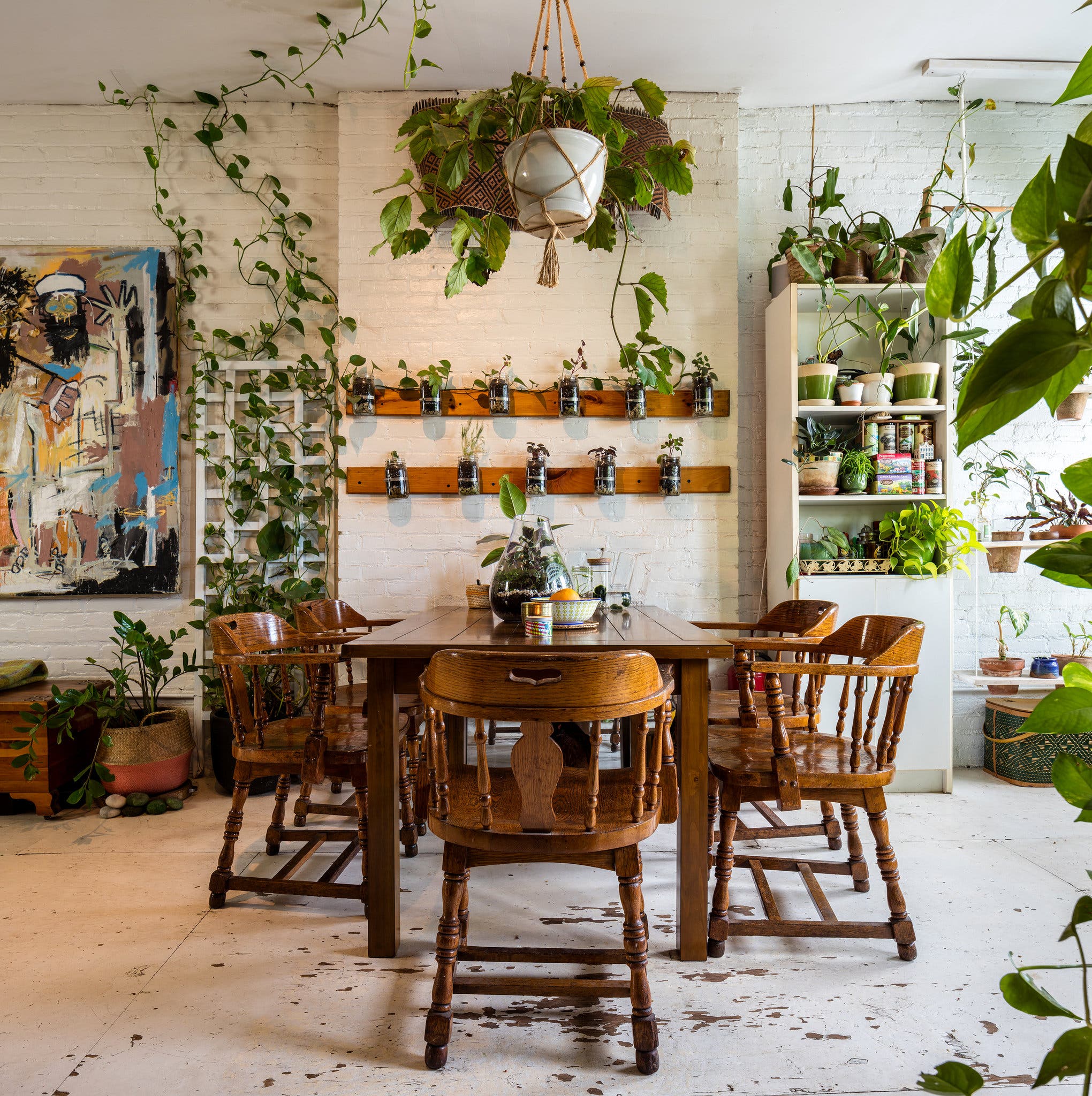
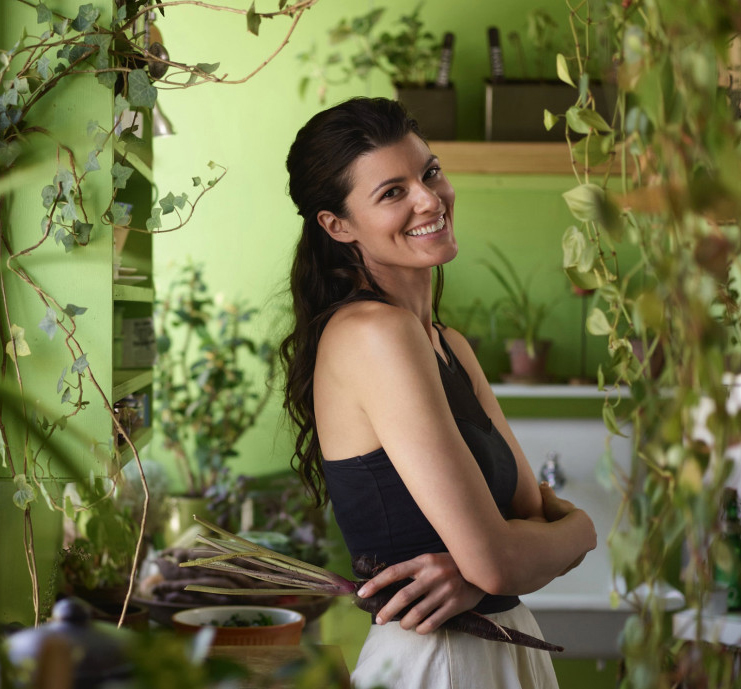
Images of Summer Rayne Oakes and her living room
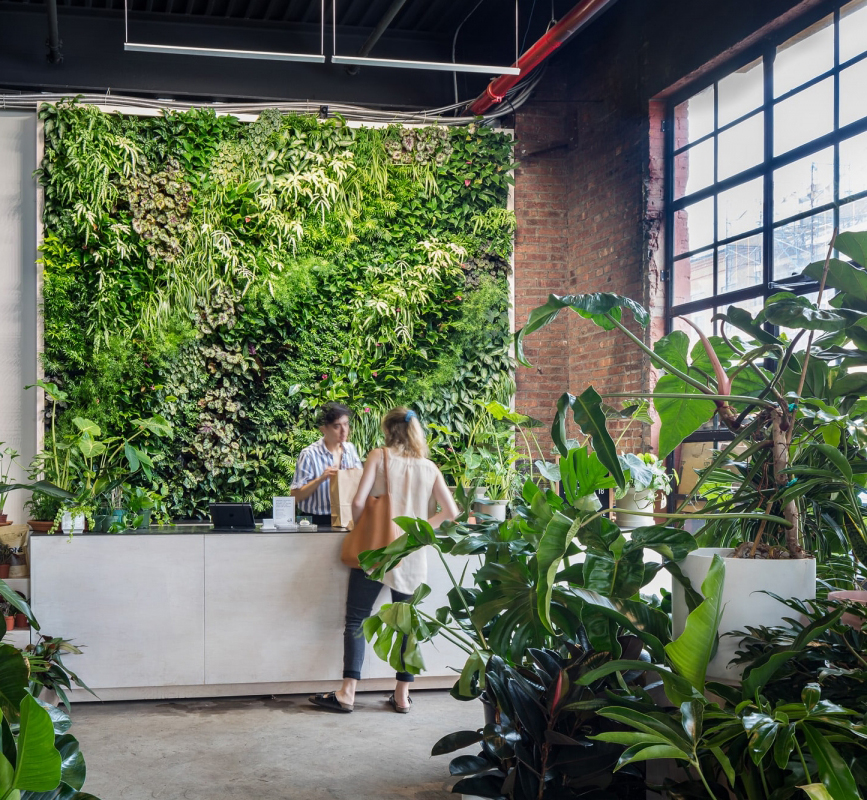
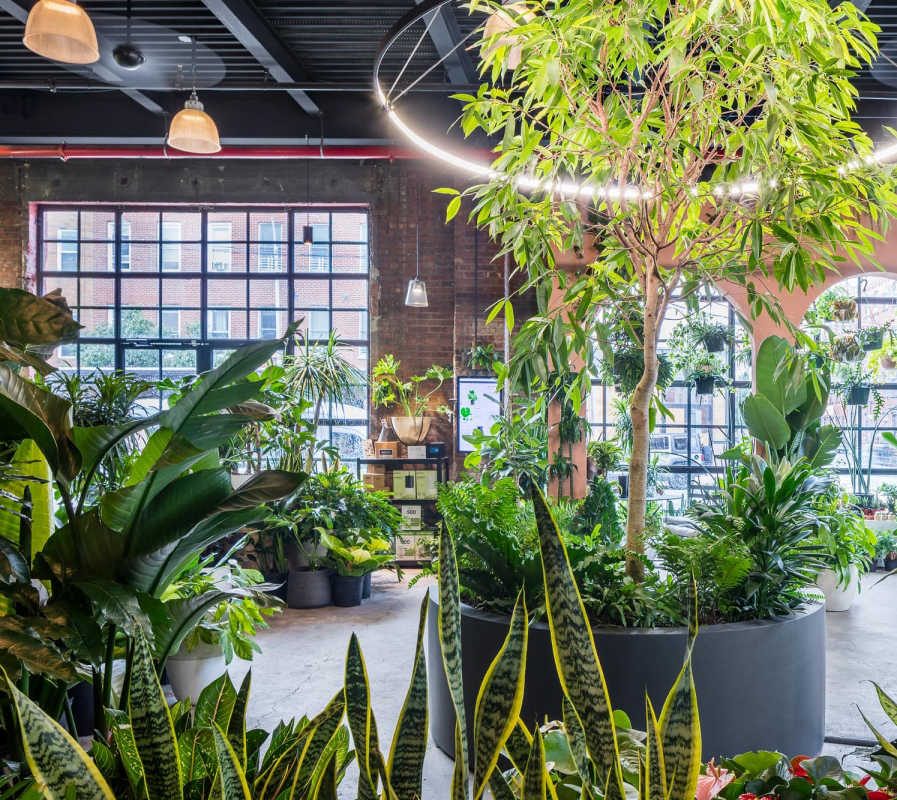
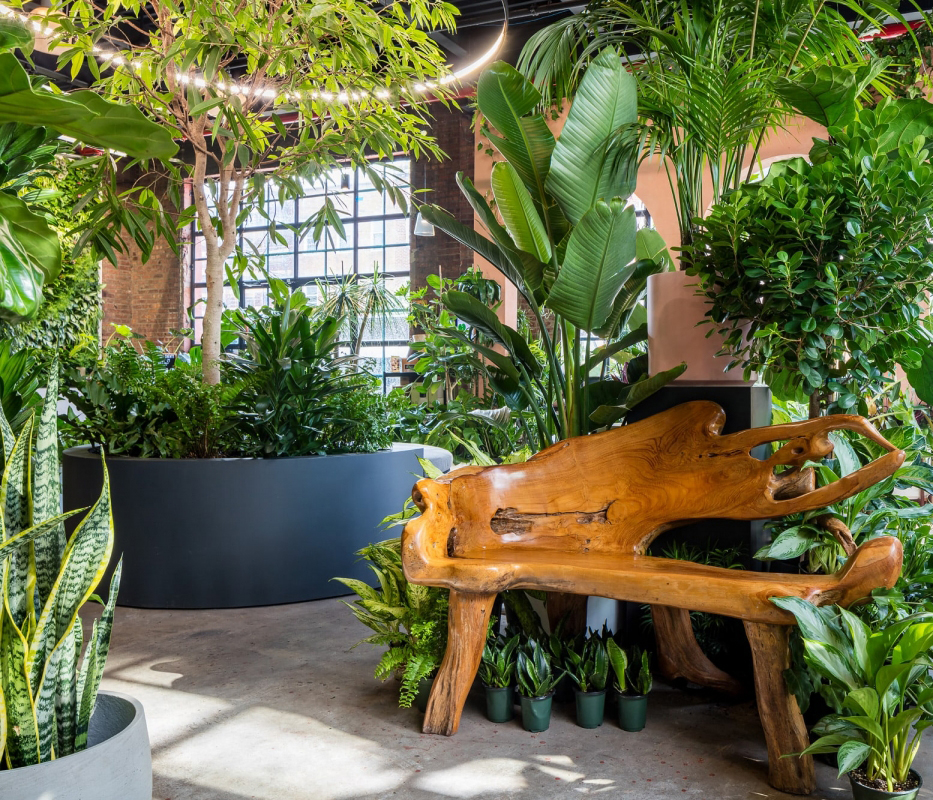
Images of Greenery NYC store
In the same article, we have the testemonial of Rebecca Bullene, the founder of Greenery NYC, a botanic design company that, in 2018, had incresead its clientele by 6,500 percent since it was founded in 2010. The reason is that developers are including gardens as an amenity for residents, and more people are investing in indoor gardens.
“Our sales have doubled each year, and I attribute that mostly to business that want to attract millennial talent and millennials themselves who want more nature in their lives”
%
of houseplant sales in 2016 in America were made by millennials
%
of the 6 million people who started gardening in 2016 in America were aged 18 to 34
Font: https://gardenresearch.com/view/national-gardening-survey-2016-edition/
indoor plants and well-being
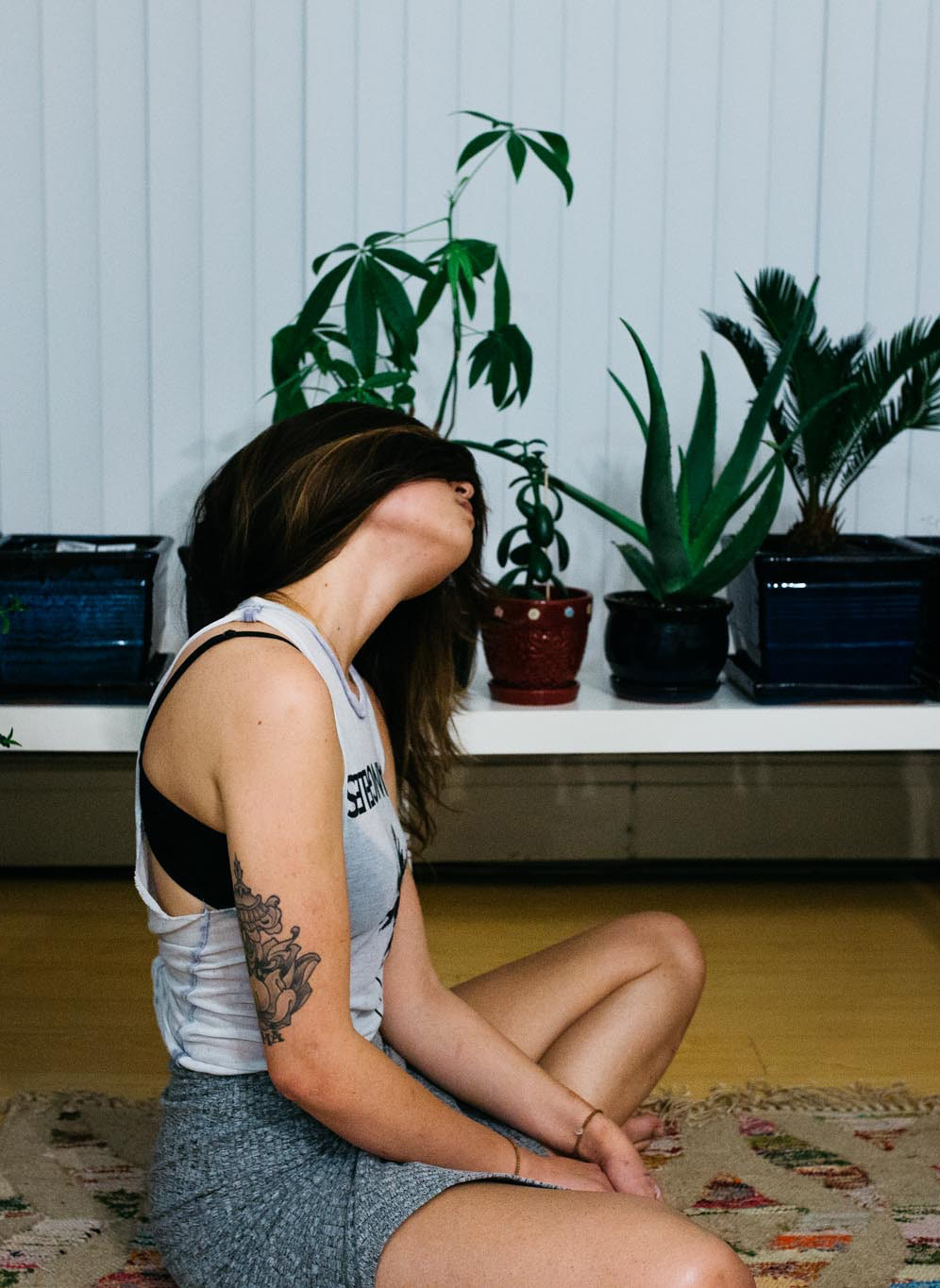
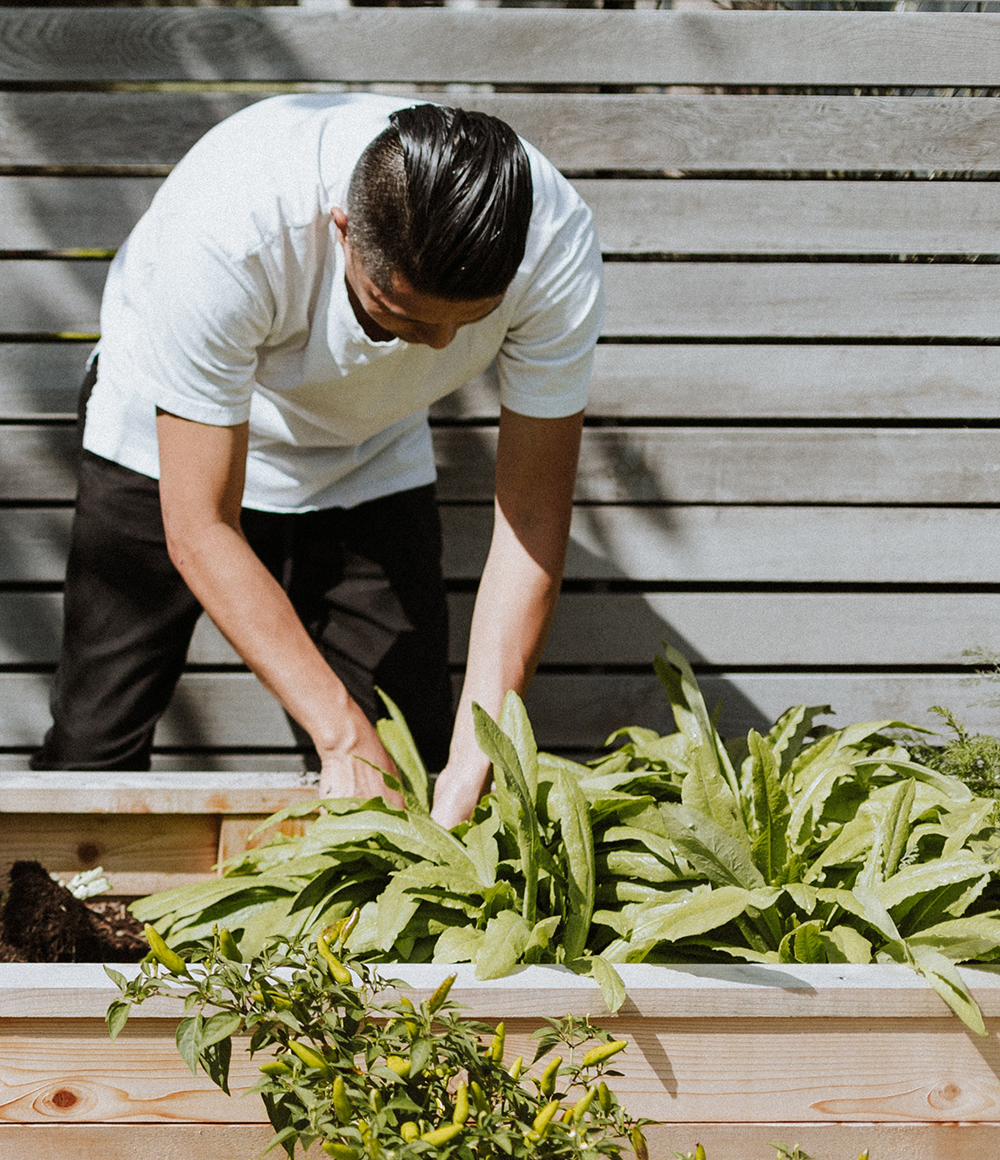
This 2010 study (link) tried to compile pieces of information from research which showed that interior plants in individual containers can produce the same benefits that outdoors plants or scenes of nature. Research has confirmed the stress-reducing benefits of passively viewing plants.
Below we enumerate some of them:
– Increase of indoor air quality
– Positive feeling of people associated with plants
– Stress reduction
– Higher productivity
– Pain reduction
“Plants boost serotonin levels and dissolve volatile airborne chemicals, they actually make healthier spaces for humans to inhabit.”
Rebecca Bullene
covid-19 and houseplants
In this article (link), we can see some of the effects of the pandemic on houseplanting.
Acording to the anthropologist Gideon Lasco, “the pandemic has spurred a “botanic boom” all over the world, one that has led people from Singapore to London to buy, collect, and nurture plants in their condominium units and apartments”.
Several other articles stated that Millennials have become obsessed with house plants as they provide them with the “opportunity to nurture something.”
The younger generations are struggling with the reality of delaying major life milestones such as buying homes, getting married and having children, largely for financial reasons, and this feeling of uncertainty phenomenon has escalated during the pandemic.
“People are designed for connection and nurturing, but with more millennials waiting until later in life to have babies and settle down, young people are turning to plants”
Lily Ewing, therapist
Wellness-minded millennials, especially those in large urban environments that lack natural greenery, are opting to fill their voids — both decorative and emotional — with houseplants.
02
online survey
We carried out a survey of 90 people, mostly between 16 and 60 years old, the majority of the respondents being between 25 and 37 years old.
The data collected, in addition to providing very useful information, was also in line with other studies collected.
have plants
%
of respondents have plants in their home
like plants
%
of respondents that have no plants as a matter of fact do like plants
like to see plants
%
of respondents that have no plants like to see them in other places
want plants
%
of respondents that have no plants already thought about having plants
Motivation to have plants
For those who already have plants, we asked why they have them in their houses.
- Happiness 28%
- Oxygen Supplier 23%
- Relaxation and stress Decrease 36%
- Decoration 89%
- Energy Levels Increase 31%
- Creativity Estimulation 23%
- Natural Humidifiers 13%
- Healing Powers 12%
There’s a strong tendency to have plants based on beauty and decoration, and to have plants indoor, in the living rooms.
Where are the plants located
For those who already have plants, we asked in which places of their houses they have their plants.
- Garden 34%
- Balcony 48%
- Living Room 61%
- Kitchen 26%
- Bedroom 12%
- Bathroom 7%
%
of respondents who do have plants, would like to have access to tips about plants and gardening
%
of respondents who do not have plants would consider to start having them if they could have access to the necessary information and tools
03
persona
Based on our research, we have built a persona that would represent the majority of our users. It was important to ensure a good experience to our users, and to develop meaningful and useful features.

Joana Flores
“A Designer de Interiores”
33 years old. Interior Designer. University-educated. Freelancer. Works in the cowork “Second Home” in Lisbon. Tech-savvy. Sustainable Habits.
Joana likes plants a lot and usually has a few in the room, but unfortunately some of them die.
She shops a lot online and quality is the most important factor she takes into account, but whenever it is possible to buy environmentally friendly products she does it and she usually sells things that she no longer uses through OLX, – ‘If it’s new it can still be used by someone’.
Joana is a heavy art consumer, she loves everything that brings beauty to her life, she loves everything about decoration but also about plastic arts. Her beauty appetite includes nature, outdoors, and travelling to meet other cultures and other wonders of beauty, natural or architectural.
“Beauty saves the World. Beauty is not only aesthetics, you can find it whenever you see love, nurturing and caring for others and for the nature that has been given to us”
joana’s tech habits
She finds a lot of information online, not only for her shopping but mostly for research, whether for professional ends or as an intellectual curiosity. She researches a lot online to find inspiration for her projects and to widen her creativity.
She is also a heavy mobile user. Her mobile phone is a storage of images she collects to inspire herself, not only found online, but also in her day-to-day activity, photographing those scenes and storing them.
Top apps she uses:

04
problem statement
After our research we discovered some of the habits, motivations and frustrations, and pointed out the problem which our persona faces.
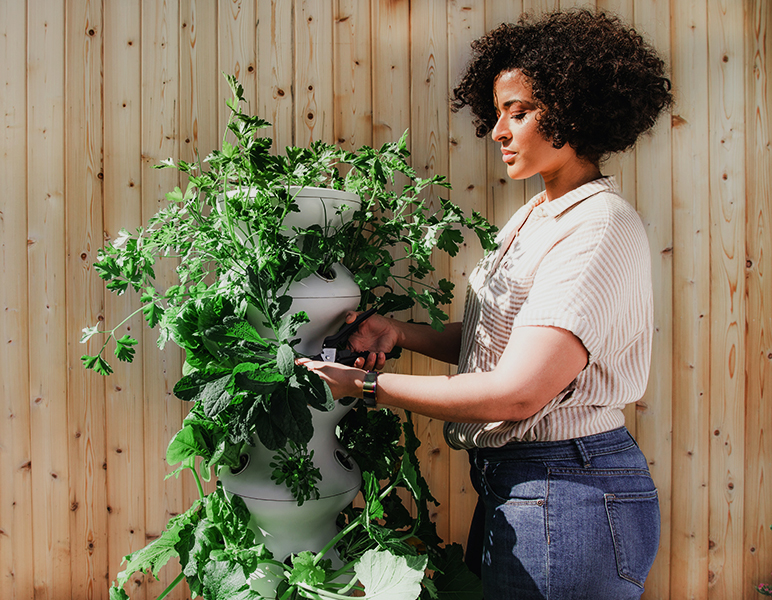
Raising and caring for a plant is an apparently laborious and
expensive process.
difficulties
Expertise
It’s hard to keep the plants alive.
Attitude
I like plants, but I simply don’t care.
These are the main difficulties we have encountered, the ones related with expertise, that have some frustration implied, and the attitudinal ones, where there are no strong “feelings” towards plants, and so, despite people liking them, they simple haven’t triggered the will to raise one.
05
how do we solve it?
We decided to create an original brand.
A multiplatform service that provides information and tips about plants and gardening, with an online store for plants, decor products and gardening accessories.
We wanted to promote, encourage and help
people to have plants in their home.
give oxygen to your home
the brand
Our brand naming is a fusion of the concept of breathing and oxygen. We chose to use a minimalist logo, with just an elegant lettering. The idea of minimalism is very strong, so we can enhance the sensation of breathing. On the other hand, it also gives an idea of a space that can be filled with plants and oxygen.

06
the multiple devices design
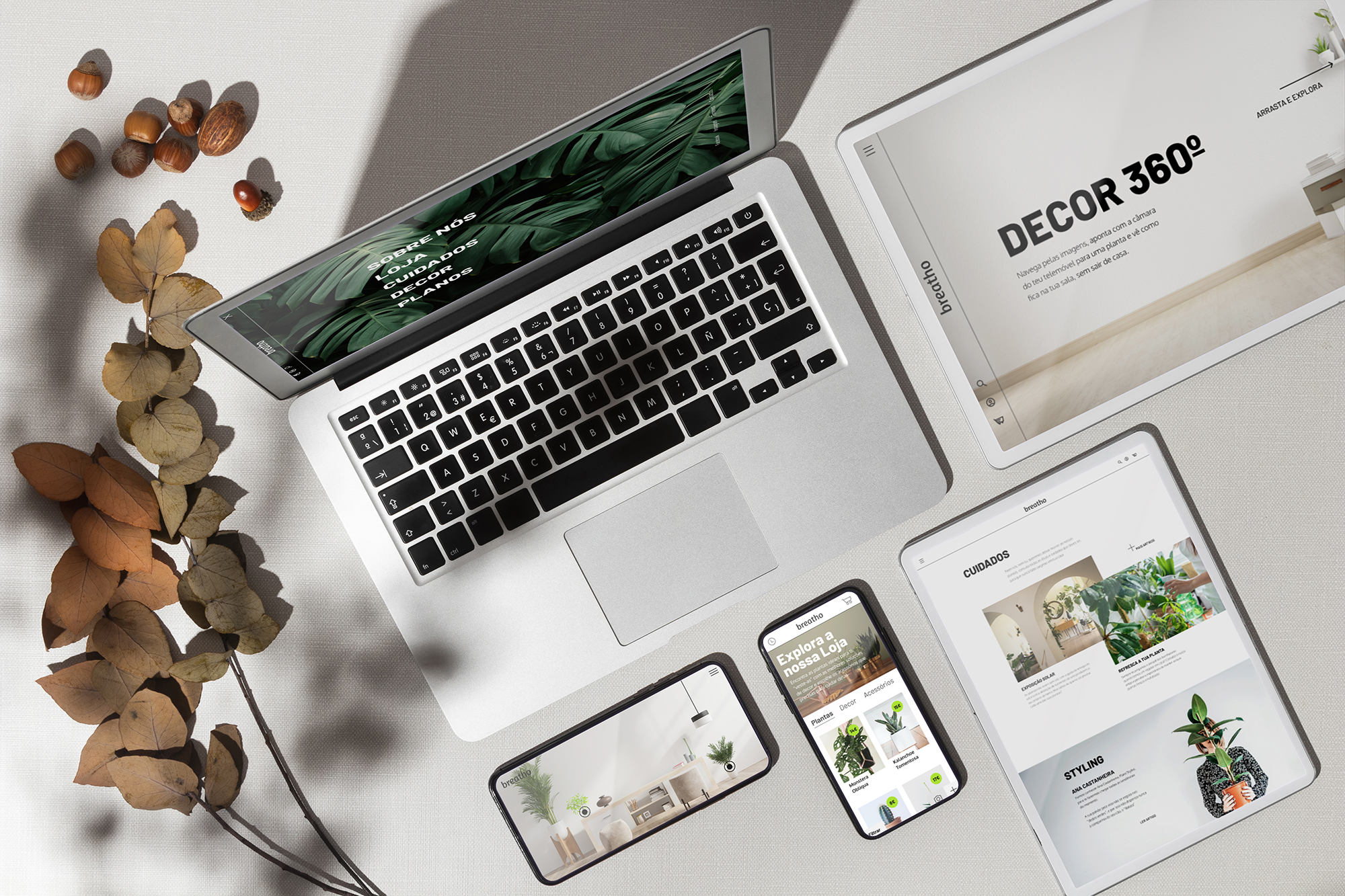
We developed our multi-platform service as an integrated interaction system, taking into account the features that were suitable for each device.
The general objective was to help the user to recognize plants, have access to decoration ideas, see which plant was ideal for every corner of their house, buy it and have real help to take care of it. We wanted to turn our users into “plants’ enthusiastics” and accompany them in this new direction that is to live the world of plants.
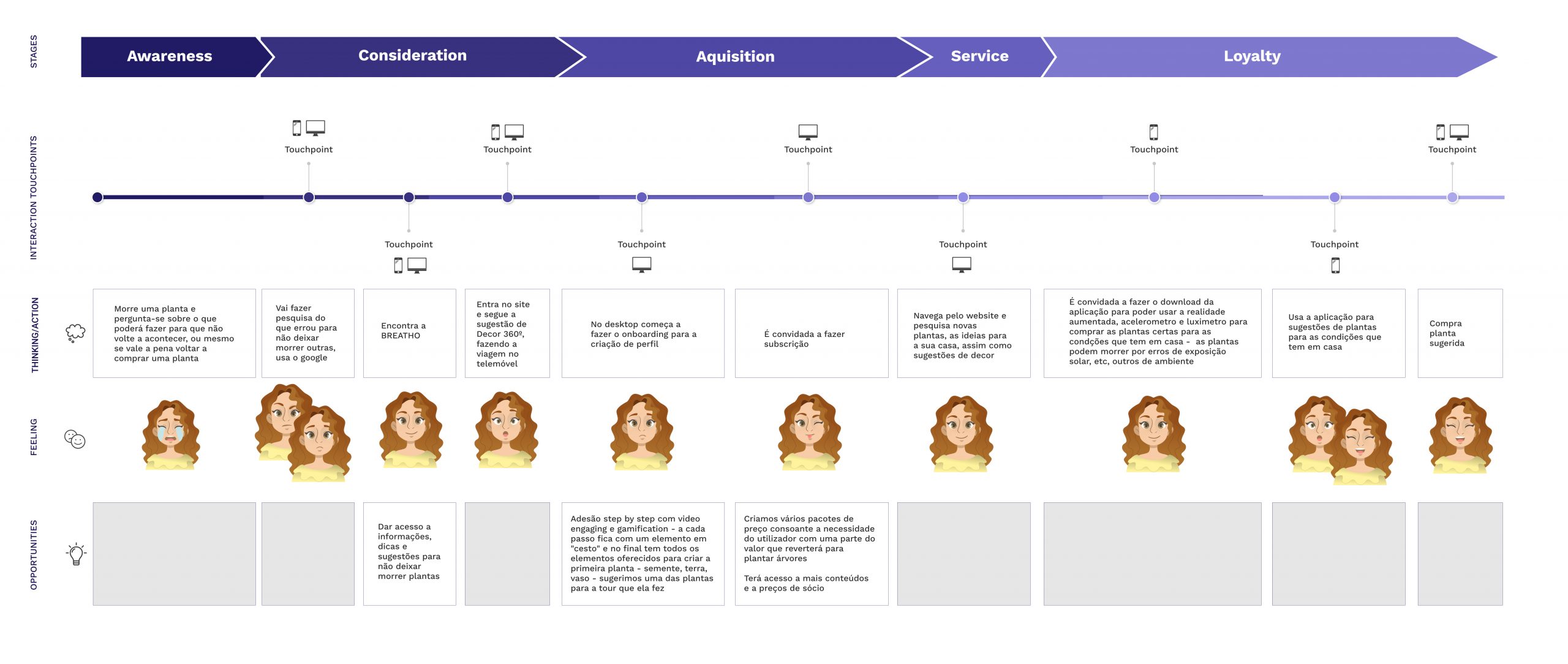
customer journey
We started by mapping a typical first interaction with our service, creating a customer journey (to be). So we mapped the path of sequential steps and interactions that our user would go through in our service.
It was important to define key touchpoints and ways to capture our user attention in every step.
user flows
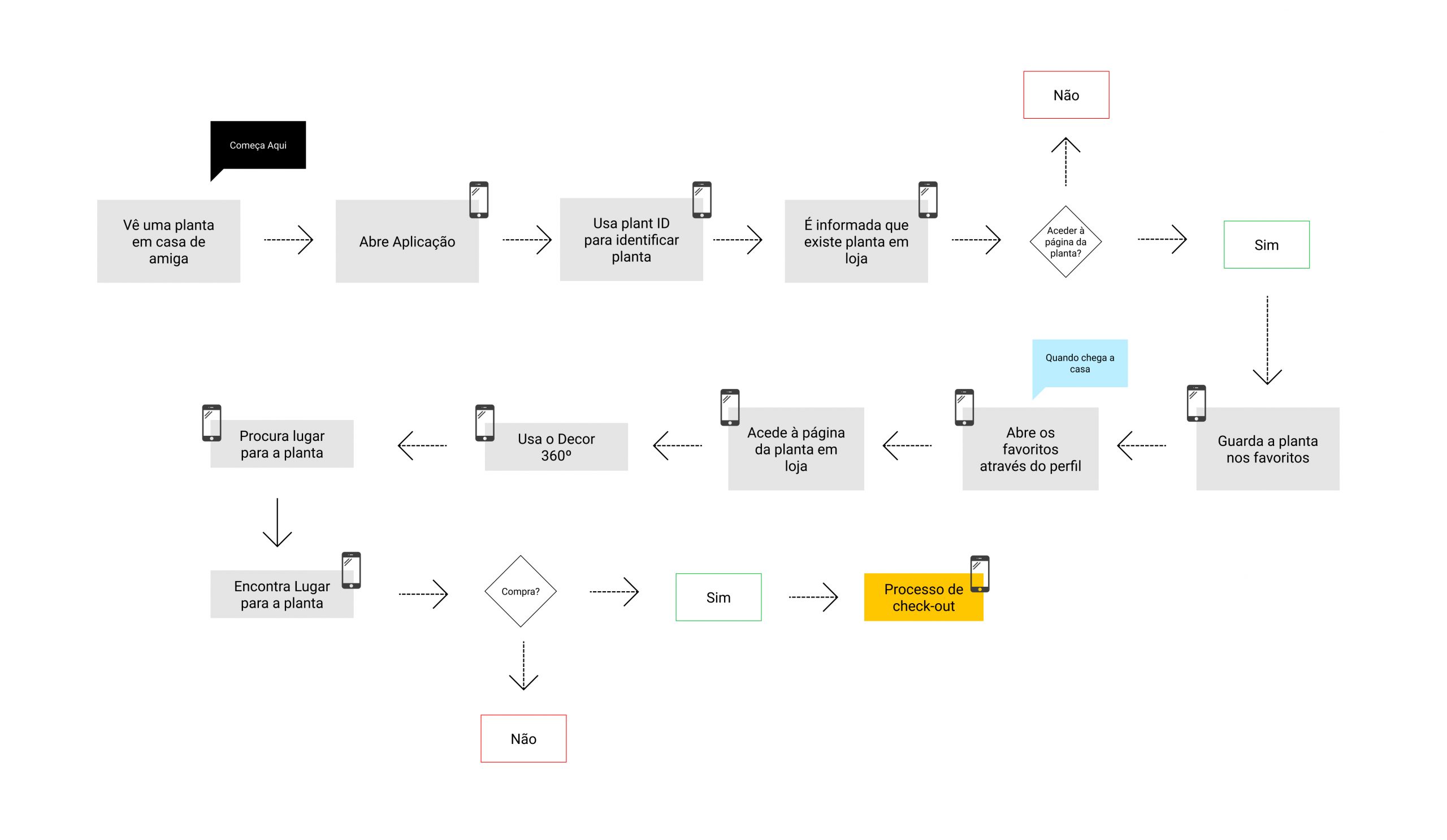
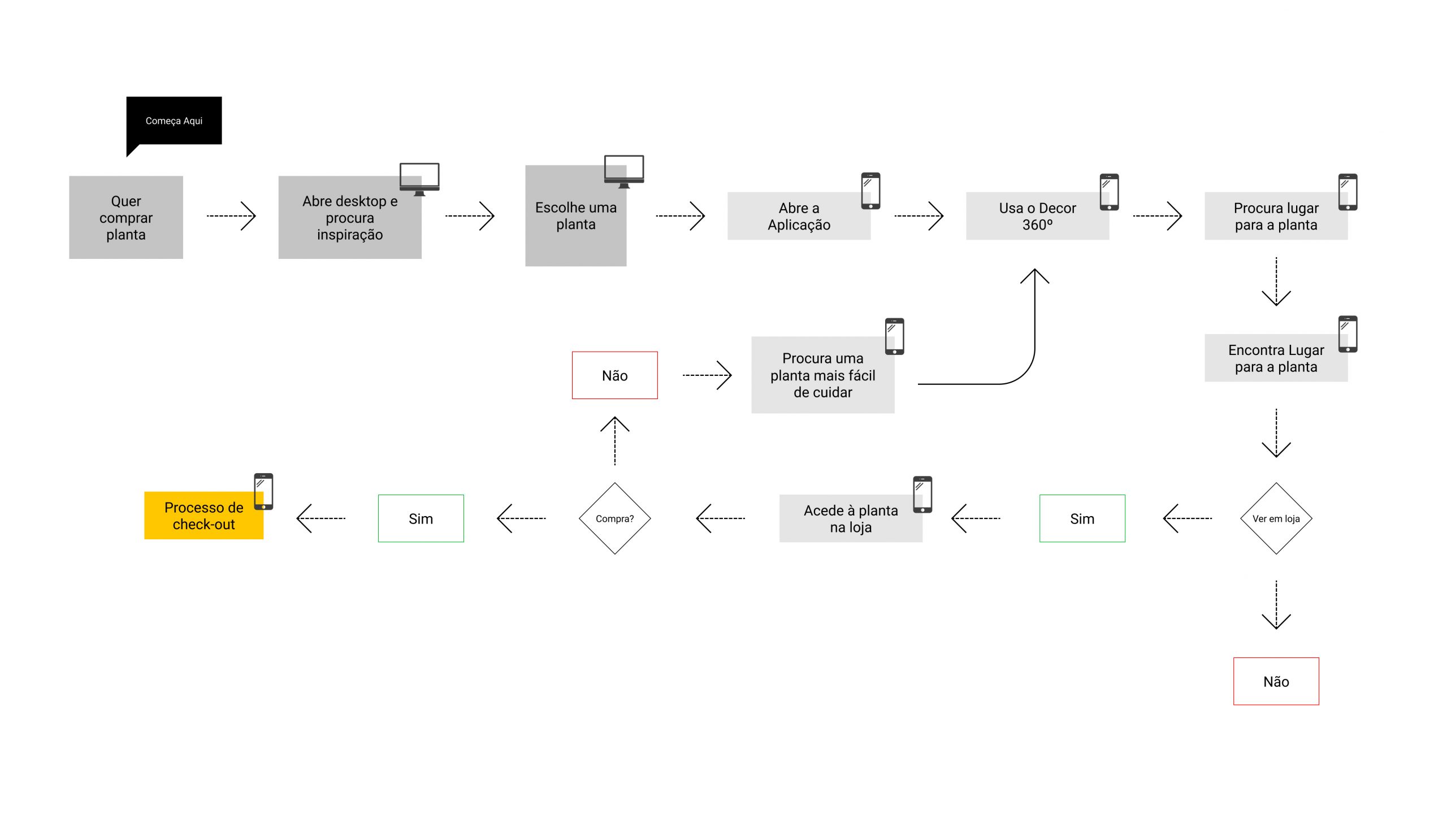
As a way to understand the best method for our user to perform some of the main tasks of our service we made different user flows.
It was helpful to understand and design the interaction between all the devices and decide which features were suitable for each one. Below we have images of two simple user flows, each one in different contexts and with different triggers.
wireframes
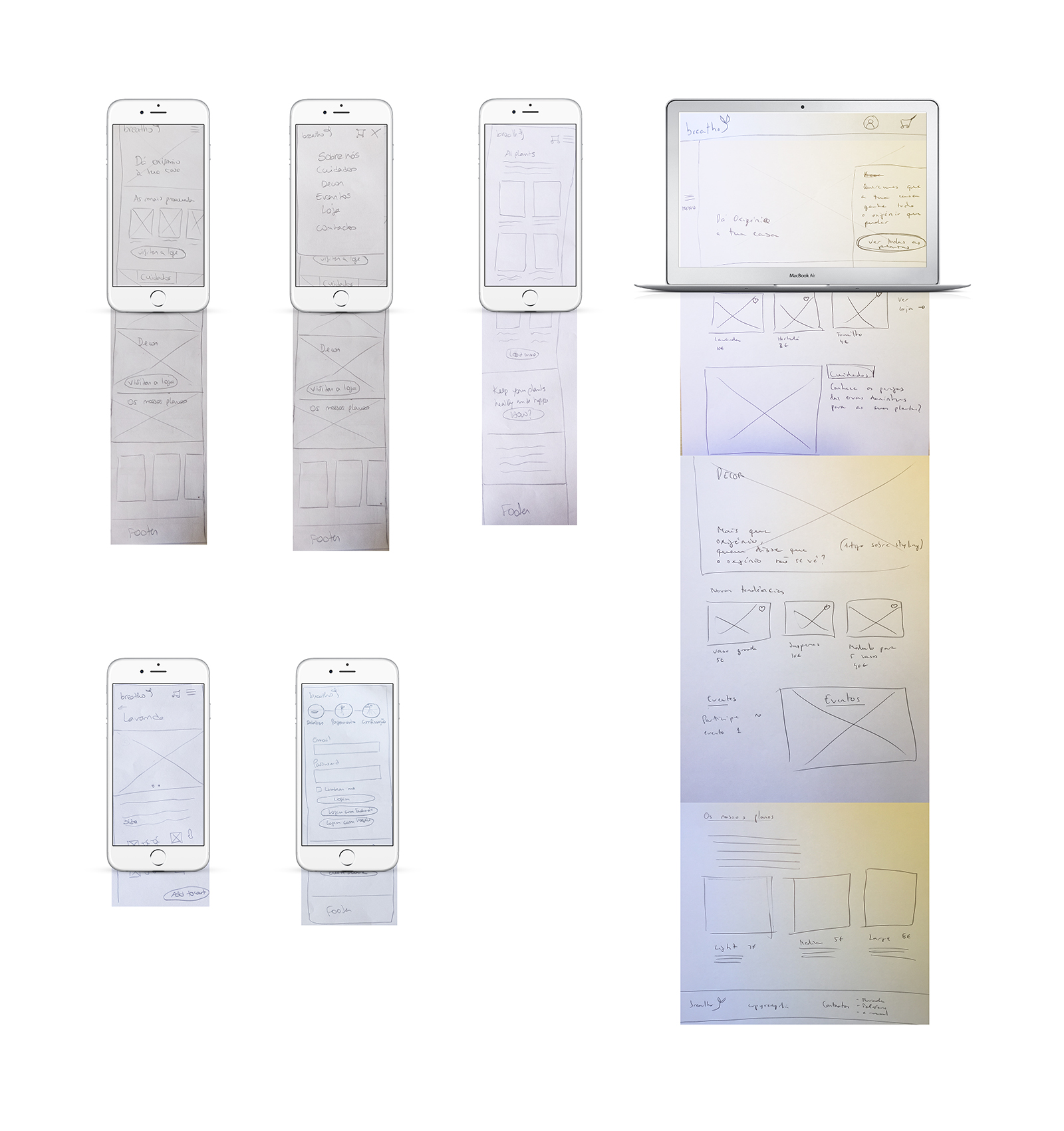
For the design of our app we started with paper wireframing. It is the best and most effective way to start, because it provides a way to sketch the interface and test it with less effort waste.
After testing and changing the lo-fi wireframes, we moved on to the hi-fi wireframes, and then to the final layout.
visual design and final layouts
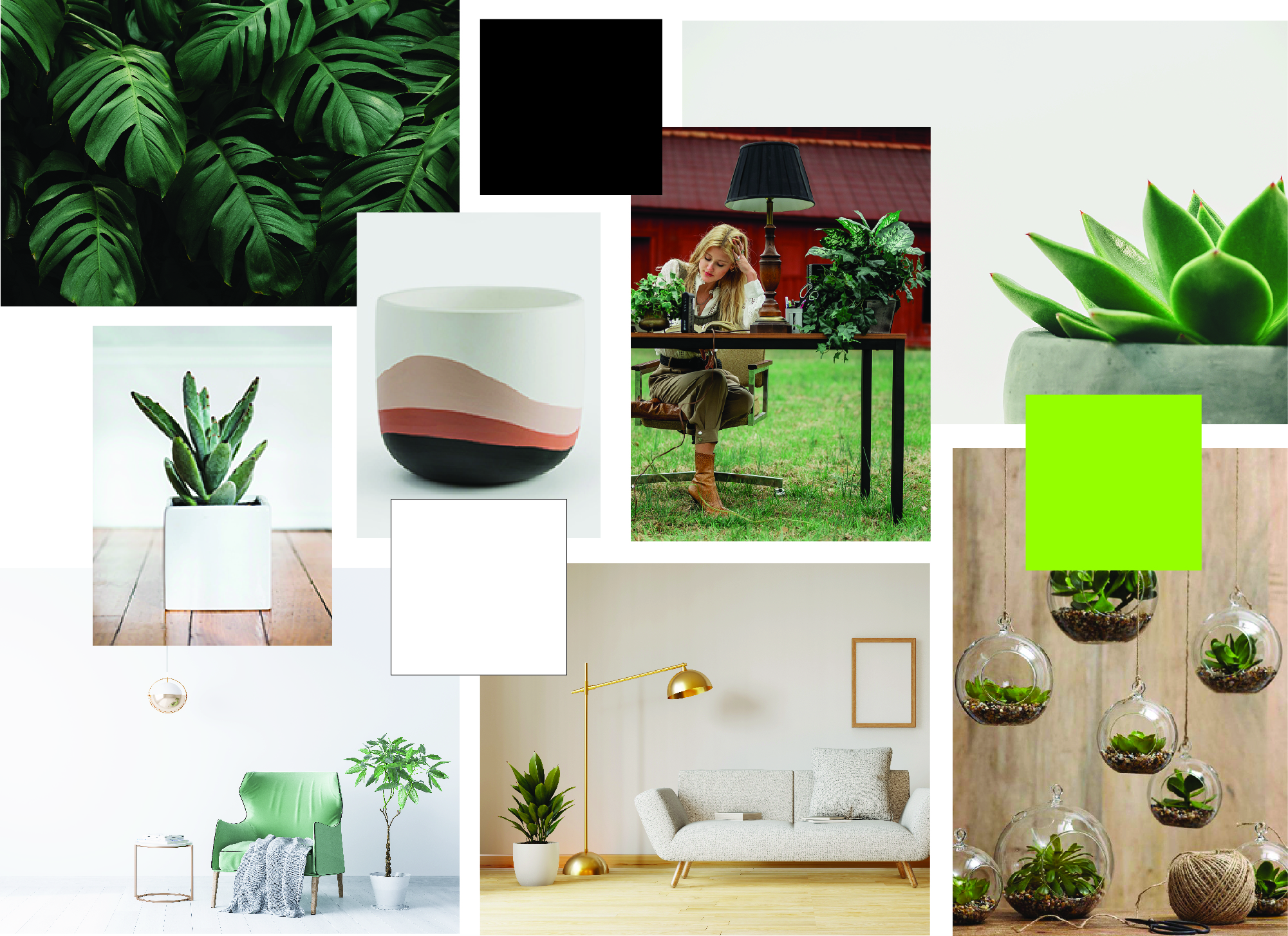
We chose to use three visual main axes: life, beauty and minimalism.
The idea was to make our users feel that they can generate life inside their cold concrete walls, so we wanted to give an immersive experience with images, as if they could breath better only by looking at the screen.
The minimalism baseline is very important to enforce in our users this feeling of breathing. On the other hand, it also gives an idea of a space that can be filled with plants and oxygen.
desktop website
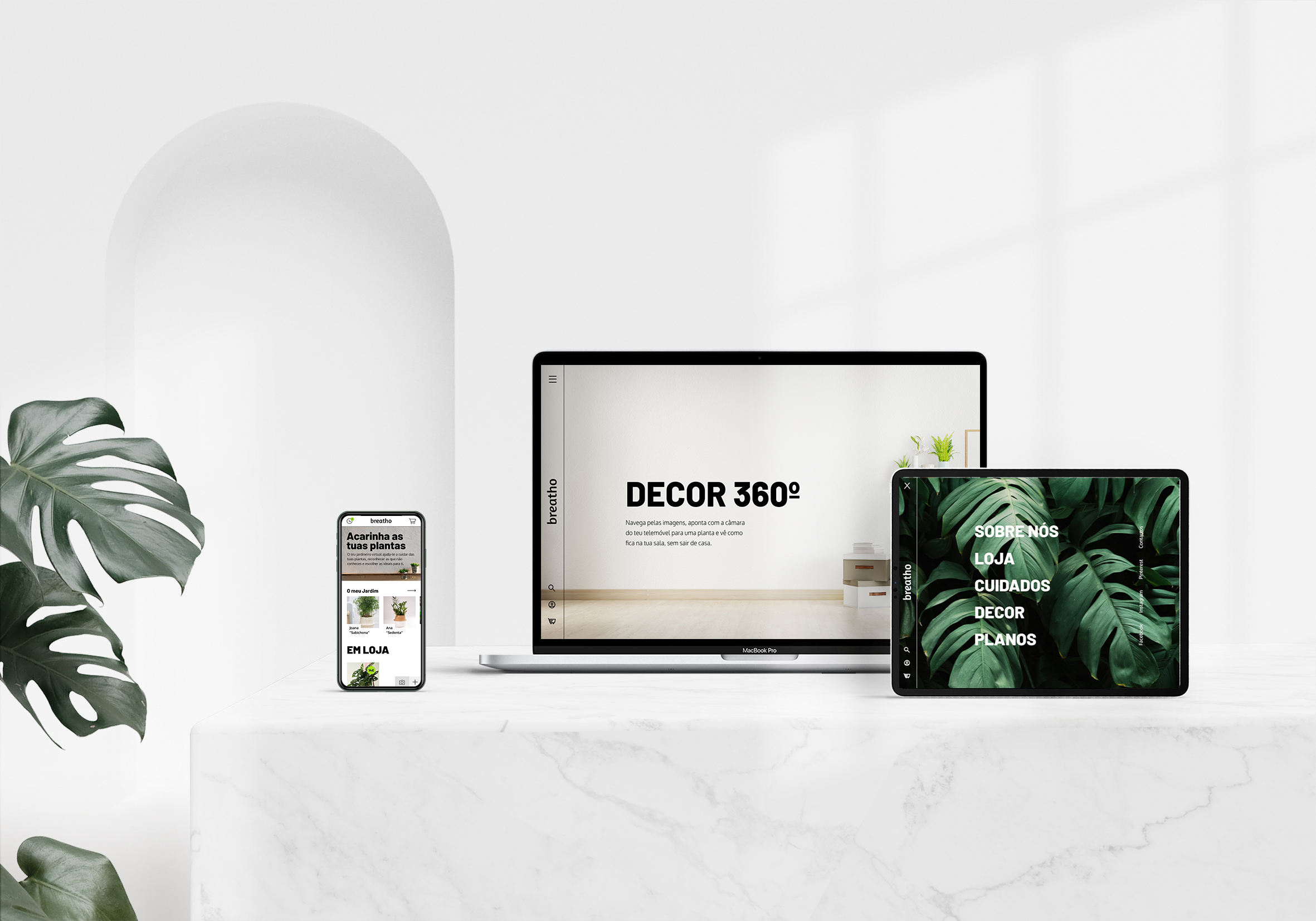
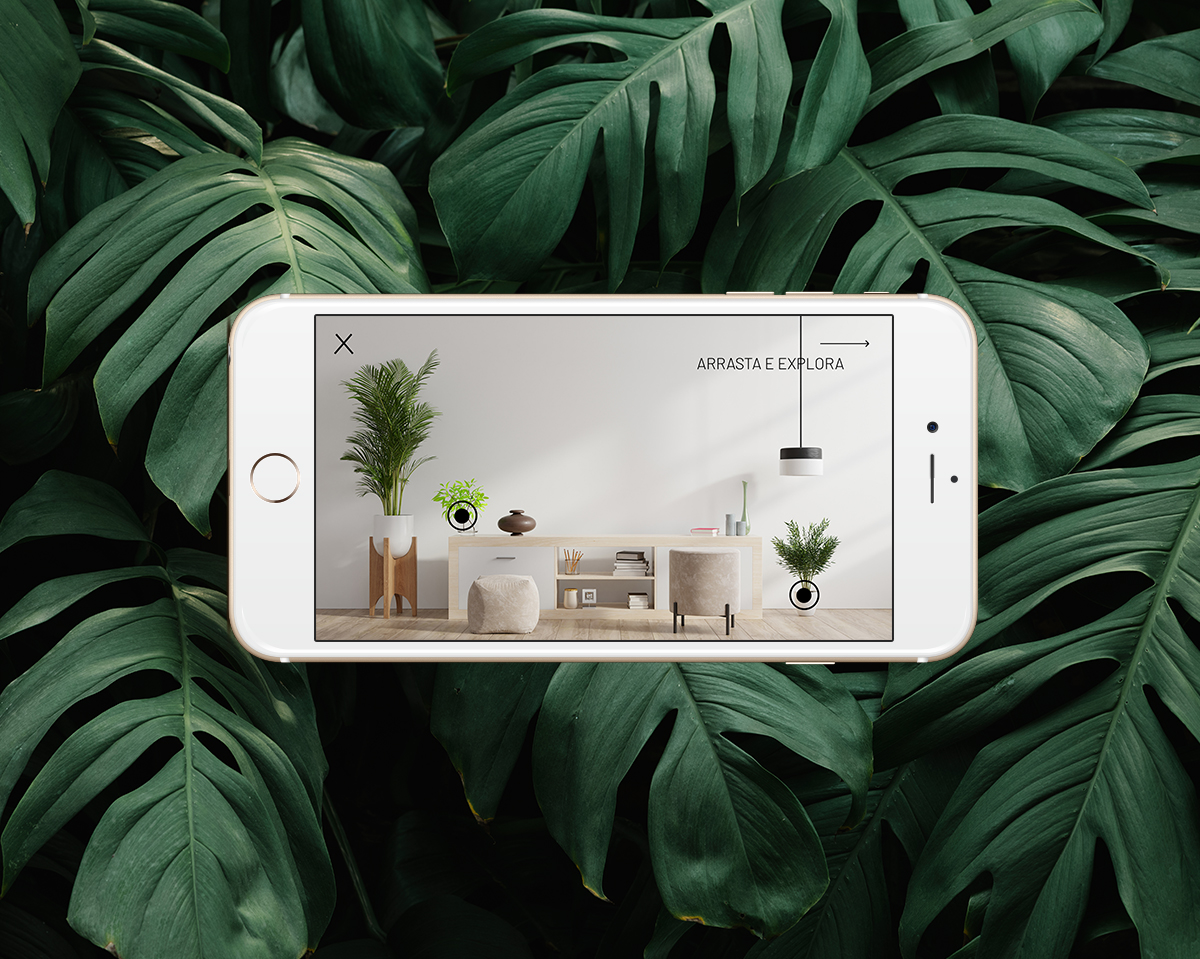
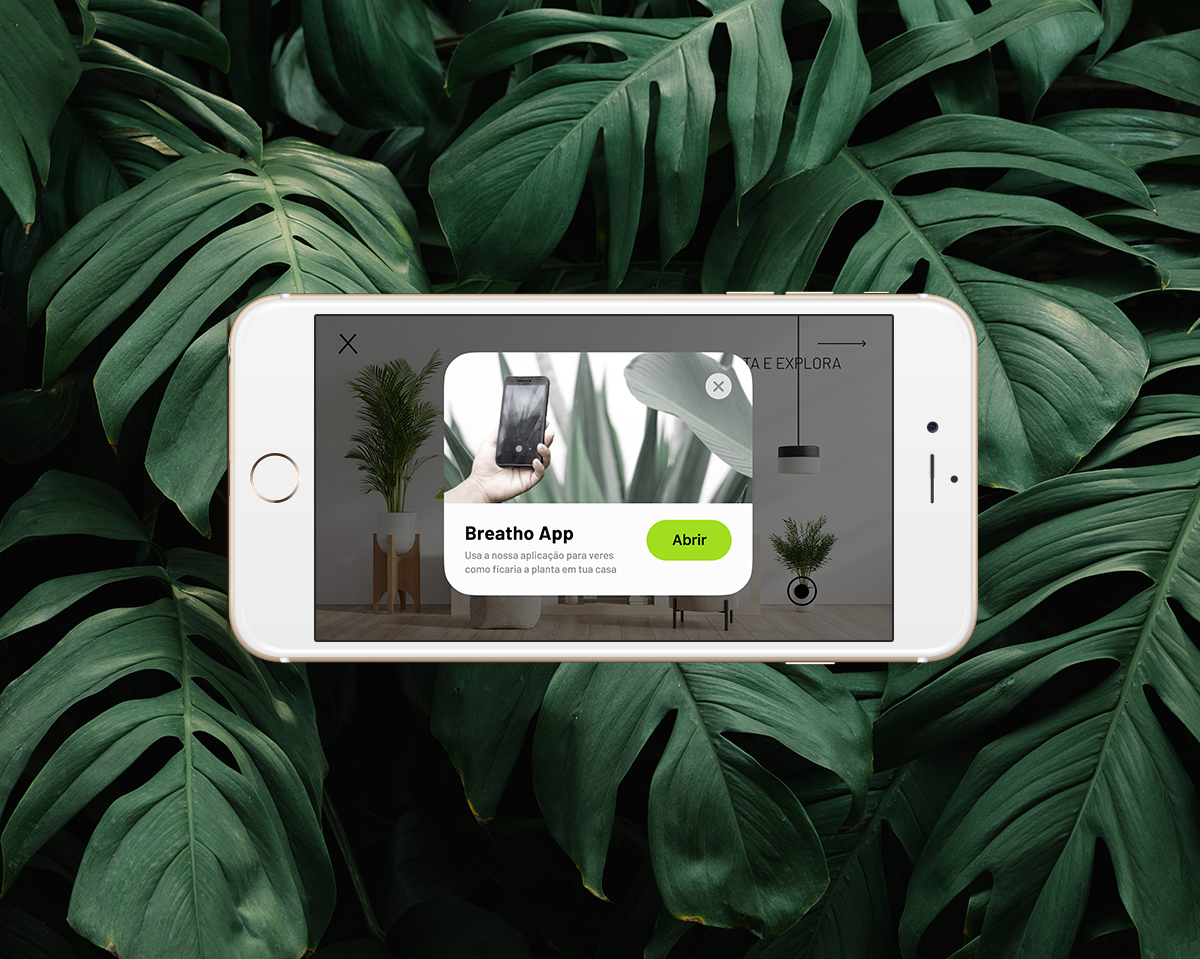
On the Desktop version of the website we have access to decorative and care articles, developed by specialists in the field, and we also have access to the online store, a possibility to create an account and subscribe plans. Due to the size of the screen we bet a lot on decoration images, where each plant is signposted. Having the mobile application, which uses google lens technology, accelerometer, luxmeter and augmented reality, the user can aim with their camera of the mobile phone to the signposted plant. After “collecting” the plant ID the user can afterwards point the camera at their house and see where it could be placed.
mobile website
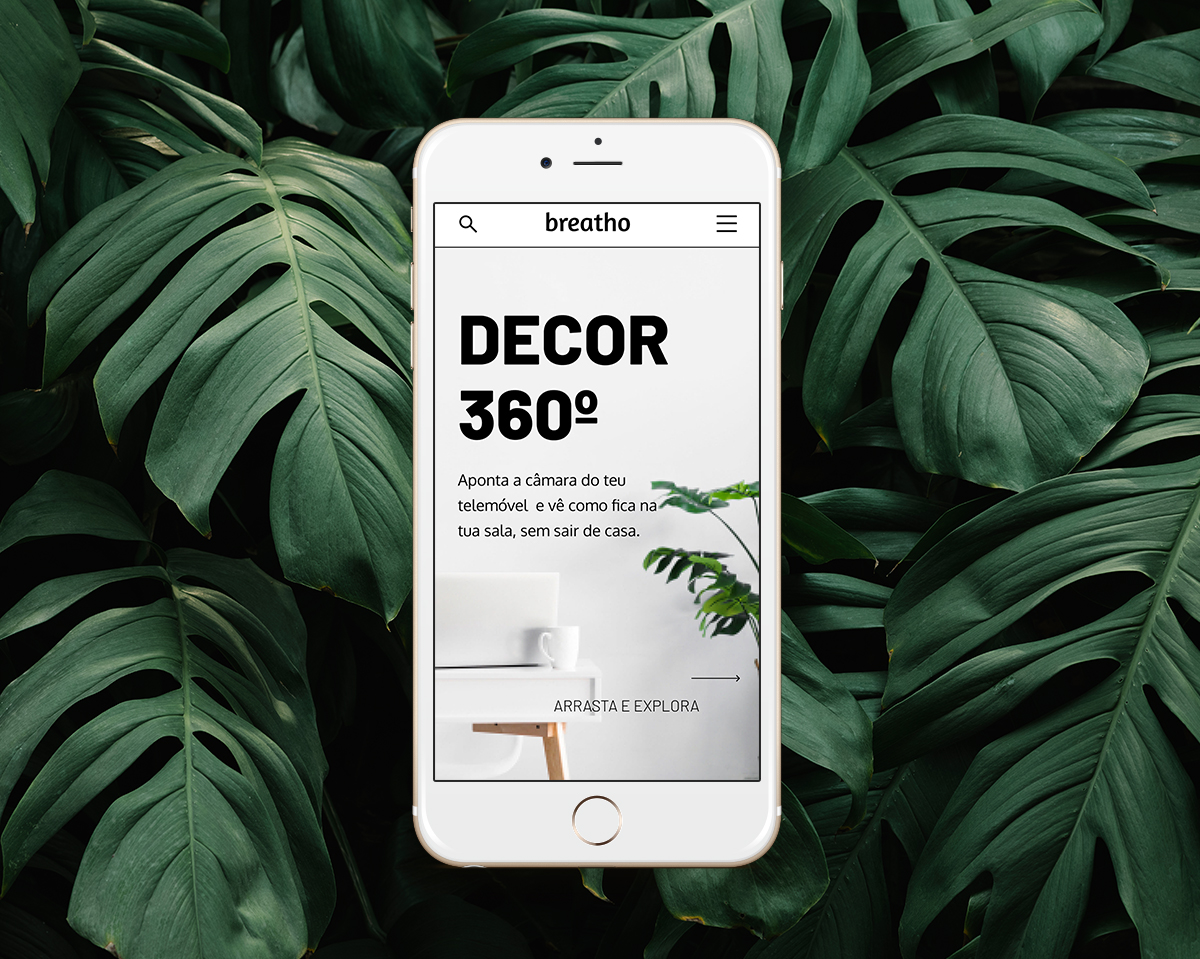
On the mobile version, since the conversion rate of online purchases is low, we chose not to have the online store, and therefore no subscription feature, but maintain all the other features of the desktop version.
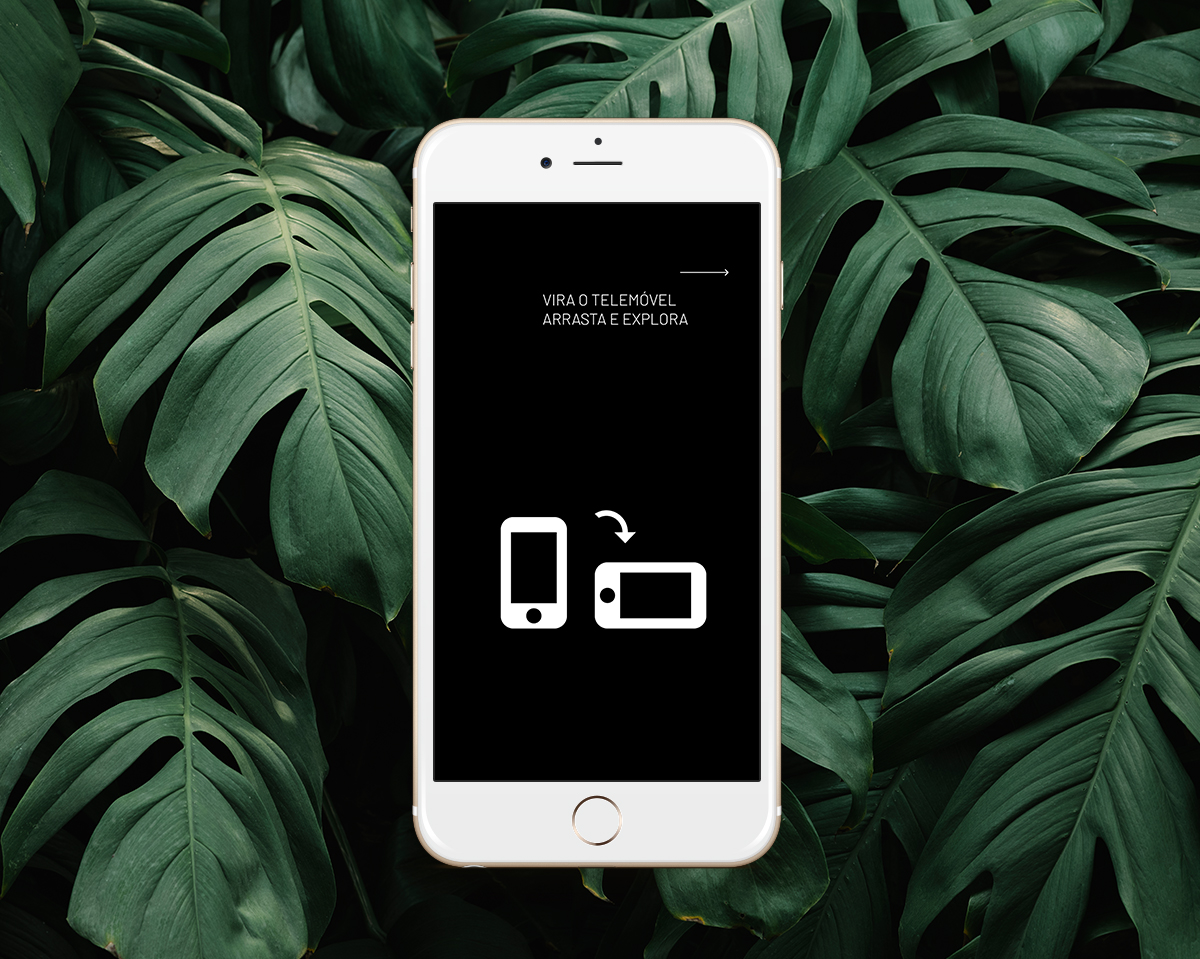
For a better experience of the Decor 360º the user is invited to flip the mobile phone horizontally, and when interested in some plant, the user can tap it and then get a notification to download the breatho app.
mobile app:
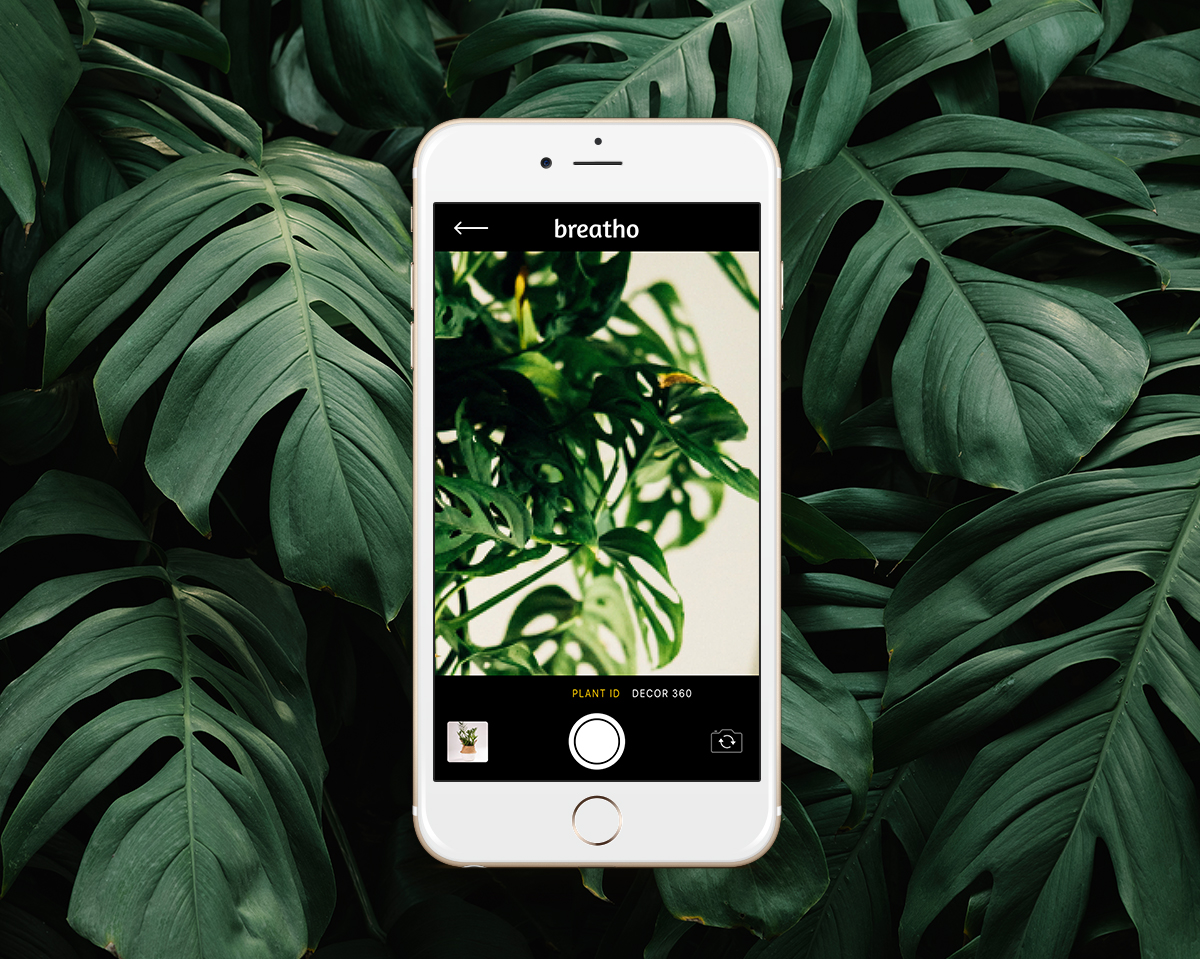
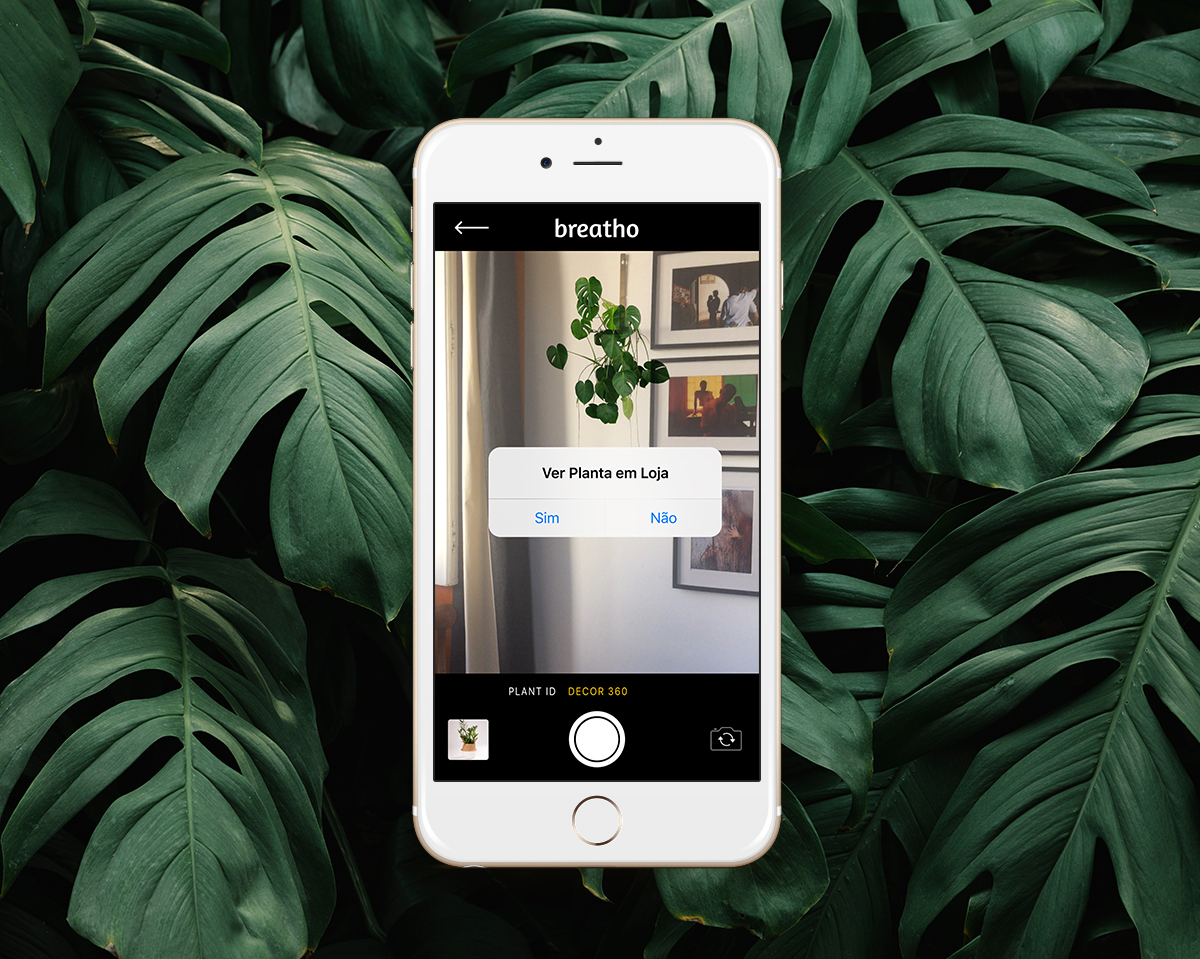
plant id and decor 360º
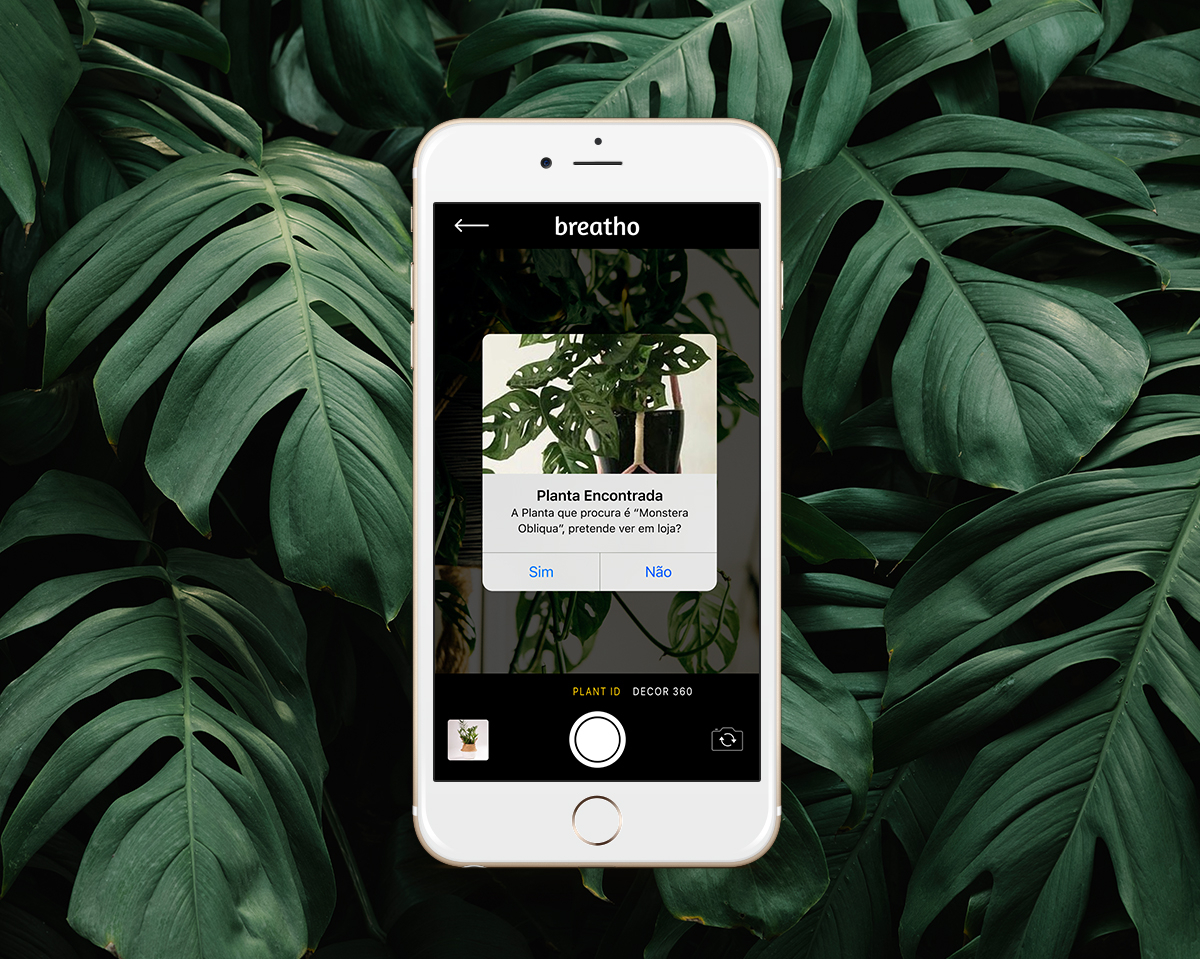
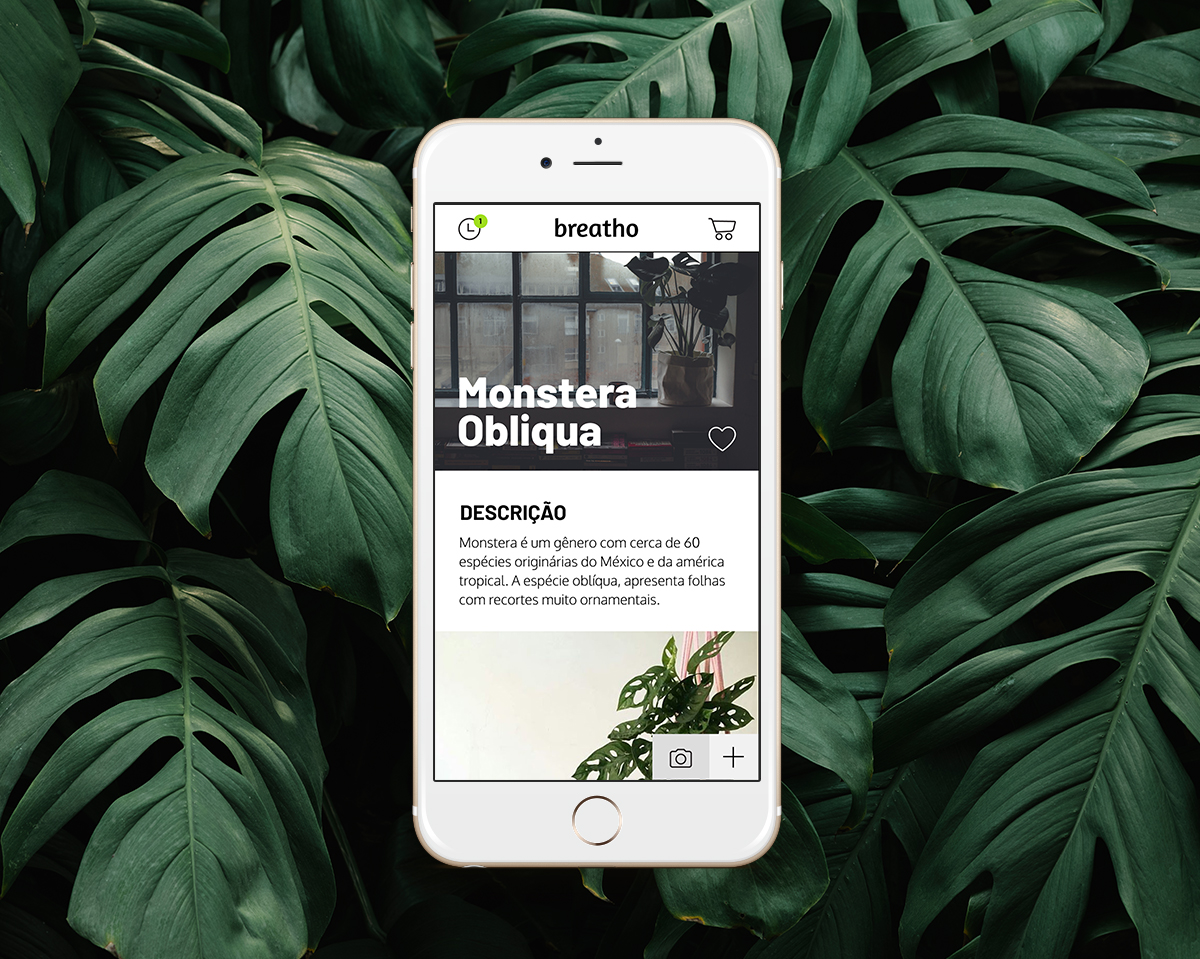
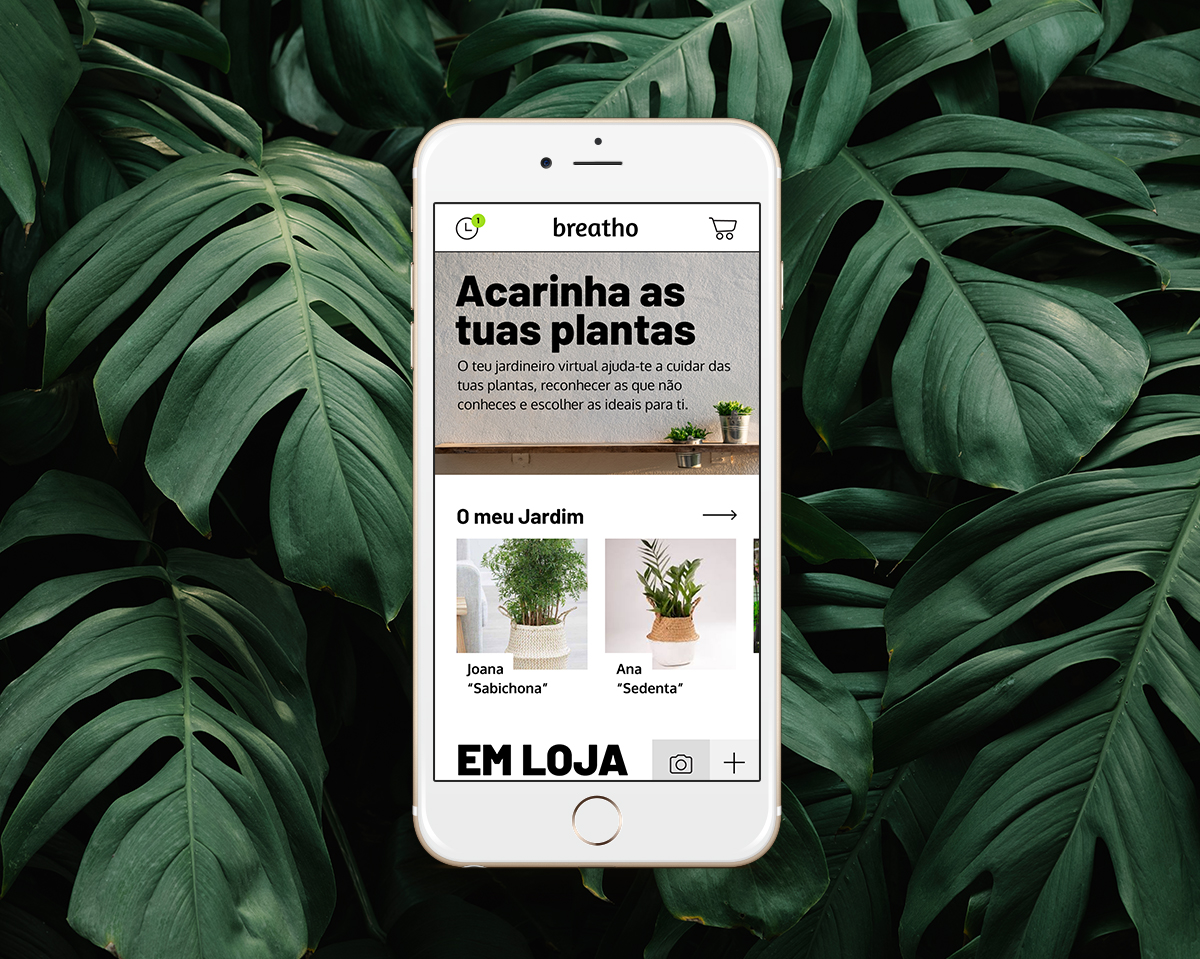
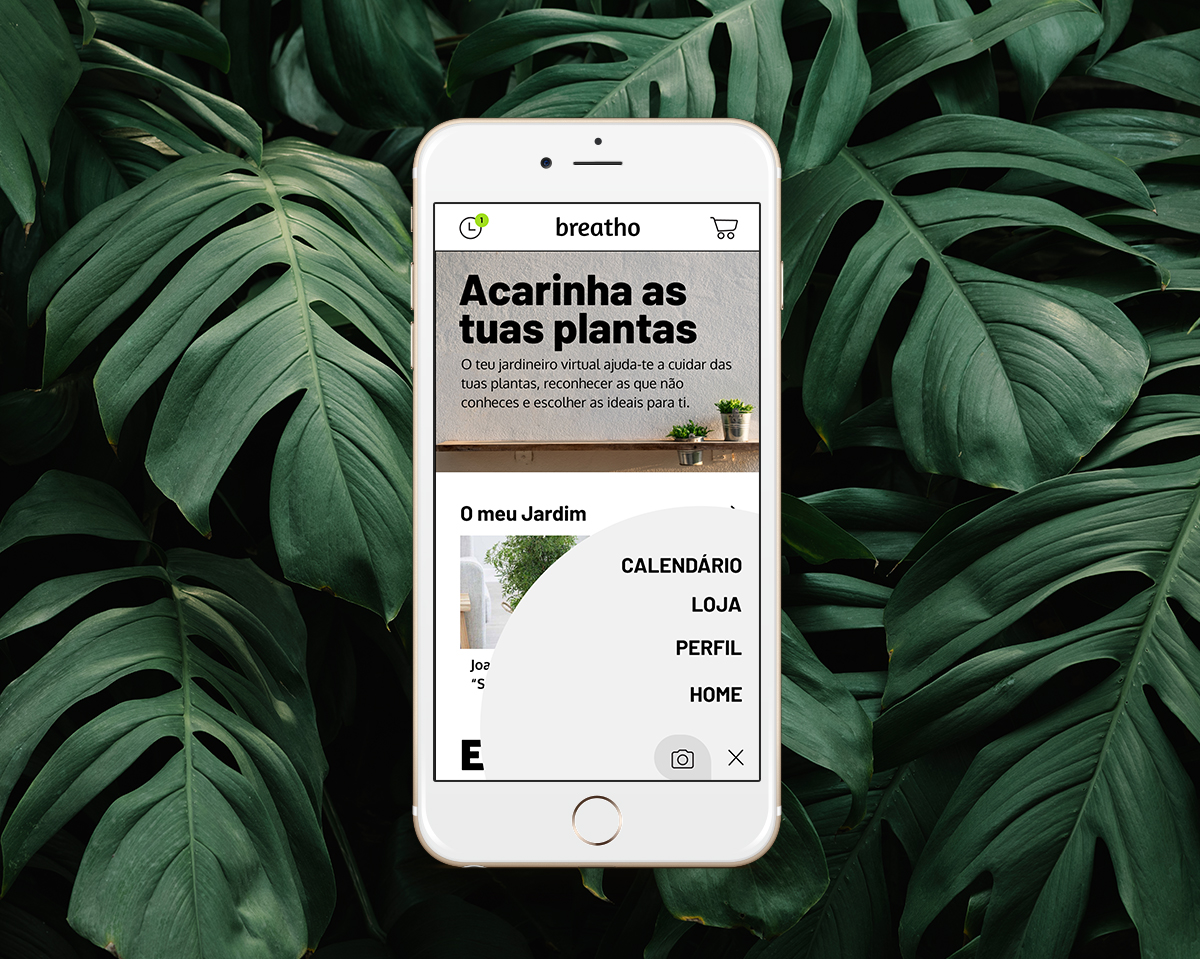
The application works as a virtual gardener, in which we have a calendar and a profile for each plant that allows our user to receive notifications about when the plants are in need of care. It is also here that is the center of the characteristics of augmented reality, accelerometer and luxmeter, which gives the possibility not only to see which plants can be put in each place of the house, but also to take a photo of a plant, indentify it and buy it if available on store.
You may access the full prototype below.
mobile app:
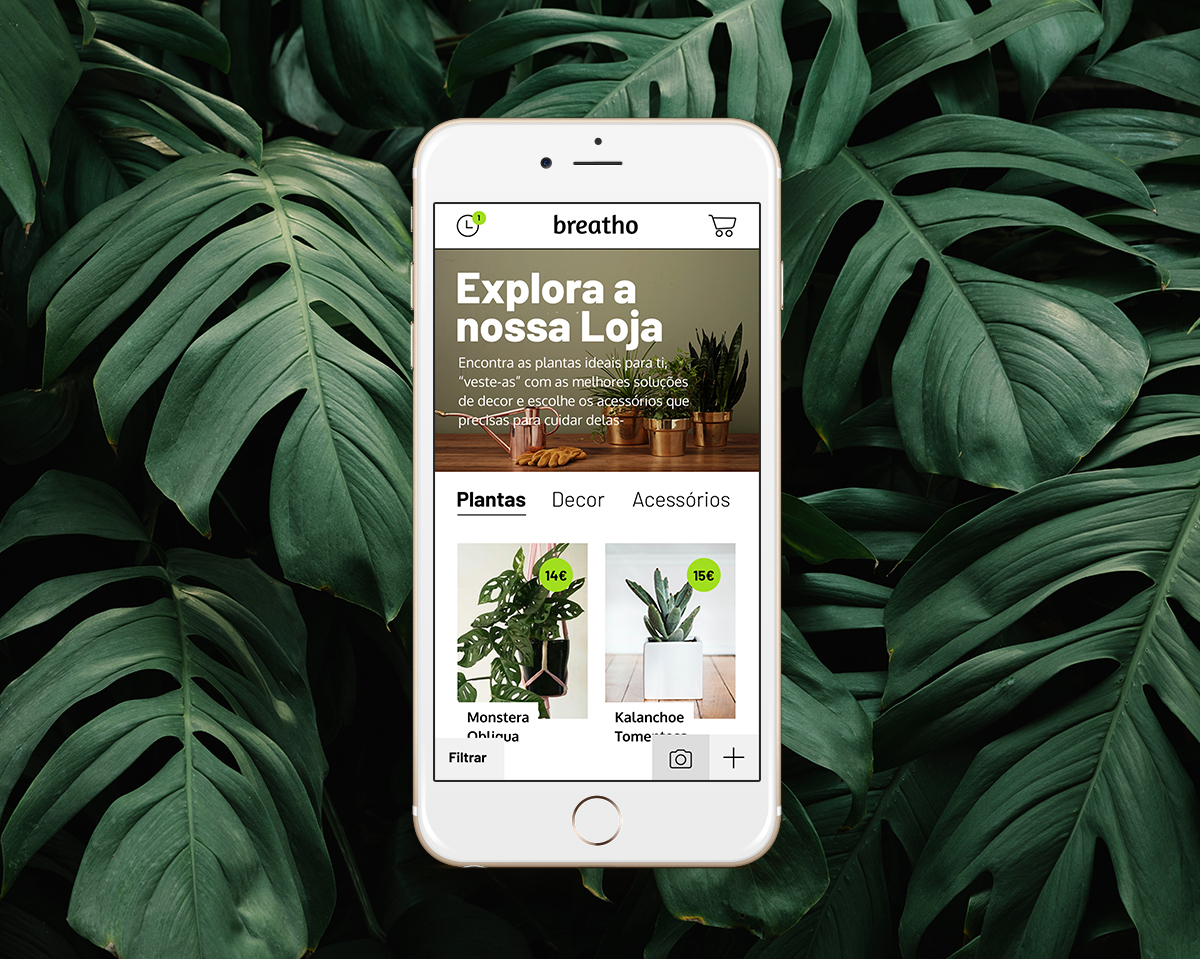
homepage, online store, profile
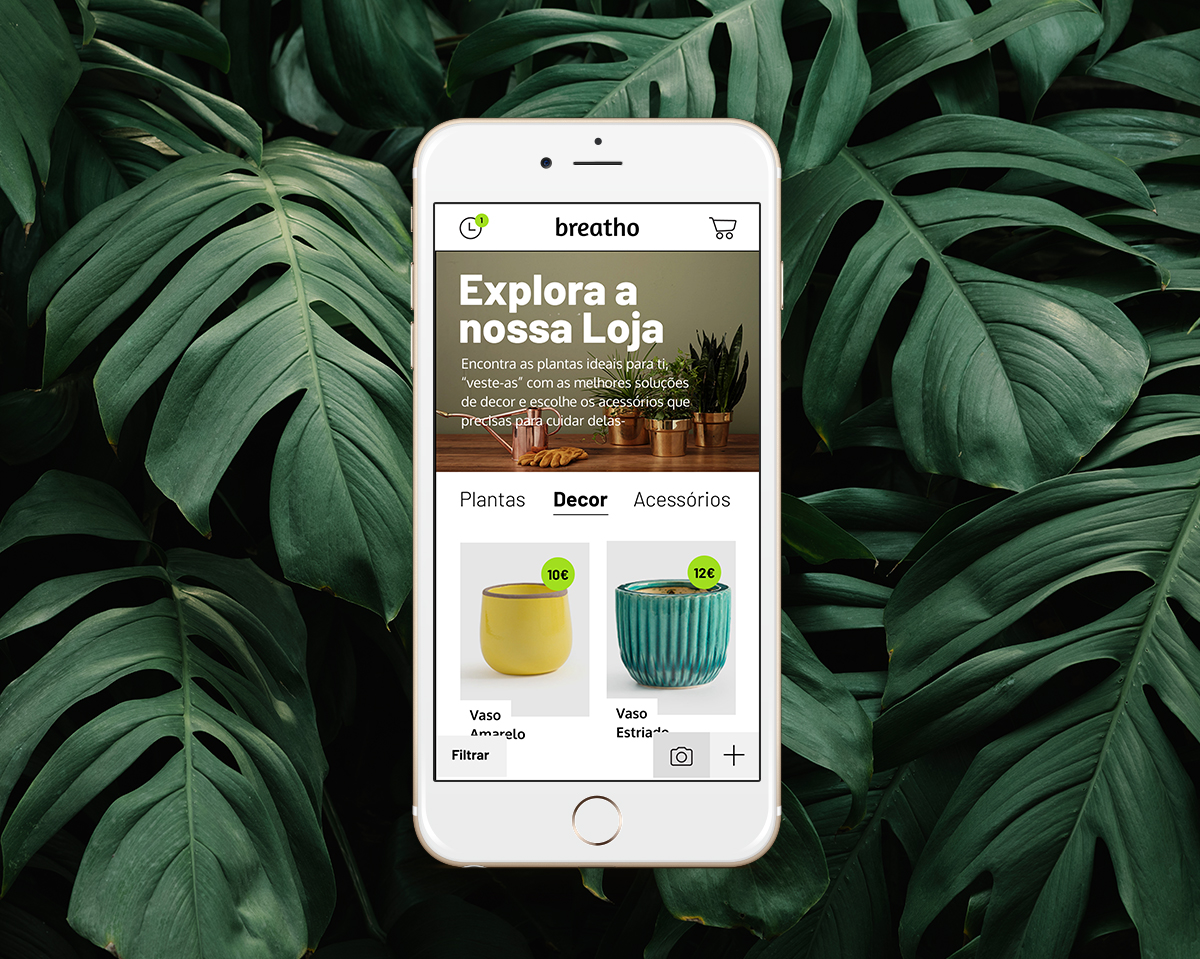
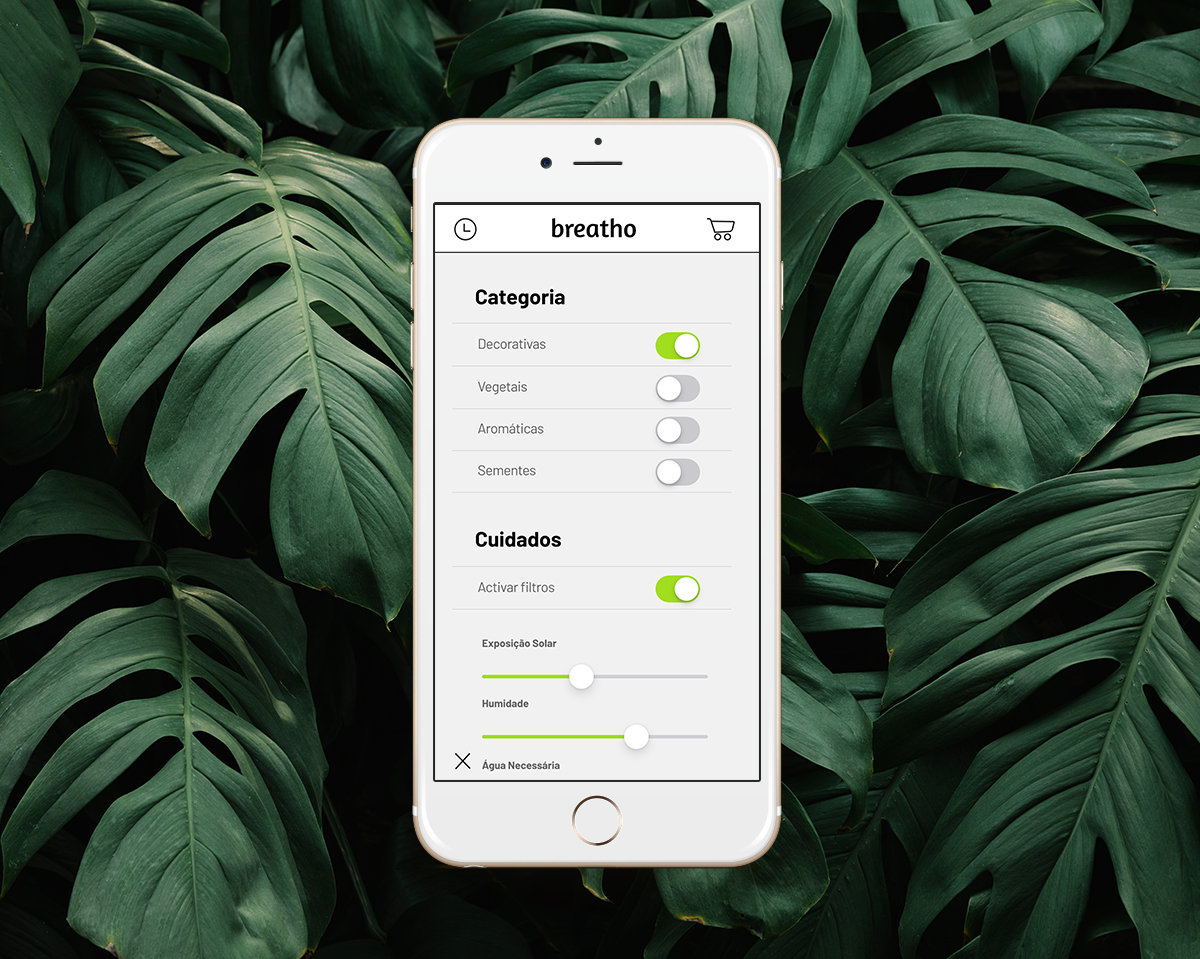
Taking into consideration the conversion rate of online shopping in mobile apps, our store has a very strong prominence in our app. The user may search for plants, decor and accessories and filter them to specify their needs, especially in the plants section, where the user can indicate all the conditions they have for a plant in a certain spot and then choose the one that suits them best.
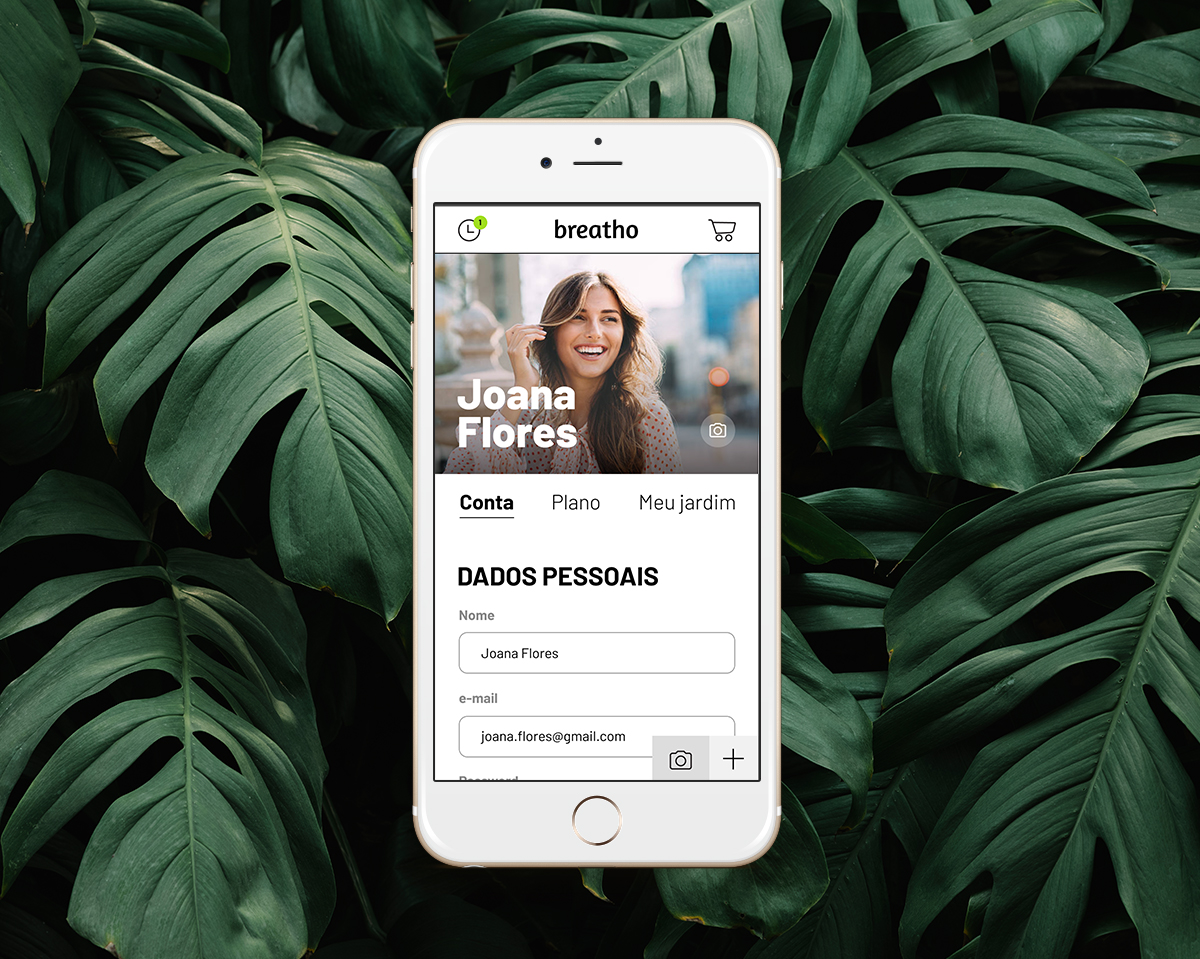
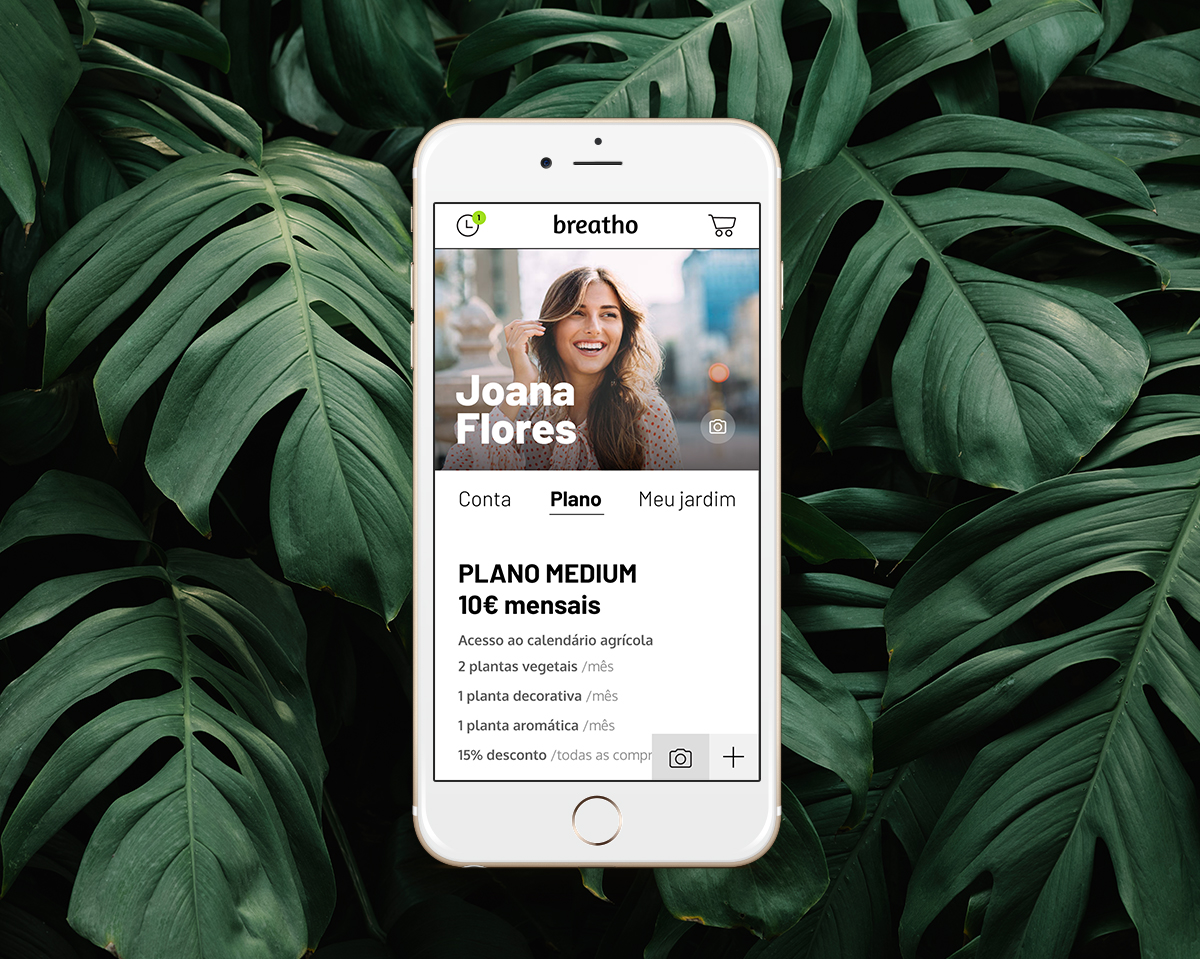
In the user profile it’s possible to access the account data and cancel it, and find all the plants they have, with the notifications associated to each one of these plants.